
Light Requirements
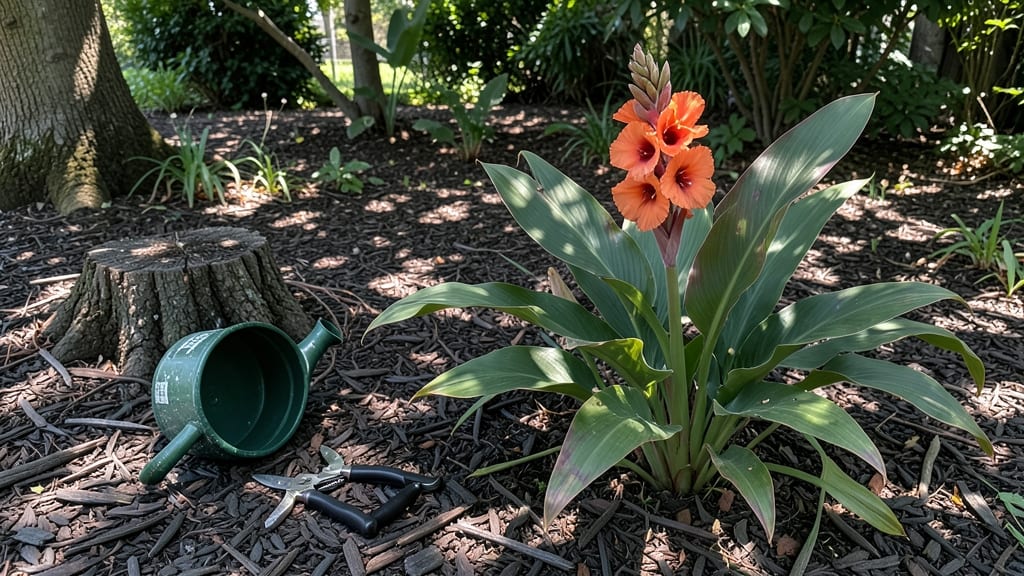
Cannas can grow in shade, though they thrive best in partial sun with at least 4–6 hours of filtered light daily. Shade-tolerant varieties like 'Black Knight' or 'Striped' perform well, but expect slower growth and fewer blooms compared to full-sun conditions.
While cannas are famously adaptable, their growth habits change dramatically in low-light environments. 🌿 In deep shade, you'll notice stems becoming leggy as they stretch toward any available light, while leaves may develop a pale, almost washed-out appearance.
The most shade-tolerant varieties like 'Black Knight' still produce blooms, but typically in smaller quantities and with less vibrant colors. For best results in shady spots, I recommend planting near a north-facing window or under high-canopy trees where they can still capture indirect sunlight for several hours each day.
What truly makes the difference is soil health—rich, well-draining soil with plenty of organic matter helps compensate for reduced photosynthesis. I've found that adding a slow-release fertilizer in early spring gives cannas the energy boost they need to survive in less-than-ideal lighting conditions.
Just be prepared to monitor them closely for signs of stress like yellowing leaves or weak stems, which often indicate they're not getting enough light to sustain themselves.
💡 In This Article
- How Shade Affects Canna Growth and Flowering
- Best Canna Varieties for Shady Gardens and Care Tips
How shade affects canna growth and flowering
Cannas rely on photosynthesis to convert light energy into glucose for growth, but in shade, their chlorophyll production becomes less efficient. When exposed to less than 4 hours of indirect light daily, cannas compensate by producing longer, thinner stems that stretch toward available light—a phenomenon called etiolation.
This results in weaker structural integrity, making them more prone to flopping over in wind or rain. The leaves themselves may develop a pale green or even yellowish cast as chlorophyll levels drop, since the plant prioritizes stem elongation over leaf density.
Flowering takes the biggest hit in low-light conditions because blooms are energy-intensive. Varieties like 'Black Knight' still produce flowers in shade, but the blooms tend to be smaller and less vibrant due to reduced pigment production. The plant allocates its limited energy to survival rather than reproductive functions.
Variegated cannas (with white or cream stripes) suffer even more—those light-colored sections contain fewer chlorophyll cells, making them particularly sensitive to insufficient light. In deep shade, you might see these patterns fade entirely as the plant struggles to maintain its distinctive markings.
The science behind this involves the plant hormone auxin, which regulates growth in response to light levels. In shade, auxin concentrations increase, promoting rapid stem elongation while inhibiting leaf and flower development.
This is why shade-grown cannas often look "leggy" and sparse. 🌱 What's fascinating is how cannas adapt over time: if gradually moved to brighter conditions, they'll slowly adjust their growth habits, though sudden exposure to full sun can cause leaf scorch.
The key is finding that sweet spot of partial shade where they get enough light without stress.
Temperature also plays a hidden role in shade tolerance. Cannas in shady spots often experience cooler soil temperatures, which slows root growth and nutrient uptake. This compound effect means shade-grown cannas need extra care in terms of soil warmth and moisture retention.
I've noticed that mulching with straw or wood chips helps maintain root-zone temperatures, giving the plant a better chance to thrive despite limited light. The goal is to mimic their natural tropical habitat where they'd receive dappled sunlight through forest canopies.
One surprising benefit of shade is reduced water loss through transpiration. With fewer leaves and slower growth, cannas in shady spots actually require less frequent watering than their sun-loving counterparts. However, this doesn't mean they're low-maintenance—you'll still need to monitor soil moisture carefully.
The trade-off is that their overall growth rate decreases by about 30-40% compared to plants in full sun, meaning you'll see fewer dramatic vertical gains or abundant foliage.
For gardeners working with limited light, consider these practical adaptations: plant cannas in containers where you can move them seasonally, or pair them with taller plants that provide filtered light while protecting from harsh afternoon sun.
The right variety can make all the difference—some cannas simply have a genetic advantage in low-light conditions, producing more efficient photosynthesis pathways. 💫