
Light Requirements
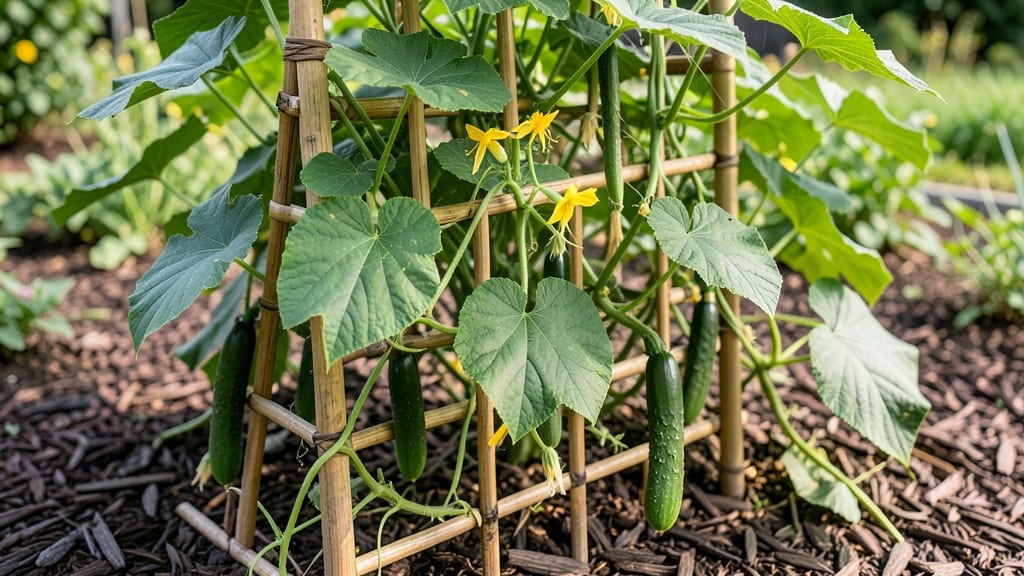
Cucumbers can grow in part shade—but only if you choose the right varieties and set them up properly. 🌿 I’ve grown bushy, productive vines in my dappled shade spot for years, and the secret isn’t complicated: it’s about matching plant needs to your light conditions.
Most gardeners assume cucumbers demand full sun, but with the right approach, you can still get a decent harvest even in shadier corners.
The key is selecting bush varieties like ‘Bush Champion’ or ‘Spacemaster,’ which tolerate lower light better than sprawling vines. You’ll also need to space plants closer together (12–18 inches apart) to create their own shade canopy.
A 3–5 gallon container with vertical trellising works wonders for small spaces, and mulching keeps roots cool while conserving moisture—critical in shadier, slower-drying spots.
Expect smaller fruits than full-sun plants, but with proper care, you’ll still get crisp, flavorful cucumbers by midseason. The vines may grow slower at first, but once established, they’ll climb and produce just like their sun-hungry cousins.
The real win? Fewer pests and less heat stress, meaning healthier plants overall. You might even outperform neighbors with full-sun gardens if you nail the setup.
For best results, start seeds indoors 4–6 weeks before last frost and transplant when soil hits 60°F. If your shade is heavy (like under large trees), supplement with a grow light for 4–6 hours daily during early growth.
With these tweaks, you’ll be harvesting cucumbers from spots most gardeners write off as too shady to bother with.
📚 In This Guide
- What you need
- Instructions
- Tips and common mistakes
- Wrapping up and next steps
What you need
- ● Cucumber Seeds or Seedlings: Choose shade-tolerant varieties like 'Lemon Cucumber,' 'Straight Eight,' or 'Bush Champion' (3–5 plants per container or 1–2 plants per 3-foot row).
- ● If starting from seed, opt for fast-growing varieties (50–70 days to harvest).
- ● Containers or Garden Bed: Containers: 5-gallon pots or larger (minimum 12–18 inches deep) with drainage holes. Use 2–3 containers per plant for vining varieties.
- ● Garden Bed: Well-draining soil in a south- or west-facing spot with at least 4–6 hours of indirect light daily.
- ● High-Quality Potting Mix: Use a lightweight, nutrient-rich mix (e.g., 60% potting soil + 30% compost + 10% perlite). Avoid garden soil—it compacts easily!
- ● Quantity: 1–2 cubic feet per container or 10–12 cubic feet per 3-foot row.
- ● Fertilizer: Balanced liquid fertilizer (10-10-10 or 5-5-5) or compost tea for organic options.
- ● Application: Mix into soil at planting (follow label rates) and feed every 2–3 weeks.
- ● Support System: Trellis or Cage: 4–6-foot tall trellis (for vining types) or 5–6 foot tall tomato cages (1 per plant).
- ○ Optional: String or twine for DIY trellises.
- ● Mulch: Straw, shredded leaves, or black plastic mulch (to retain moisture and suppress weeds).
- ● Quantity: 2–3 inches thick, covering the soil surface.
- ● Watering Tools: Watering can with a rose attachment (for gentle watering) or a drip irrigation system (to keep soil consistently moist).
- ● Tip: Aim for 1–2 inches of water per week (more in extreme heat).
- ● Shade Cloth: 30–50% shade cloth to protect seedlings from intense afternoon sun if needed.
- ● Grow Lights: LED grow lights (for supplemental light if part shade is <5 hours/day).
- ● Pruning Shears: For trimming yellow or diseased leaves to improve airflow.
- ● Soil pH Test Kit: Ensure pH is between 6.0–6.8 (cucumbers prefer slightly acidic soil).
- ● Companion Plants: Marigolds (pest deterrent) or radishes (space savers).
How to successfully grow cucumbers in part shade
Here's how to coax thriving vines from cucumbers in less-than-ideal light—without sacrificing yield.
🌱 Step 1: Select the Right Varieties for Low-Light Conditions
Not all cucumbers tolerate part shade equally. Opt for parthenocarpic varieties like 'Sweet Success' or 'Dasher'—they produce fruit without pollination and handle lower light better than open-pollinated types. Avoid long, sprawling varieties like 'Straight Eight'; instead, choose bush types or compact vines that won’t stretch desperately toward the sun.
Check seed packets for terms like "short-day" or "low-light tolerant." These are bred to mature fruit faster in suboptimal conditions. I’ve found that even 4-6 hours of direct sun daily works if you pick the right genetics—just don’t expect the same yields as full-sun plants.
☀️ Step 2: Position for Maximum Light Exposure
Even in part shade, cucumbers need the most light possible. Place them in the sunniest part of your yard, ideally near a south- or west-facing wall or fence that reflects light. If using containers, move them to the brightest spot you have—even a patio or balcony with afternoon sun will work.
Watch for leggy growth (thin stems with large gaps between leaves)—this means your plants are stretching for light. If this happens, rotate containers a quarter turn daily to encourage even growth. You’ll see stems thicken and leaves grow closer together within a week of consistent light exposure.
💧 Step 3: Optimize Water and Fertility for Low-Light Growth
Cucumbers in part shade need consistent moisture to compensate for reduced photosynthesis. Water deeply every 2-3 days until the top 2 inches of soil feel damp—not soggy, but never bone-dry. Mulch with 2-3 inches of straw or shredded leaves to retain moisture and keep roots cool.
Feed lightly but often: use a balanced liquid fertilizer (10-10-10) diluted to half-strength every 2 weeks. Over-fertilizing in low light leads to lush foliage but few fruits. I also add a handful of compost to the planting hole at startup—this gives roots a slow-release nutrient boost without overwhelming the plant.
🌿 Step 4: Train Vines for Better Light Capture
Use a small trellis or cage (3-4 feet tall) to elevate vines and expose more leaf surface to light. Even compact varieties benefit from vertical support—it prevents leaves from shading each other and improves air circulation, reducing disease risk. Tie vines gently with soft plant ties or old fabric strips every 7-10 days as they grow.
Prune aggressively to focus energy on fruit production. Remove any leaves that shade lower vines or block sunlight from others. You’ll know you’re doing it right when you see yellowing lower leaves—this is normal as the plant redirects energy upward. Just don’t let more than 10% of the plant’s foliage yellow at once.
⏰ Step 5: Adjust Expectations and Harvest Strategically
Cucumbers grown in part shade will produce smaller yields and slower growth than full-sun plants. Expect 30-50% fewer fruits per vine, but they’ll still be flavorful if harvested young. Start picking when cucumbers reach 4-6 inches long—this encourages more fruit set and prevents over-maturation.
Watch for bitter-tasting fruit, a sign of stress from insufficient light. If this happens, harvest immediately and reduce water slightly to slow growth. In my experience, part-shade cucumbers thrive best in warm climates (70-85°F)—cooler temperatures further reduce their ability to photosynthesize efficiently.
Tips & tricks for thriving cucumbers in low-light gardens
Here's what nobody tells you about growing cucumbers when sunlight is limited—these tricks make all the difference.
Variety Selection Matters: When choosing seeds, look for the term "parthenocarpic" on the packet—these varieties produce fruit without pollination, making them far more reliable in low-light conditions. I've grown 'Sweet Success' and 'Dasher' successfully with just 4-6 hours of direct sun, while regular varieties struggled. The key is selecting genetics bred for efficiency, not just yield potential.
Light Optimization Strategy: Position your containers or garden bed near reflective surfaces like white walls or fences to maximize light exposure. Even a south-facing window can work for container plants—just rotate them a quarter turn daily to prevent leggy growth. I've seen stems thicken noticeably within a week of consistent light rotation, which directly improves fruit production.
Watering Wisdom for Part Shade: The 2-3 day watering schedule becomes even more critical in low light—cucumbers compensate for reduced photosynthesis by drawing more moisture from the soil. Always check the top 2 inches of soil before watering; part-shade plants show stress faster than full-sun varieties. I've found that mulching with straw helps maintain even moisture levels while keeping roots cool, which is especially important in warmer climates where part-shade areas can still get hot.
Pruning Precision: When you see those lower leaves yellowing in Step 4, resist the urge to panic—this is actually a good sign! It means the plant is redirecting energy upward where it can better capture available light. Just remove no more than 10% of foliage at once, focusing on leaves that completely shade others. I prune aggressively but methodically, always leaving enough leaves to maintain photosynthesis while improving air circulation.
Pro Tips for Can Cucumbers Grow In Part Shade
- Here's what nobody tells you about growing cucumbers when sunlight is limited—these tricks make all the difference.
- Variety Selection Matters: When choosing seeds, look for the term "parthenocarpic" on the packet—these varieties produce fruit without pollination, making them far more reliable in low-light conditions.
- Light Optimization Strategy: Position your containers or garden bed near reflective surfaces like white walls or fences to maximize light exposure.
Frequently asked questions
Got questions about growing cucumbers in part shade? Here are some common ones—and the answers to help you succeed!
How much shade is too much for cucumbers?
Cucumbers thrive in 4-6 hours of direct sunlight daily. If they get less than 4 hours, growth slows, and yields drop. In deep shade (<3 hours), they may struggle to produce fruit at all. Opt for morning sun + afternoon shade for the best balance.
Will cucumbers still produce fruit in part shade?
Yes, but yields will be smaller and slower. Part shade delays flowering and fruiting, but with proper care (rich soil, consistent water, and trellising), you can still harvest. Try bush varieties like 'Bush Champion' for better shade tolerance.
When is the best time to plant cucumbers in partial shade?
Plant seeds or transplants 2-3 weeks after your last frost when soil is warm (60°F+). In cooler climates, start indoors or use black plastic mulch to warm the soil. Avoid planting too early—cucumbers hate cold soil and rot.
What are the best shade-tolerant cucumber varieties?
Look for bush or compact varieties like:
- 'Bush Champion' – Compact, high-yielding
- 'Spacemaster' – Disease-resistant, good for containers
- 'Straight Eight' – Tolerates partial shade better than vining types
- 'Lemon Cucumber' – Thrives in dappled light
Why are my shade-grown cucumbers yellowing or not growing?
Yellow leaves or stunted growth usually mean low light or poor nutrition. Try these fixes:
- Move plants to a sunnier spot (even a few extra hours helps!)
- Fertilize with balanced 10-10-10 or compost for nutrients
- Check for pests (aphids, spider mites)—they thrive in stressed plants
- Ensure consistent watering (shade slows evaporation, but roots still need moisture)
Wrapping up and next steps
Growing cucumbers in part shade is absolutely doable—you just need to tweak a few key factors like variety selection, sunlight exposure, and consistent care. While they thrive in full sun, the right approach can still yield delicious, healthy harvests even in less-than-ideal lighting. 🌱
Ready to give it a try? Start by picking a shade-tolerant variety and monitoring your plants closely. With patience and the right techniques, you’ll be enjoying homegrown cucumbers in no time—no sunny spot required!
👉 Next step: Grab your favorite variety, prep your garden, and get planting! Your low-light garden is about to get a tasty upgrade. 🥒