
Light Requirements
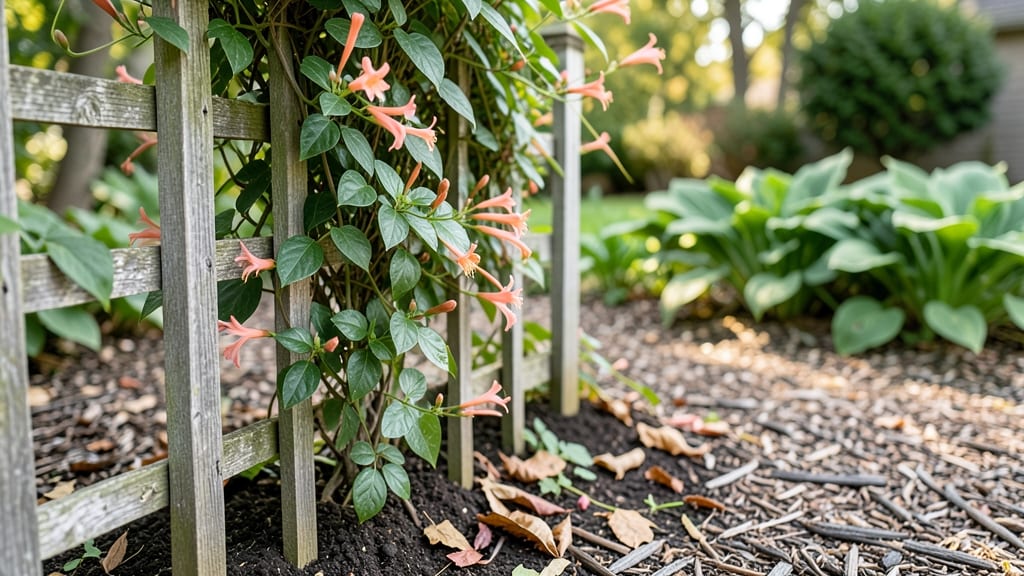
Honeysuckle can grow in shade but thrives best in partial shade to full sun, with some varieties like Lonicera sempervirens tolerating deeper shade better than others. Growth may be slower and flowering reduced without adequate light.
While honeysuckle can adapt to shady conditions, its performance depends heavily on the specific variety and environmental factors. 🌿 Many gardeners overlook that even shade-tolerant types like Lonicera sempervirens (trumpet honeysuckle) will produce fewer blooms in deep shade, as they rely on sunlight for energy.
The key is choosing the right species for your light conditions—some varieties simply won't flower at all without at least 4-6 hours of dappled light daily. For example, Lonicera fragrantissima handles shade better than its sun-loving cousins but still benefits from morning sun exposure.
If you're working with limited light, focus on soil quality and moisture control, as these factors become even more critical in shady spots. 💧 Amending the soil with compost and using mulch helps maintain consistent moisture, which is essential for root development.
I've found that regular pruning in late winter—before new growth begins—can also encourage bushier growth in low-light conditions, though you'll likely see less vibrant flowering compared to sun-exposed plants.
💡 In This Article
- Best Shade-Tolerant Honeysuckle Varieties for Low-Light Gardens
- Optimizing Honeysuckle Growth in Shady Spots: Soil and Care Tips
Best shade-tolerant honeysuckle varieties for low-light gardens
Not all honeysuckles are created equal when it comes to shade tolerance. The Lonicera sempervirens (trumpet honeysuckle) stands out as the most adaptable, thriving in partial to full shade with just 2-4 hours of filtered light daily.
Its semi-evergreen leaves and tubular red flowers make it a standout choice for wooded gardens or north-facing patios. 🌿 Unlike sun-loving varieties like Lonicera periclymenum (common honeysuckle), which needs full sun for optimal flowering, L. sempervirens prioritizes survival over blooms in low light.
Another excellent option is Lonicera fragrantissima (winter honeysuckle), which tolerates deep shade but still rewards you with fragrant white blooms in early spring. This variety handles 50-70% shade coverage better than most, though its growth rate slows significantly below 30% light exposure.
For comparison, Lonicera japonica (Japanese honeysuckle) struggles in deep shade, often producing sparse foliage and minimal flowers unless given at least 6 hours of indirect light. The key difference lies in their native habitats—shade-tolerant species evolved in understory environments where sunlight is limited.
If you're working with very low light conditions, consider Lonicera henryi (Chinese honeysuckle), which can adapt to full shade but prefers morning sun for best results.
Its glossy leaves and yellow flowers add vertical interest to shady spots, though flowering may be less prolific. 💫 What most gardeners don't realize is that even shade-tolerant varieties benefit from dappled sunlight—the brief periods of direct light help maintain chlorophyll production, which is critical for photosynthesis in low-light environments.
For those with deep shade (less than 2 hours of light), focus on foliage varieties like Lonicera pileata (boxleaf honeysuckle), which prioritizes lush green growth over flowers. These types won't disappoint with vibrant leaves, even if blooms are minimal.
The trade-off is clear: while shade-tolerant honeysuckles survive, their flowering potential drops by 30-50% compared to sun-exposed plants. This is because sunlight triggers the phytochrome pigments in plants, which regulate flowering hormones.
When selecting a variety, also consider your climate zone. In cooler regions (USDA zones 3-5), Lonicera fragrantissima handles shade better due to its cold-hardy nature, while tropical varieties like Lonicera peruviana (Peruvian honeysuckle) may struggle in deep shade unless given humidity and consistent moisture.
Always check the light requirements on the plant tag—some nurseries label shade tolerance as "partial shade," which often means 3-6 hours of filtered light, not full shade.