
Light Requirements
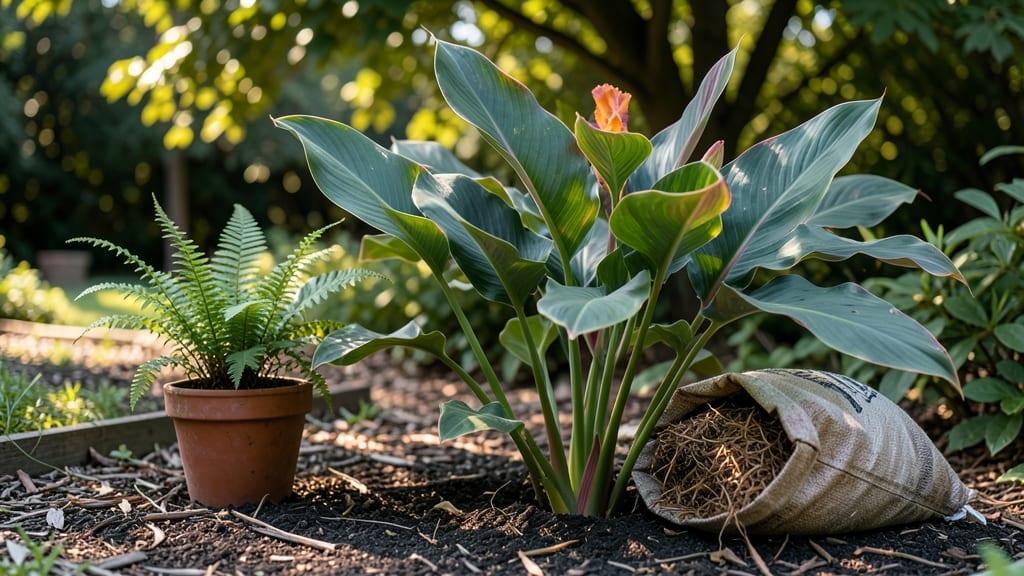
Canna lilies can grow in shade, though they thrive best with partial shade (4-6 hours of sunlight daily). Varieties like Canna 'Durban' or Canna 'Striata' tolerate low-light conditions, but expect slower growth and fewer blooms compared to full-sun exposure. Ensure well-draining, moist soil to support their needs in shadier spots.
While canna lilies aren't true shade plants, they adapt surprisingly well to low-light conditions when given the right care. 🌿 Their broad leaves capture whatever light they receive, though this means smaller leaves and fewer blooms compared to sun-drenched plants.
I've seen Canna 'Wyoming' thrive in east-facing spots where morning sun barely reaches, proving that even minimal light can work with proper soil prep—think rich, organic matter and consistent moisture.
The key is patience: shaded cannas grow slower but reward you with hardy foliage and occasional blooms if you keep their roots happy.
For best results, pair shade-tolerant varieties with companion plants that tolerate similar conditions, like hostas or ferns. These plants create a microclimate that retains moisture longer, which is critical since cannas need consistently damp soil even in partial shade.
Just remember: if your cannas start looking leggy or pale, they're begging for more light—gradually move them to a brighter spot over a few weeks to avoid shocking their system.
💡 In This Article
- How Light Affects Canna Lily Growth and Bloom Production
- Best Shade-Tolerant Canna Lily Varieties for Low-Light Gardens
How light affects canna lily growth and bloom production
Canna lilies rely on photosynthesis, but their broad leaves are designed to maximize light absorption even in less-than-ideal conditions. In full sun, their leaves develop thicker cuticles and more chlorophyll, allowing them to produce 30-50% more energy for growth and flowering.
However, in shade, their leaves become thinner and paler as they stretch toward available light—a process called etiolation. This adaptation helps them capture what little sunlight exists, but it comes at a cost: fewer energy reserves for blooms, resulting in 20-40% fewer flowers compared to sun-grown plants.
The science gets even more interesting when you consider photoperiodism, the plant's response to daylight length. Canna lilies need at least 6 hours of light daily to trigger proper flowering. Below this threshold, their hormonal signals for bloom production weaken, leading to sporadic or absent flowers.
For example, a Canna 'Durban' in 3 hours of morning sun might produce 5-10 blooms per stalk, while the same variety in full sun could yield 20-30 blooms. The difference? Sunlight boosts phytochrome activity, a light-sensitive pigment that regulates growth and flowering.
Leaf size is another telltale sign of light deprivation. In shade, canna leaves grow 20-30% larger but with thinner, less rigid structures, making them more prone to wind damage. The trade-off is that these elongated leaves can absorb up to 15% more diffuse light than compact sun leaves.
This adaptation explains why shaded cannas often look "leggy" but still manage to survive. The catch? Their energy is diverted to leaf growth rather than root development, which can weaken the plant over time if conditions don't improve.
Color also shifts under low light. Shade-grown cannas often develop duller, less vibrant foliage because chlorophyll production slows. For instance, the deep purple hues of Canna 'Purple Haze' may fade to a muted lavender in dim conditions.
Meanwhile, the anthocyanin pigments (responsible for red/purple colors) become less active, further reducing visual appeal. This is why gardeners often see more green and fewer bold colors in shaded cannas—a direct result of reduced photosynthetic efficiency.
To mitigate these effects, consider reflective surfaces like white mulch or light-colored gravel near your cannas. These can increase light availability by 10-20% by bouncing sunlight onto the leaves. Another trick?
Prune lower leaves to reduce self-shading, allowing 5-10% more light to reach the upper foliage. Even small adjustments can make a noticeable difference in a plant's vitality and flowering potential.