
Light Requirements
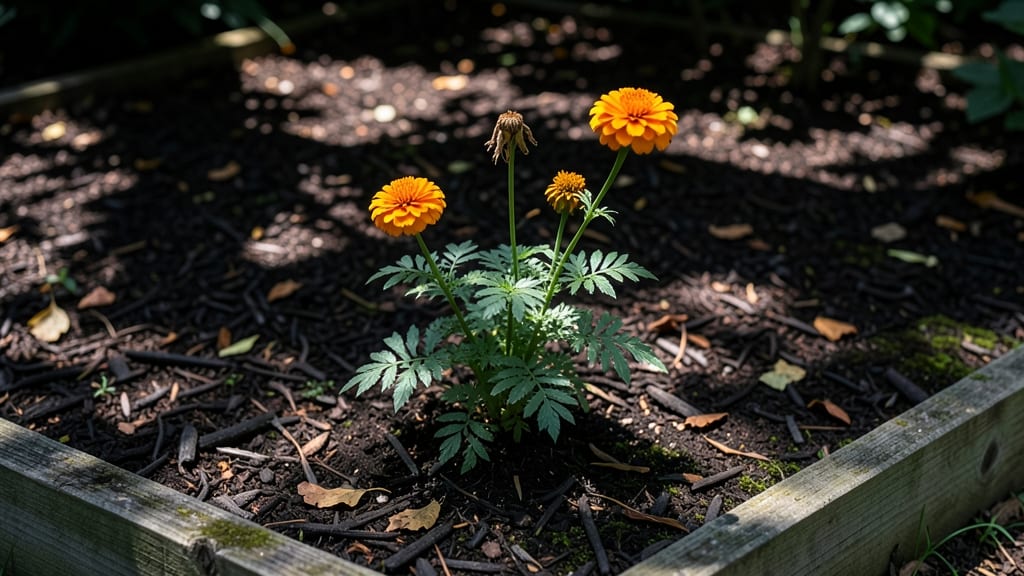
Marigolds can grow in shade but thrive best in full sun, producing fewer blooms and slower growth under low-light conditions. Partial shade (4-6 hours of sunlight) is ideal for healthier plants and vibrant flowers.
Marigolds are famously sun-loving annuals, but they can adapt to shadier spots when given the right conditions. 🌱 The trade-off? Less sunlight means fewer blooms and leggier stems, as the plant stretches toward whatever light it can find.
I’ve seen marigolds in dappled shade still produce flowers, but they’ll never match the abundance of those basking in full sun. For best results, choose shade-tolerant varieties like 'Bonanza' series or 'Crackerjack'—these handle partial shade better than standard types.
What makes this tricky is that marigolds need light for photosynthesis, the process that fuels their growth and flower production.
Without enough light, they’ll focus energy on leafy growth instead of blooms, and their stems may weaken. 🌿 If you’re working with limited light, prioritize well-draining soil, consistent watering, and a balanced fertilizer to help compensate.
Even in shade, marigolds can still add color to your garden—just manage expectations about their performance.
💡 In This Article
- How Shade Affects Marigold Growth and Flower Production
- Best Shade-Tolerant Marigold Varieties for Low-Light Gardens
How shade affects marigold growth and flower production
Marigolds rely on sunlight to power their photosynthesis engine, where chlorophyll captures energy to convert carbon dioxide and water into glucose—the plant's fuel.
In shade, this process slows dramatically because light intensity drops by 50-70% compared to full sun. 🌿 With less energy, marigolds prioritize basic survival over flower production, often producing 30-50% fewer blooms than sun-exposed counterparts.
The leaves may also develop a paler green hue due to reduced chlorophyll synthesis, making them less vibrant and more susceptible to pests.
Shade triggers another critical response: stem elongation. When marigolds can't reach adequate light, they stretch upward in a phenomenon called etiolation, producing taller, weaker stems that flop under their own weight. This is why shade-grown marigolds often need staking or support.
The roots also become shallower as the plant focuses energy on reaching light rather than establishing a deep network. In extreme cases, marigolds may even revert to a more vegetative state, producing mostly leaves with sporadic flowers.
The flowering cycle itself gets disrupted in shade. Marigolds are short-day plants, meaning they bloom in response to decreasing daylight hours.
In shaded conditions, their internal clock (controlled by phytochrome pigments) gets confused, delaying or reducing flower initiation. 🌼 You might see buds form but fail to open fully, or flowers may drop prematurely.
The energy that would normally go toward vibrant petals gets diverted to basic stem and leaf maintenance instead.
Temperature plays a hidden role here too. Shaded areas often stay cooler and more humid, which can slow down photosynthesis further. Marigolds prefer 65-75°F for optimal growth, but temperatures below 60°F in shade can stall development entirely.
The good news? Morning sun (even just 2-3 hours) can make a huge difference by jumpstarting photosynthesis while avoiding the harsh afternoon heat that full sun brings.
Even in shade, marigolds can still thrive with the right adjustments. The key is balancing light deprivation with proper care: richer soil (compost-amended), 1-2 inches of water per week, and a balanced 10-10-10 fertilizer every 4-6 weeks can compensate for lost energy.
Varieties like 'Bonanza' marigolds handle shade better because their genetics allow for more efficient light use, but they'll never outperform their sun-loving cousins.
What most gardeners don't realize is that marigolds in shade develop a different growth strategy.
Instead of the bushy, compact forms seen in full sun, they grow more sprawling with larger leaves—almost like a survival adaptation. 💫 This makes them useful as ground covers in shaded borders, though they'll never reach their full ornamental potential. The trade-off is clear: shade marigolds are survivors, not showstoppers.