
Light Requirements
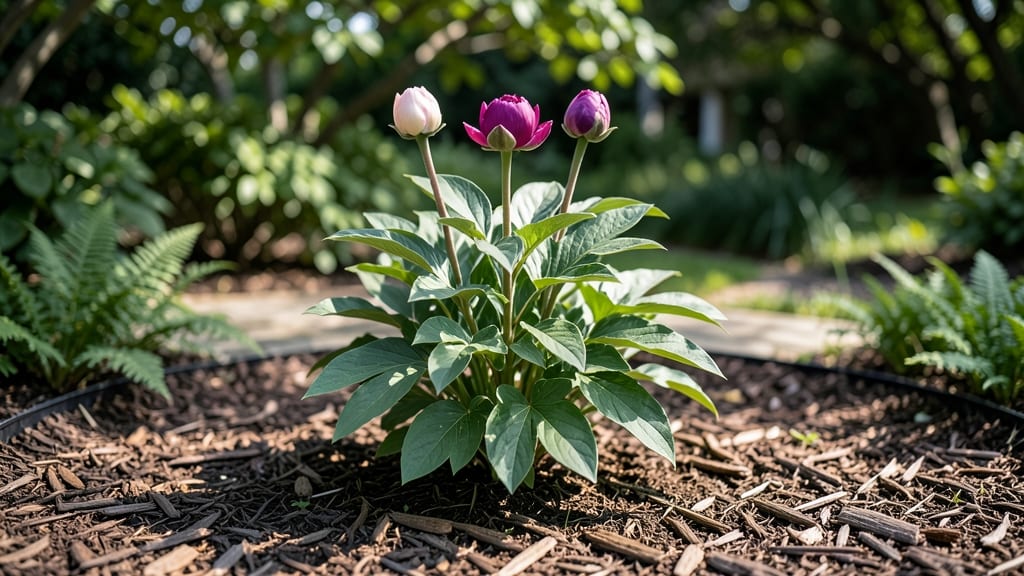
Peonies can grow in shade but need at least 4–6 hours of sunlight daily for optimal blooms. Varieties like Paeonia lactiflora and Paeonia officinalis handle partial shade better, though flowers may be smaller or less vibrant without sufficient light.
Peonies are famously sun-loving plants, but their ability to adapt to shade comes down to variety and light exposure balance. 🌿 While they can survive with less sunlight, the trade-off is often fewer blooms or paler petals.
I’ve seen Sarah Bernhardt peonies produce stunning flowers in dappled shade, though they still need some direct light to fuel their energy demands. The key is finding the right spot—too much shade shifts their focus from blooming to leafy growth, while too little sun weakens their overall structure.
For gardeners with shady spots, focus on Paeonia lactiflora hybrids, which are the most shade-tolerant. These varieties often bloom later in the season, giving them a slight advantage in low-light conditions. Pairing peonies with taller plants can also help filter harsh afternoon sun while maintaining enough light for healthy growth.
Just remember: even shade-tolerant peonies will reward you best when they get a few hours of bright, indirect light each day.
💡 In This Article
- How Shade Affects Peony Growth and Bloom Quality
- Best Low-Light Peony Varieties for Shady Gardens
How shade affects peony growth and bloom quality
Peonies rely on photosynthesis to produce energy for both their lush foliage and spectacular blooms. In full sun, their leaves can absorb 12-15 hours of light daily, converting sunlight into glucose at a rate that supports both root development and flower production.
When you reduce light exposure to less than 4 hours, the plant shifts its energy priorities—prioritizing leaf growth over flower buds. This is why shade-grown peonies often produce fewer, smaller blooms, as their energy is diverted to maintaining larger leaves for photosynthesis in dimmer conditions. 🌿
The color intensity of peony petals also suffers in shade. Anthocyanins, the pigments responsible for vibrant reds, pinks, and purples, require strong light to develop fully. In low-light conditions, these pigments become diluted, resulting in pastel shades that lack the boldness of sun-grown flowers.
For example, a deep crimson variety like 'Coral Charm' might appear more like a muted rose in heavy shade. Even the texture of the petals can change—sun-exposed blooms have firmer, more substantial petals, while shade-grown flowers may appear thinner and more delicate.
Root development is another critical factor affected by shade. Peony roots need energy to establish deep, strong networks that anchor the plant and store nutrients. In insufficient light, roots grow more slowly and shallowly, making the plant more susceptible to stress from weather changes or competition from surrounding plants.
This is why shade-tolerant varieties like Paeonia lactiflora 'Sarah Bernhardt' (a double pink bloom) often require 2-3 years longer to reach full maturity compared to sun-loving varieties planted in optimal conditions.
Not all shade is equal, however. Dappled shade—where sunlight filters through trees—is far more forgiving than dense, deep shade from evergreens or tall structures. The intermittent light allows for brief photosynthesis bursts that keep the plant healthier.
For instance, peonies under morning sun with afternoon shade (like near a north-facing wall) often perform better than those in all-day shade. The cooler temperatures of afternoon shade also help prevent leaf scorch, a common issue in hot, full-sun climates.
Temperature plays a hidden role in shade tolerance. Cooler microclimates under trees can extend the growing season for peonies, allowing them to photosynthesize for longer periods.
However, if the shade is too dense, the soil may stay cooler and wetter for extended periods, increasing the risk of fungal diseases like botrytis blight. This is why well-draining soil is essential for shade-grown peonies—it prevents waterlogged roots that can suffocate the plant even in low-light conditions. 🌱
Consider this comparison: A Paeonia officinalis variety like 'Duchesse de Nemours' (a classic double pink) might produce 50-70 blooms per plant in full sun, but only 10-20 blooms in heavy shade. The difference isn't just quantity—it's also quality.
Shade-grown blooms often have a shorter vase life (lasting 3-5 days vs. 7-10 days in sun) and may not develop the same fragrant oils that make peonies so beloved. The trade-off is clear: more shade means more foliage but fewer, less vibrant flowers.