
Light Requirements
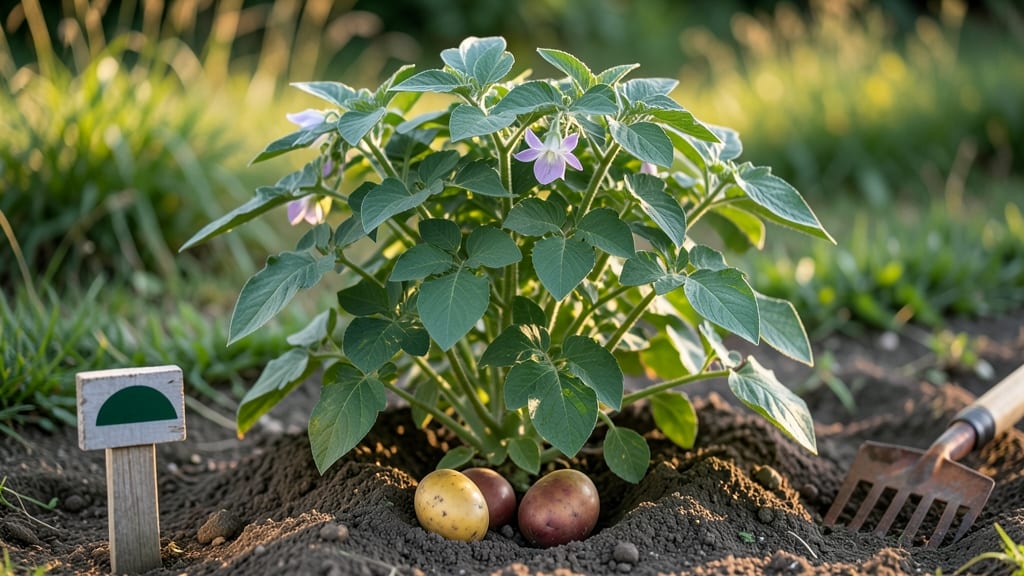
Growing potatoes in shade is possible but yields will be significantly smaller, as they need at least 4-6 hours of sunlight daily to develop properly. Opt for shade-tolerant varieties like 'Yukon Gold' or 'Red Pontiac' and ensure well-draining soil with partial sunlight exposure.
Potatoes thrive on sunlight because their tubers rely on photosynthesis to store energy. When grown in shade, plants divert less energy to tuber development, resulting in fewer and smaller harvests. 🌱 However, with the right variety and soil conditions, you can still achieve a modest yield.
I’ve found that container gardening works well for shade-loving potatoes—just place them near a window or under dappled tree cover where they can catch indirect light.
For best results, pair shade-tolerant potatoes with leafy greens like spinach or lettuce, which also prefer lower light. The key is monitoring soil moisture—shady conditions can slow evaporation, so avoid overwatering.
With patience and the right approach, you’ll get a harvest, just not the bumper crop you’d expect in full sun.
💡 In This Article
- How Shade Affects Potato Growth and Tuber Development
- Best Shade-Tolerant Potato Varieties for Low-Light Gardens
How shade affects potato growth and tuber development
Potatoes are energy-hungry plants that rely on photosynthesis to convert sunlight into starch stored in their tubers. When grown in shade, they receive 30-50% less light than in full sun, which directly limits their ability to produce chlorophyll.
This reduction forces the plant to prioritize leaf and stem growth over tuber development, since leaves are more efficient at capturing whatever limited light is available. 🌿 In full sun, a mature potato plant can produce 2-3 pounds of tubers per square foot, while in shade, that yield drops to just 0.5-1 pound—sometimes even less.
The science gets even more interesting when you consider how shade affects starch production. Potatoes store energy as starch in their tubers, which requires significant sunlight exposure.
In low-light conditions, the plant's metabolic processes shift toward producing more sugars in the leaves (which are easier to synthesize with limited light) rather than converting them into starch. This is why shade-grown potatoes often taste slightly sweeter but lack the dense, fluffy texture of sun-grown varieties.
The tuber formation process itself also slows—what normally takes 90-120 days in full sun may stretch to 140+ days in shade, with smaller, misshapen tubers.
What most gardeners don't realize is how shade impacts the plant's root system. In full sun, potatoes develop deep, extensive root networks that can reach 12-18 inches below the soil surface, creating ideal conditions for tuber formation. In shade, these roots become shallow and sparse, limiting where tubers can develop.
This is why shade-grown potatoes often cluster near the surface—sometimes even breaking through the soil—rather than forming the deep, uniform harvests you'd expect from sun-exposed plants. The foliage also becomes leggy and pale, a classic sign of light deprivation that signals the plant is struggling to meet its energy needs.
There's one silver lining: shade can actually improve potato quality in certain ways. The reduced light stress means fewer green spots (which contain solanine, a toxic compound) and a lower risk of sunburn on the tubers.
However, this comes at a cost—shade-grown potatoes typically have 30-40% less dry matter (the starchy, edible portion) compared to their sun-grown counterparts.
For example, a Yukon Gold potato from full sun might have 20% dry matter, while one from shade could drop to just 12-14%, making them less ideal for baking or frying where starch content matters most.
To visualize the difference, imagine two potato plants side by side: one basking in 6+ hours of direct sunlight and the other receiving only 3-4 hours of dappled light. The sun-exposed plant will develop thick, sturdy stems with 5-7 tubers per plant, each weighing 4-6 ounces.
The shade plant, meanwhile, might produce 2-3 tubers that weigh only 1-2 ounces each, with a higher proportion of inedible stem tissue.
The contrast is striking when you compare their growth rates—sun-grown plants can add 1 inch of stem per week, while shade plants might manage just 0.5 inches.
If you're growing potatoes in shade, the key is to maximize what little light they do receive. Position containers on south-facing windowsills or under 40-50% shade cloth to filter harsh light while still allowing photosynthesis. Mulching with straw helps maintain soil warmth, which compensates slightly for the lack of sunlight.
And remember: even shade-tolerant varieties won't thrive without at least 4 hours of indirect light daily—any less, and you're essentially asking the plant to perform a miracle with limited resources. 💡