
Light Requirements
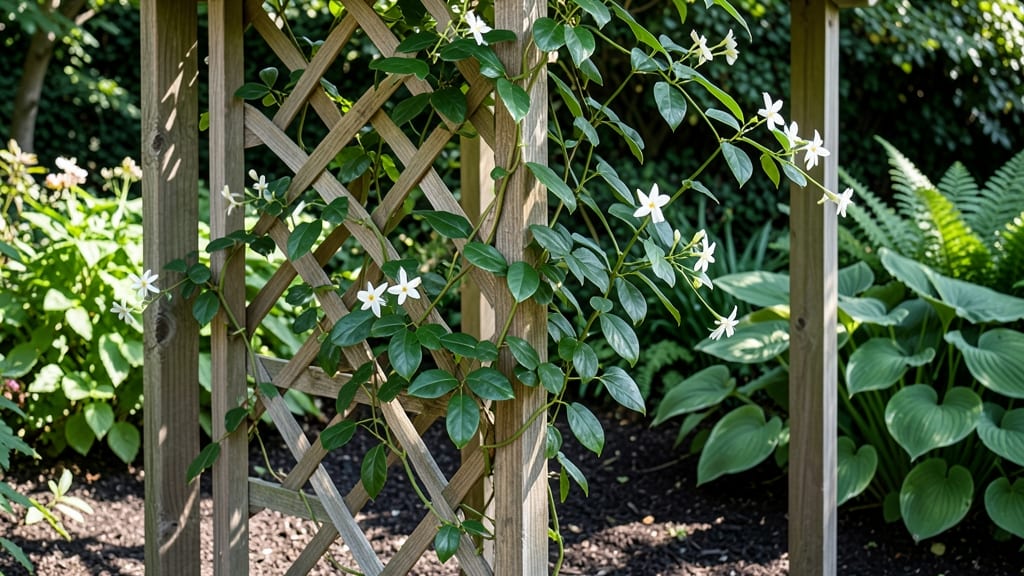
Star jasmine can grow in shade but thrives best in partial shade or dappled sunlight, producing fewer flowers and slower growth in deep shade. Choose a north- or east-facing spot for optimal results with minimal leaf drop.
While star jasmine adapts to shadier conditions, its growth and flowering habits change noticeably. 🌿 In deep shade, expect lush green leaves but sparse blooms, as the plant diverts energy toward leaf production instead of flowers.
I’ve seen star jasmine survive in east-facing windows or under tall trees, though the stems may become leggy without enough light. The key is balance—too little light weakens the plant, while too much direct sun can scorch delicate foliage.
For best results, aim for morning sun with afternoon shade or filtered light through sheer curtains. A north-facing wall often works well, as it provides gentle, indirect light without harsh afternoon rays.
If your space is fully shaded, consider supplementing with a grow light during the plant’s active growing season to encourage healthier blooms and stronger stems.
💡 In This Article
- How Shade Affects Star Jasmine Flowering and Leaf Health
- Best Shade Solutions for Star Jasmine Growth and Blooms
How shade affects star jasmine flowering and leaf health
Star jasmine (Trachelospermum jasminoides) relies on photosynthesis to convert light into energy, but its chlorophyll adapts differently under shade. In low-light conditions, the plant produces more chlorophyll to capture whatever light is available, which is why leaves often appear darker green in shady spots.
However, this adaptation comes at a cost: the plant prioritizes leaf production over flowering, as energy is diverted to maintaining larger, thicker foliage. 🌿 This is why star jasmine grown in deep shade may produce only a fraction of the fragrant white blooms it would in brighter conditions.
The trade-off becomes clear when comparing growth habits.
Under 4-6 hours of indirect light (like a north-facing window), star jasmine typically grows at a moderate pace with occasional blooms, while in full shade (less than 2 hours of light daily), growth slows significantly, and stems may become weak and leggy.
The plant’s natural climbing habit can also suffer, as vines stretch excessively toward any available light source, leading to a sparse, unruly appearance. This is why gardeners often notice star jasmine thriving in partial shade—where it gets morning sun and afternoon shade—rather than deep shade.
Deep shade also weakens the plant’s structural integrity. Star jasmine’s stems contain less lignin (a woody polymer) when grown in low light, making them more prone to snapping under their own weight or in windy conditions.
The leaves may also develop a thinner texture, losing their characteristic glossy finish. 💫 To mitigate this, supplementing with artificial grow lights (especially in winter) can help maintain stem strength and encourage blooming, even in shady environments.
Another critical factor is humidity. Shady areas often retain more moisture, which can lead to fungal issues like powdery mildew if airflow is poor. Star jasmine’s delicate leaves are particularly susceptible to this problem, so ensuring good circulation—through pruning or strategic placement—is essential.
In my experience, star jasmine grown in dappled sunlight (like under a tree with sparse canopy) strikes the best balance: it retains its vibrant foliage while still producing a reasonable number of flowers.
For those growing star jasmine in containers, the light requirements become even more critical. A pot-bound plant in deep shade will struggle to develop a strong root system, limiting its ability to absorb nutrients and water efficiently.
This often results in yellowing leaves (a sign of nutrient deficiencies) and stunted growth. To counteract this, rotate containers periodically to ensure even light exposure and consider using a well-draining, nutrient-rich potting mix to support root health.
The science behind this involves the plant’s photoperiodism—the way it responds to light duration. Star jasmine, like many flowering plants, requires a certain threshold of light to trigger blooming.
In deep shade, this threshold isn’t met, so the plant remains in a vegetative state. 🌟 By understanding these mechanisms, you can make informed decisions about where to place your star jasmine—whether in a shady corner of your garden or a partially shaded patio—to maximize its potential.