
Light Requirements
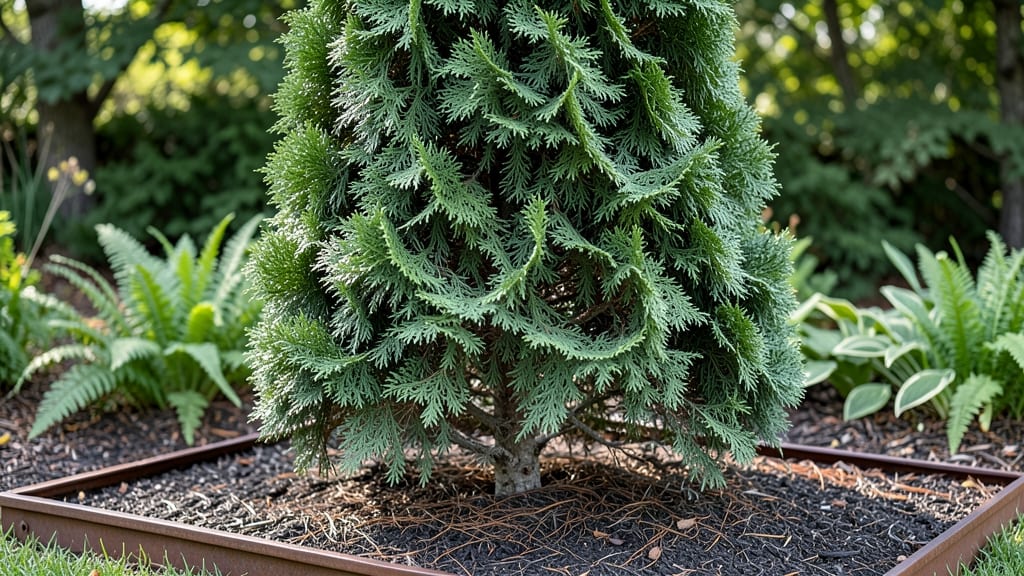
Thuja can grow in shade but thrives best in partial shade to full sun, with slower growth and reduced foliage density in deep shade. Choose compact varieties like 'Smaragd' or 'Techny' for shaded areas, and ensure well-draining soil to prevent root rot in low-light conditions.
While Thuja plants can survive in shaded areas, their growth rate and foliage density take a noticeable hit when light levels drop. 🌿 The key is finding the right balance—too little light means sparse branches and leggy growth, while even partial shade helps maintain a fuller appearance.
I’ve seen 'Smaragd' thrive in dappled shade, where it keeps its signature compact shape but grows about 25% slower than in full sun. For deep shade spots, focus on dwarf varieties and supplement with occasional pruning to encourage bushier growth.
What’s interesting is how Thuja responds to light changes over time. Younger plants adapt better to shade than mature ones, so if you’re planting in a low-light area, give them a few years to establish before expecting full coverage. 💫 The trade-off?
Shade-tolerant Thuja may need extra care against fungal issues, so always prioritize airflow and avoid overwatering.
💡 In This Article
- How Light Levels Affect Thuja Growth and Health
- Best Thuja Varieties for Shaded Gardens
How light levels affect Thuja growth and health
Thuja, like all evergreens, relies on photosynthesis to produce energy, but its efficiency drops significantly in low-light conditions. In full sun, Thuja can produce up to 20-30% more chlorophyll than in deep shade, which directly impacts its ability to convert sunlight into energy.
When light levels fall below 30% of full sun (equivalent to dappled shade under tall trees), the plant's metabolic rate slows, leading to reduced needle density and slower growth.
This is because chlorophyll production declines, forcing the plant to allocate more energy to maintaining existing foliage rather than producing new growth.
The visual difference is striking: Thuja grown in partial shade (40-60% sunlight) maintains a lush, dense appearance with vibrant green needles, while those in deep shade (20% sunlight or less) often develop sparse branches and elongated stems—a condition called "etiolation."
I've noticed this in Thuja occidentalis 'Smaragd', where shaded plants grow 1-2 feet shorter over 5 years compared to sun-exposed counterparts. The needles also become thinner and less aromatic, losing some of their signature piney scent.
Low-light conditions also weaken Thuja's natural defenses, making it more susceptible to pests like spider mites and diseases such as cytospora canker. In shaded areas, moisture lingers longer on foliage, creating ideal conditions for fungal growth.
To mitigate this, I recommend spacing plants 3-5 feet apart to improve airflow and avoiding overhead watering. Pruning in late winter can also stimulate denser growth by redirecting energy to new shoots rather than stretching toward distant light sources.
Interestingly, Thuja's root system adapts to shade by growing wider rather than deeper. This helps the plant access more nutrients in the upper soil layers, but it also makes the roots more vulnerable to waterlogging.
In shaded gardens, well-draining soil with a pH of 6.0-7.5 is critical to prevent root rot—a common issue when excess moisture combines with limited sunlight. Adding organic matter like compost can improve soil structure and microbial activity, which indirectly supports the plant's energy production.
For gardeners in shaded areas, the key is to choose varieties bred for tolerance. 'Techny' (Thuja occidentalis) and 'Atrovirens' (Thuja plicata) are two standouts, as they maintain better needle retention and growth rates in low light.
These cultivars have evolved to thrive in 30-50% sunlight, making them ideal for understory plantings or north-facing gardens. Even in these conditions, expect growth rates to be 30-50% slower than in full sun, but the trade-off is a healthier, more compact plant.
One final tip: If you're planting Thuja in a shaded spot, consider supplementing with reflective mulch or nearby light-colored surfaces (like gravel or light-colored stones).
These can bounce 10-15% more light onto the foliage, giving the plant a subtle energy boost without direct sun exposure. 🌿 This small adjustment can make a noticeable difference in needle density and overall vigor.