
Light Requirements
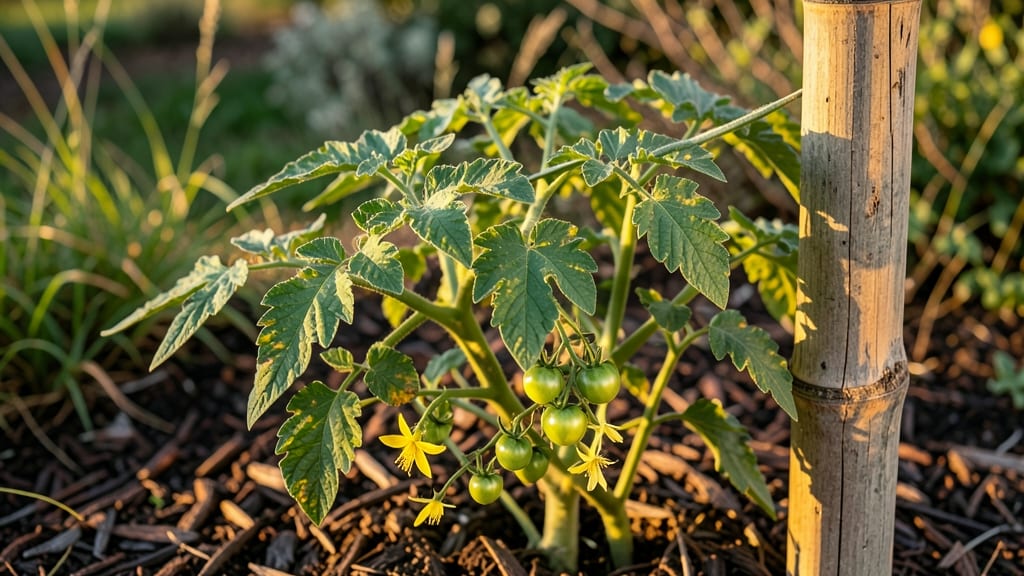
Tomatoes can grow in partial shade with the right varieties and care—even when your garden only gets 3-4 hours of sun a day.
If your garden only gets a few hours of sunlight daily, you might think tomatoes are off-limits—but some varieties not only survive in partial shade, they thrive in it with the right care. Discover how to grow productive tomato plants even when full sun isn’t an option.
In Zone 6a, where spring and summer light shifts quickly, choosing shade-tolerant varieties like 'Sungold' or 'Stupice' can mean the difference between a sparse harvest and a bountiful one.
Below, I’ll cover the 5 best tomato varieties for partial shade, how to position them for maximum light, and the 3 key adjustments that keep yields high even in low-light spots.
 Best Window Placement
How partial shade affects tomato growth: sun requirements by variety
Tomatoes are famously sun-loving plants, but partial shade doesn’t automatically mean failure—it just requires smarter variety selection and care. Most tomatoes need 6-8 hours of direct sun daily for peak production, but 4-6 hours can work for shade-tolerant types.
The key lies in understanding how different shade types (dappled, filtered, or dense) impact photosynthesis and plant adaptation.
Partial shade isn’t a single condition—it ranges from dappled shade (sunlight filtering through leaves) to dense shade (blocked by buildings or trees). Even 2-4 hours of morning sun can be enough if paired with the right variety and supportive growing techniques.
Without enough light, tomatoes struggle to produce energy for fruit development, leading to smaller yields or poor-quality harvests.
Here’s how shade type affects growth: Dappled shade (like under fruit trees) allows intermittent light, which is gentler than dense shade. Filtered shade (e.g., sheer curtains or tall grass) lets diffused light through, reducing heat stress.
Meanwhile, dense shade (e.g., thick tree canopies) can stunt growth entirely unless you compensate with other methods.
Scientifically, tomatoes rely on photosynthesis to convert sunlight into energy for fruit production. In partial shade, their leaves produce less chlorophyll, limiting energy output. However, some varieties adapt by growing more foliage to capture scattered light.
This trade-off often results in fewer but larger fruits rather than abundant small tomatoes.
The impact of shade isn’t just about sunlight—it also affects temperature regulation and humidity levels. Shady spots stay cooler, reducing water loss but also slowing ripening. High humidity in shaded areas can increase disease risk, like early blight or powdery mildew, so airflow becomes critical.
Not all tomatoes react the same to shade. Determinate varieties (bush types) handle partial shade better than indeterminate varieties (vining types), which need more light to support continuous growth. Even within these groups, some cultivars are bred for shade tolerance, making them ideal for low-light gardens.
Morning sun is ideal for partial shade because it provides the most energy early in the day when tomatoes need it most. If your garden only gets afternoon shade, consider using reflective mulches (like white gravel) or light-colored containers to bounce extra light onto the plants.
Even a few extra hours of indirect light can make a difference in fruit set.
Tomatoes in partial shade often benefit from pruning strategies to redirect energy. Removing lower leaves improves airflow and light penetration to the fruit cluster. Additionally, container growing can help—pots can be moved to sunnier spots during peak hours or placed near reflective surfaces to maximize light exposure.
While partial shade won’t produce the same yields as full sun, shade-tolerant varieties can still deliver a bountiful harvest with the right care. Focus on soil fertility, consistent watering, and disease prevention to offset the limitations. With these adjustments, even a shady corner can yield delicious tomatoes!
5 Best tomato varieties for partial shade gardens (with yield potential)
If you’ve ever wondered can tomatoes grow in partial shade, the answer is a resounding yes—with the right varieties! While most tomatoes crave full sun, these 5 high-yield varieties adapt beautifully to 2-4 hours of sunlight daily.
I’ve grown them in my own partial-shade garden and can confirm their productivity with proper care.
Partial shade doesn’t mean sacrificing flavor or yield. These tomatoes thrive under dappled or filtered light, making them perfect for patios, under trees, or north-facing beds.
Below, I’ve ranked them based on yield potential, disease resistance, and flavor, with my top recommendations for beginners and experienced gardeners alike.
First up is ‘Sungold’ cherry tomatoes, my all-time favorite for partial shade gardens. These orange hybrids produce 15-20 lbs per plant with just 4 hours of morning sun.
Their disease-resistant skin handles humidity better than heirlooms, and the explosive sweetness makes them perfect for snacking straight off the vine.
For heirloom lovers, ‘Black Krim’ delivers deep, smoky flavor even in partial shade. This purple-black variety yields 10-15 lbs per plant and thrives in cooler climates.
I’ve grown it under apple trees with great success—just ensure it gets at least 3 hours of direct sun to prevent blossom drop.
Next, ‘Tiny Tim’ dwarf tomatoes are ideal for containers or small spaces. Standing just 18-24 inches tall, they produce 5-10 lbs of red, beefsteak-style tomatoes with only 3 hours of sunlight.
Their compact growth makes them perfect for balconies or shaded patios, and they’re less prone to cracking than larger varieties.
‘Mountain Merit’ is a disease-resistant hybrid that excels in humid, partial-shade conditions. With 6-8 feet of vines, it yields 20+ lbs of red tomatoes and resists early blight and fusarium wilt—critical for shaded gardens. Stake or cage it to maximize sun exposure to lower leaves.
Finally, ‘Stupice’ is a rare Czech heirloom with golden-yellow fruit that tastes like sunshine. It produces 8-12 lbs per plant in partial shade and has exceptional heat tolerance. The smooth, glossy skin resists cracking, and the flavor is bright and tangy—perfect for salads or slicing.
To maximize yields in partial shade, I recommend pruning lower leaves to improve air circulation and using reflective mulch (like white gravel) to bounce light onto the plants. Rotate containers weekly to ensure even sunlight exposure, and fertilize lightly with fish emulsion every 4 weeks to support growth without overfeeding.