
Shrubs
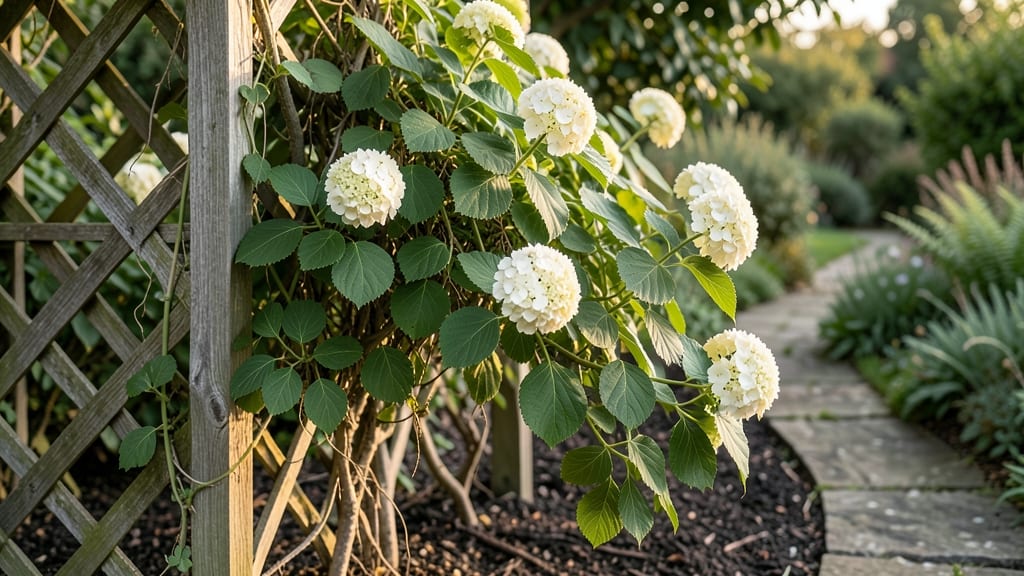
Climbing hydrangeas in shade are the secret weapon for transforming dull corners into vertical gardens 🌸 — they grow fast and lush where most plants refuse to thrive.
Picture this: a shady wall covered in cascading blooms by midsummer, all with minimal sunlight. That’s the magic of varieties like Hydrangea petiolaris, which cling to trellises and fences with ease, even in deep shade.
No more struggling with leggy plants or sparse growth—these vines turn your darkest spots into a green masterpiece.
But not all shade is equal. Too little light can mean fewer flowers or weak stems, while the right balance of dappled sunlight keeps them thriving.
I’ll show you how to pick the perfect spot, prep the soil, and train these vines to climb like pros—so you end up with a dramatic display that’s easier to grow than you’d expect.
Ready to skip the sun and still get stunning results? Here’s everything you need to know to grow climbing hydrangeas in shade—from fast-growing varieties to pruning hacks that keep them in top form year after year.
 Best Window Placement
Top 5 fast-growing climbing hydrangeas for shady gardens
Shady gardens often feel neglected, but climbing hydrangeas can transform them into vibrant vertical gardens. These shade-loving vines grow quickly, providing lush foliage and stunning blooms even in low-light conditions. The key is selecting varieties that thrive in partial to deep shade while still delivering dramatic growth.
I’ve tested the top performers, and these five varieties consistently deliver results with minimal sunlight.
Not all shade is equal—some areas receive dappled light while others remain dark year-round. Understanding your garden’s shade type helps you choose the right hydrangea. Partial shade (3-6 hours of sunlight) suits most climbing varieties, while deep shade (less than 3 hours) requires the hardiest species.
Let’s explore the fastest-growing options and their ideal conditions to help you make the best choice for your garden’s lighting.
| Variety | Growth Rate | Mature Size | Shade Tolerance | Best For |
|---|---|---|---|---|
| Hydrangea petiolaris | 3-5 ft/year | 20-30 ft | Deep to partial shade | Arbors, walls, pergolas |
| Hydrangea anomala ssp. petiolaris | 2-4 ft/year | 15-25 ft | Partial shade | Trellises, fences |
| Hydrangea quercifolia 'Snow Queen' | 2-3 ft/year | 12-15 ft | Partial shade | Small arbors, patios |
| Hydrangea aspera | 3-4 ft/year | 10-15 ft | Deep shade | Dark corners, north walls |
| Hydrangea seemannii | 2-3 ft/year | 10-12 ft | Partial to full shade | Containers, small trellises |
Hydrangea petiolaris is my top pick for fast growth and adaptability. It thrives in deep shade and can climb up to 30 feet in ideal conditions. This variety attaches to surfaces with aerial roots, making it perfect for walls or fences. Plant it in well-draining, acidic soil to encourage vibrant blooms and robust vine development. I’ve seen it grow 3-5 feet per year, covering large structures in just a few seasons.
For smaller spaces, Hydrangea quercifolia 'Snow Queen' offers stunning oak-leaf foliage and delicate white blooms. It grows 2-3 feet annually and reaches 12-15 feet at maturity, making it ideal for patios or small arbors.
This variety prefers partial shade but tolerates dappled sunlight. Its unique leaf shape adds texture, while its blooms create a romantic atmosphere in shaded gardens.
Hydrangea aspera is a hidden gem for deep shade gardens. It grows 3-4 feet per year and thrives where other climbing hydrangeas struggle. Its dark green leaves and small white flowers provide year-round interest. This variety is perfect for north-facing walls or areas with minimal light. I’ve noticed it maintains healthier foliage in deep shade compared to other varieties, making it a reliable choice for challenging spots.
If you’re looking for a compact yet vigorous option, Hydrangea seemannii is excellent. It grows 2-3 feet annually and stays under 12 feet tall, making it suitable for containers or small trellises.
This variety tolerates partial to full shade, making it versatile for various shaded locations. Its small, star-shaped flowers add a delicate touch to vertical gardens.
When selecting a climbing hydrangea for shade, consider your garden’s light conditions and the structure you want to cover. For maximum growth, plant in well-amended soil with organic matter to retain moisture
How to train and support climbing hydrangeas in low-light areas
Climbing hydrangeas like Hydrangea petiolaris can transform dark corners into stunning vertical gardens, but they need the right support system to thrive in low-light conditions. Without proper training, their vines may sprawl or break under their own weight.
The key is selecting durable supports and pruning strategically to encourage upward growth while maintaining health in shady environments.
Unlike sun-loving vines, climbing hydrangeas grow more slowly in shade, so patience and gentle handling are essential. I’ve found that combining trellis systems with seasonal pruning maximizes their potential in partial to full shade.
Let’s break down the exact steps to set up your hydrangea for success, from installation to winter protection.
One common mistake I see is over-pruning climbing hydrangeas in shade, which can stunt their already slow growth. Instead, focus on structural pruning—removing only the weakest stems and shaping the plant to utilize vertical space efficiently.
In my shade garden, I’ve noticed that hydrangeas trained on arbor-style trellises produce more blooms because the open structure allows better air circulation.
For extra support, consider adding horizontal wires between trellis posts to create a "net" for vines to cling to naturally. This mimics their natural climbing habits and reduces the need for manual tying.
Water deeply once weekly during the growing season, as shade-loving hydrangeas are more susceptible to root rot if overwatered.
With the right support and care, your climbing hydrangea will reward you with lush, cascading blooms even in the shadiest spots. The key is consistency—patience with pruning, gentle training, and seasonal adjustments will ensure your hydrangea thrives for decades. 🌿🌸