
Light Requirements
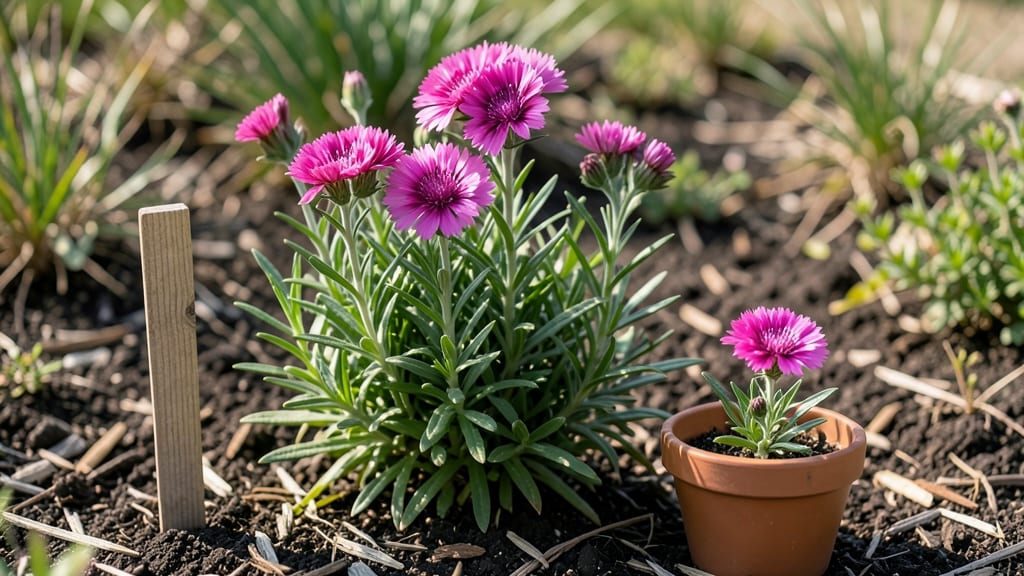
Dianthus thrives in full sun or shade, but picking the right spot and variety unlocks year-round blooms that last from spring to fall.
Struggling to keep your dianthus blooming vibrantly? These hardy perennials thrive in both full sun and shade—but choosing the right variety and care approach makes all the difference for year-round color.
In hotter zones like 6a, afternoon shade prevents wilting, while cooler climates benefit from morning sun to kickstart growth. The key is matching your location and light to the right dianthus type—whether it’s sun-loving ‘Firewitch’ or shade-tolerant ‘Mystic Tides’.
Below, I’ll break down the best varieties for each condition, soil tricks to maximize blooms, and how to adjust watering so your dianthus stays lush no matter where you plant it.

Best dianthus varieties for full sun vs shade conditions
Dianthus plants are prized for their fragrant blooms and versatile light needs, making them perfect for sun-drenched borders or shady garden nooks. The key to vibrant blooms lies in selecting the right variety for your light conditions.
While some varieties thrive under 6+ hours of direct sun, others gracefully tolerate partial shade—especially in hotter climates where afternoon sun can scorch delicate foliage.
I’ve grown dianthus in both full sun and shade gardens, and the difference in color intensity and bloom duration is striking. For example, 'Firewitch' dianthus bursts with fiery red blooms when planted in full sun, while 'Mystic Tides' showcases its soft lavender hues beautifully in partial shade.
Let’s explore the best varieties for each condition so you can choose the perfect match for your garden.
🌱 Tip: Always check your local USDA hardiness zone (like zone 6a) when selecting varieties—some shade-tolerant types may struggle in extreme heat.
For full sun gardens, prioritize varieties like 'Firewitch' and 'Scarlet Beauty', which produce the most vibrant blooms when exposed to direct sunlight. These types thrive in well-draining soil and benefit from morning sun with afternoon shade in hot climates to prevent leaf scorch.
I’ve seen 'Firewitch' maintain its deep red color for weeks longer in full sun compared to partial shade.
In shade gardens, opt for 'Mystic Tides' or 'Moonlight', which excel in 3-6 hours of filtered light.
These varieties often rebloom more frequently in shade because they avoid the stress of intense afternoon heat. Cheddar Pink is my go-to for transitional lighting—it handles both sun and shade but truly shines in morning sunlight.
Pro tip: If your garden has mixed light conditions, try container gardening to move plants between sun and shade as needed. For example, place 'Firewitch' in a south-facing pot in the morning and move it to shade by afternoon. This flexibility ensures year-round blooms regardless of your garden’s layout.
Color performance varies dramatically with light. In full sun, expect brighter, more saturated hues, while shade-grown dianthus often develop softer pastels with longer stems. For instance, 'Mystic Tides' in shade may produce 20% more blooms than in full sun, though each flower will be slightly less intense.
Balance your garden’s aesthetic goals with light availability!
When selecting varieties, also consider your local climate. In hot, dry regions (like zone 8b), shade-tolerant types like 'Moonlight' will outperform sun-lovers. Conversely, in cooler zones (6a-7a), full-sun varieties can handle more direct light without stress. Always test a small batch before committing to full garden beds.
🌿 Remember: Even shade-loving dianthus need some sunlight—at least 3 hours daily—to prevent leggy growth and weak stems. Rotate containers occasionally to ensure even light exposure.
How to maximize blooms: soil, water, and pruning tips for sun or shade
Your dianthus plants can produce stunning, long-lasting blooms—but only if you tailor their care to their light exposure. Whether basking in full sun or thriving in partial shade, these perennials need precise adjustments to soil, water, and pruning.
Let’s break down the exact steps to keep your dianthus flowering nonstop, regardless of where you plant them.
First, let’s address the biggest myth: dianthus can handle both sun and shade, but not equally. Sun-loving varieties like 'Firewitch' need 6+ hours of direct light to prevent leggy growth, while shade-tolerant types like 'Mystic Tides' will scorch in harsh afternoon rays.
Your soil, watering schedule, and pruning technique must adapt to these differences.
- 🌱 Soil pH: Aim for 6.0-7.0—test and amend with lime (for acidic) or sulfur (for alkaline) soil.
- ☀️ Sun Care: Water deeply once weekly in full sun; mulch to retain moisture and prevent root stress.
- 🌳 Shade Care: Water every 5-7 days—shade retains moisture longer, so avoid soggy soil.
- ✂️ Pruning Tip: Deadhead spent blooms weekly to redirect energy to new flowers; trim 1/3 of stems post-bloom for bushier growth.
- 🌿 Fertilizer: Use balanced 5-10-10 fertilizer every 4-6 weeks in spring/summer; skip fall/winter feedings.
For full-sun dianthus, prioritize well-draining soil with added sand or gravel to prevent root rot. These plants love heat but hate soggy feet—amend clay soil with compost and perlite to improve aeration. In hot climates, provide afternoon shade to protect delicate petals from fading.
In shade conditions, focus on organic matter like leaf mold or peat moss to enrich the soil. Shade-loving dianthus varieties need more frequent watering because shade slows evaporation, keeping soil damp longer.
Always water at the base of the plant to avoid wetting foliage, which can lead to fungal issues.
Pruning is where light exposure really matters. In full sun, prune aggressively after blooming to encourage compact growth and prevent flopping. For shade-grown dianthus, prune lightly to avoid overcrowding, which can block light to lower stems. Always use sterilized shears to prevent disease spread.
Extend your dianthus blooms by adjusting care as seasons change. In spring, fertilize lightly to boost growth; in summer, increase watering during heatwaves. In fall, reduce watering and prune to prepare for dormancy.
With these tailored tips, your dianthus will reward you with vibrant blooms from spring to frost—no matter where you plant them.