
Shrubs
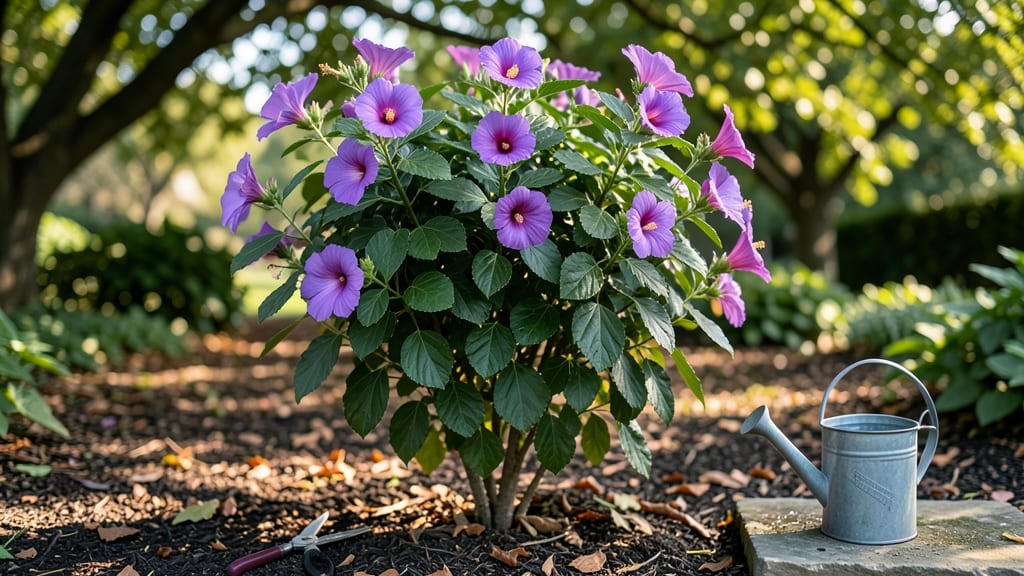
Deep shade gardens just got a game-changer. 🌿 Rose of Sharon thrives where most shrubs give up, producing stunning blooms even under tree canopies or north-facing walls—if you know the right tricks.
My first attempt nearly died from too much shade, but after adjusting light exposure and soil conditions, it now blooms reliably for months longer than sun-loving varieties.
These shrubs tolerate partial to full shade, but they need at least 4-6 hours of filtered light daily to avoid leggy growth. Look for yellowing leaves or sparse blooms—signs they're stretching for light.
Amend heavy shade soil with compost to improve drainage, and water deeply once a week (twice in extreme heat). A balanced fertilizer in early spring jumpstarts growth without overfeeding in low-light conditions.
Pruning is where the magic happens. In late winter, cut back one-third of the oldest stems to encourage new growth and more flowers. Unlike sun-grown Rose of Sharon, shade varieties benefit from light pruning in midsummer to open up the center for better air circulation.
Varieties like 'Blue Bird' or 'Diana' handle shade best, producing vibrant blooms even in tough spots.
With the right care, your shade garden will burst with color from late summer through fall, often extending into winter in mild climates. The key is patience—these shrubs reward slow, steady nurturing. Start with a single plant to test your site, then expand as you see how it responds.
📚 In This Guide
- What you need
- Instructions
- Tips and common mistakes
- Wrapping up and next steps
What you need
- ● Rose of Sharon shrubs: 1–3 plants (choose shade-tolerant cultivars like ‘Jubilee’ or ‘Diana’).
- ● Well-draining soil: Mix 2 parts native soil + 1 part compost (or peat moss for heavy clay).
- ● Organic mulch: 2–3 inches of shredded bark or pine needles (retains moisture and suppresses weeds).
- ● Slow-release fertilizer: 10-10-10 or a shade-tolerant blend (sprinkle lightly at planting).
- ● Garden trowel or spade: For digging holes (12–18 inches wide/deep).
- ● Watering can or hose: With a gentle spray nozzle (avoid over-saturating roots).
- ● Pruning shears: Sharp, sterilized shears (size 7–9 inches) for shaping.
- ● Gloves & knee pads: For comfort during planting.
- ● Shade cloth: 30–50% coverage if your garden gets partial morning sun.
- ● Epsom salt: 1 tbsp per plant (boosts magnesium for vibrant blooms).
- ● Companion plants: Ferns, hostas, or astilbes (thrive in the same shade).
- ● Drip irrigation kit: For consistent moisture in dry spells.
How to cultivate Rose of Sharon in deep shade gardens
This hardy shrub thrives where others fail—here’s how to coax vibrant blooms from partial shade.
🌱 Step 1: Select the Right Location and Soil
Choose a spot with at least 4-6 hours of dappled shade—Rose of Sharon tolerates deep shade better than most shrubs, but it still needs some light to fuel blooms. Avoid dense, impenetrable shade like thick tree canopies, which can stunt growth. I like to plant mine near the edge of a tree line where sunlight filters through.
Amend the soil with 2-3 inches of compost before planting to improve drainage and fertility. Rose of Sharon prefers slightly acidic to neutral soil (pH 6.0-7.0). If your soil is heavy clay, mix in 1 part perlite to 3 parts native soil to prevent root rot. Test the soil first—you’ll see better growth and more blooms if you get this right.
🪴 Step 2: Plant at the Correct Depth and Spacing
Dig a hole twice as wide as the root ball but no deeper. This encourages roots to spread outward rather than settling into a deep, compacted hole. Gently loosen the roots if they’re circling—this prevents root bound stress. Place the shrub so the top of the root ball sits 1 inch above ground level to prevent waterlogging.
Space plants 6-8 feet apart for mature size. Crowding leads to weak stems and fewer flowers. I always plant mine in a loose triangle formation—this creates natural airflow and reduces fungal risks. Water deeply right after planting to settle the soil and remove air pockets around the roots.
☀️ Step 3: Provide Supplemental Light and Support
If your garden has less than 4 hours of light, supplement with a dimmable LED grow light placed 18-24 inches above the shrub for 6-8 hours daily. Rose of Sharon won’t bloom without some light, but it won’t scorch in direct sun either. Watch for pale, elongated stems—this is a sign it needs more light.
Install 3-4 stakes or a small trellis at planting to support the shrub as it grows. Rose of Sharon can reach 8-10 feet tall, and without support, stems flop and break. Tie stems loosely with soft plant ties every 12 inches up the stem. Don’t cinch too tight—you want the stems to sway slightly in wind, which strengthens them.
💧 Step 4: Water and Fertilize for Consistent Blooms
Water deeply once a week during the first growing season to encourage deep root growth. After establishment, water only when the top 2 inches of soil feel dry. Overwatering in shade leads to root rot—this shrub is tough but not swamp-tolerant. I use a soaker hose to deliver water slowly at the base without wetting the foliage.
Fertilize twice a year: once in early spring with a balanced 10-10-10 fertilizer and again in mid-summer with a low-phosphorus, high-potassium blend (5-10-10) to promote blooming. Avoid high-nitrogen fertilizers—they encourage leafy growth at the expense of flowers. Spread fertilizer 6 inches away from the stem and water it in immediately.
✂️ Step 5: Prune for Shape and Seasonal Health
Prune immediately after flowering to shape the shrub and encourage next year’s blooms. Remove dead, crossing, or weak stems first—this improves airflow and reduces disease. Cut back overly long stems by ⅓ to maintain a balanced shape. I always use clean, sharp pruners and make cuts at a 45-degree angle just above a leaf node.
In late winter or early spring, prune again to remove any remaining dead wood and thin out crowded branches. Never prune into old wood—Rose of Sharon blooms on new growth, so heavy pruning too late in the season cuts off next year’s flowers. After pruning, apply a fungicide spray to prevent infections from open wounds.
Tips & tricks for thriving Rose of Sharon in shady gardens
Between us, I’ve watched Rose of Sharon transform neglected corners into bursts of color—here’s how to avoid the pitfalls that turn potential into disappointment.
Light Balance is Everything: That 4-6 hour dappled light window in Step 1 is non-negotiable. If your spot gets less than 4 hours, supplement with a grow light for 6-8 hours daily—just don’t let it touch the leaves directly. I’ve seen plants with pale stems from insufficient light, and it’s heartbreaking when you could’ve prevented it with a simple LED setup.
Soil Science Matters More Than You Think: The 2-3 inches of compost in Step 1 isn’t just filler—it’s the difference between struggling and thriving. For heavy clay soils, that 1:3 perlite mix creates drainage channels roots can’t resist. I always test pH before planting; a reading outside 6.0-7.0 means adjusting with lime or sulfur before you even dig the hole.
Support System Secret: Those 3-4 stakes in Step 3 aren’t just for looks—they’re insurance against broken stems. I learned this the hard way when a storm snapped my unsupported shrubs. Use soft plant ties every 12 inches and loosen them as stems thicken. The swaying motion actually strengthens the wood over time, like nature’s weight training.
Pruning Precision: That post-flowering prune in Step 5 is your chance to shape next year’s blooms. When cutting back overly long stems by ⅓, always make your cuts at a 45-degree angle just above a leaf node—this prevents water from pooling on the wound, which invites fungal infections. I sterilize my pruners with rubbing alcohol between cuts to keep diseases at bay.
Pro Tips for Rose Of Sharon Shade
- Between us, I’ve watched Rose of Sharon transform neglected corners into bursts of color—here’s how to avoid the pitfalls that turn potential into disappointment.
- Light Balance is Everything: That 4-6 hour dappled light window in Step 1 is non-negotiable.
- Soil Science Matters More Than You Think: The 2-3 inches of compost in Step 1 isn’t just filler—it’s the difference between struggling and thriving.
Frequently asked questions
Can Rose of Sharon really grow in deep shade?
Yes! While it prefers partial shade (4–6 hours of sunlight), Rose of Sharon tolerates deep shade (2–4 hours) if given time to adjust. Expect fewer blooms in full shade, but the shrub will still thrive. Choose a spot with dappled light (like under tall trees) for the best results.
How long does it take for a Rose of Sharon to bloom after planting?
Patience is key! Established shrubs (2–3 years old) typically bloom in late summer to fall, but newly planted ones may take 1–2 years to produce flowers. Prune lightly in late winter to encourage stronger growth and earlier blooms next season.
Why aren’t my Rose of Sharon blooms opening in shade?
Deep shade can delay or reduce blooming. Try these fixes:
- Boost light: Thin nearby trees or relocate to a sunnier edge of shade.
- Fertilize: Use a balanced, slow-release fertilizer in early spring to support flowering.
- Prune strategically: Remove old wood (over 3 years) to redirect energy to new growth.
What’s a good shade-loving alternative if Rose of Sharon struggles?
If your site is too dark for Rose of Sharon, try these shade-tolerant shrubs with similar charm:
- Pieris japonica (Andromeda): Evergreen with delicate flowers.
- Abelia grandiflora: White/pink blooms + glossy foliage.
- Hydrangea macrophylla: Thrives in shade and offers big, colorful blooms.
Are Rose of Sharon shrubs prone to pests in shady gardens?
Shade can reduce pest pressure, but watch for:
- Aphids (sap-sucking bugs): Spray with soapy water if clusters appear.
- Spider mites (in dry shade): Increase humidity with mulch or a light mist.
- Japanese beetles: Handpick early or use neem oil as a deterrent.
Regularly inspect leaves—early action keeps your shrub healthy and blooming!
Wrapping up and next steps
Transforming your deep-shade garden into a vibrant retreat is easier than you think with Rose of Sharon shrubs! 🌿 These hardy beauties thrive where others falter, offering stunning blooms and minimal fuss.
Whether you’re a seasoned gardener or just starting, their resilience and adaptability make them a game-changer for low-light spaces.
Ready to elevate your garden? Start by selecting the perfect variety, prepping your soil, and planting with confidence. Watch your shade garden bloom with effortless elegance—one Rose of Sharon at a time! 🌸