
Blooming
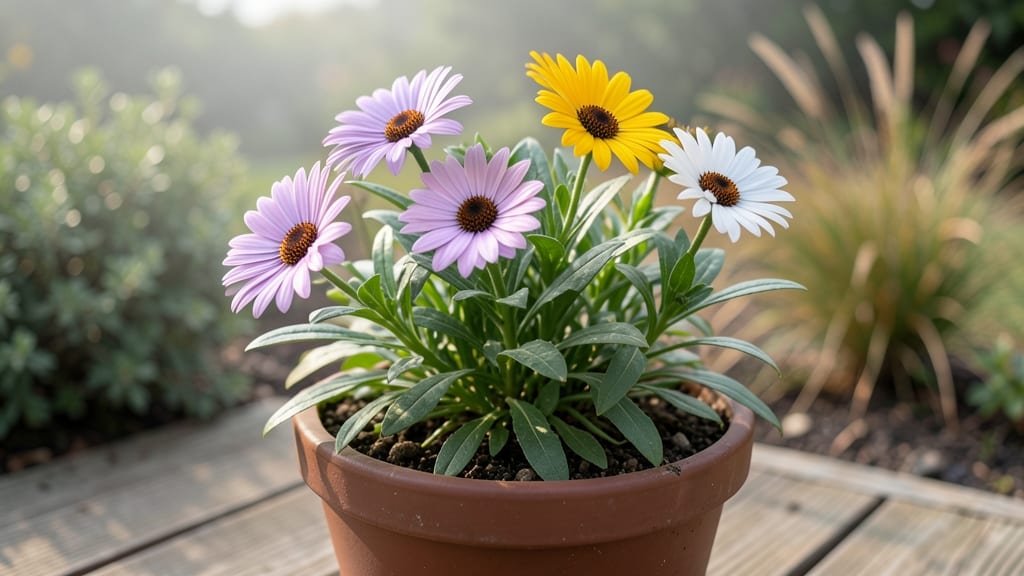
African daisies (Osteospermum) bloom all summer with proper care, producing vibrant flowers from early spring through fall in warm climates, though heavy deadheading and consistent watering extend their flowering season beyond typical summer months.
African daisies thrive in warm climates but can push their blooming season further with the right techniques. 🌸 The key is understanding their natural rhythm—these plants often slow down in cooler months, but strategic deadheading (removing spent blooms) keeps them producing fresh flowers.
I've found that consistent watering—about 1 inch per week—and occasional fertilizing with a balanced formula helps maintain their energy levels. Even in mild winters, they'll reward you with sporadic blooms if you protect them from frost and adjust watering to prevent root stress.
What sets African daisies apart is their adaptability. While they won't bloom continuously like tropical plants, they'll reward you with longer flowering periods than many perennials if you stay proactive.
The secret lies in their resilience—these flowers can bounce back from neglect, but they perform best when you give them the attention they deserve. Think of them as the understated workhorses of the garden that deliver vibrant color with minimal fuss.
💡 In This Article
- African Daisy Flowering Seasons Explained
- Deadheading and Care Tips for Year-Round Blooms
African daisy flowering seasons explained
African daisies (Osteospermum) follow a distinct blooming cycle tied to temperature and daylight hours. In their native South African habitat, they naturally respond to seasonal changes by producing flowers primarily during warmer months when days are longer.
This explains why they thrive from early spring through fall in USDA zones 7-11, where temperatures average between 60-90°F.
The key trigger is daylight—these plants need at least 6-8 hours of direct sunlight daily to initiate flowering, which is why they often slow down in cooler months when daylight shortens.
The plant's internal clock also plays a role. African daisies have a built-in dormancy mechanism that activates when nighttime temperatures drop below 50°F. This isn't true hibernation, but rather a metabolic slowdown where growth pauses temporarily.
You'll notice the leaves may turn slightly purple or growth slows dramatically—these are clear signals the plant is conserving energy.
Interestingly, they can still produce sporadic blooms in mild winters if protected from frost, though the flowers will be fewer and smaller. 🌿 The contrast between summer's abundant 2-3 inch wide blooms and winter's occasional flowers highlights how dramatically environmental factors influence their performance.
What's fascinating is how African daisies adapt to different climates. In cooler regions (zones 5-6), they often behave as annuals, completing their entire life cycle in one season. But in warmer climates, they can persist for years as perennials.
The secret lies in their root system—deep taproots allow them to access moisture and nutrients even during dry spells, which helps maintain some level of activity throughout the year. This resilience explains why they're often called "indestructible" flowers, though they do need proper care to reach their full potential.
Seasonal stress signals are your early warning system. Watch for these three key indicators: yellowing leaves (often from overwatering in cooler weather), drooping stems (usually a sign of underwatering), and fewer buds (which suggests insufficient sunlight or nutrients).
The good news is that African daisies are remarkably forgiving—once conditions improve, they typically bounce back quickly. Their ability to recover from neglect makes them perfect for gardeners who want low-maintenance color with high rewards. 💛
Here's what actually happens during their seasonal transition: As temperatures drop, the plant redirects energy from flower production to root development. This is why you might see a sudden flush of new leaves in fall—it's their way of preparing for winter.
The trade-off is fewer flowers, but this strategy ensures the plant survives to bloom again the following season.
Understanding this natural cycle helps explain why African daisies won't bloom continuously like tropical plants, but with proper care, they'll still provide vibrant color for 8-10 months of the year in ideal conditions.
The most important takeaway is that African daisies are opportunistic bloomers. They'll produce flowers whenever conditions are right, but they won't waste energy on blooms when survival is at stake.
This is why deadheading becomes so crucial—it signals to the plant that it's safe to keep producing flowers rather than conserving energy. Think of it as giving the plant permission to keep blooming rather than preparing for winter. ✨