
Blooming
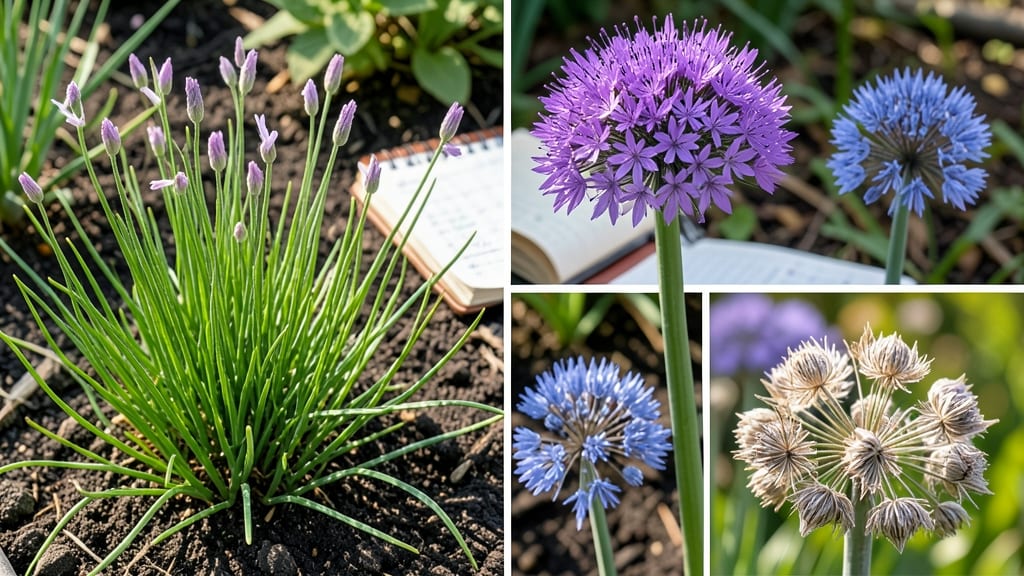
Alliums don't bloom all summer—most varieties produce flowers just once in spring or early summer, though perennials like Allium sphaerocephalon (drumstick allium) may occasionally rebloom if you remove spent blooms. Whether they continue flowering depends on the specific type, your local climate, and how well you care for them.
Most alliums follow a single-season blooming pattern because they're triggered by specific daylight and temperature cues. 🌸 The drumstick allium (Allium sphaerocephalon) is one exception—its spherical purple blooms can return if you snip off old flowers promptly.
Tropical alliums like Allium fistulosum (welsh onion) may offer more frequent blooms in warm climates, but even these need consistent care to perform well. The key is understanding each variety's natural rhythm and adapting your garden routine accordingly.
For gardeners hoping to stretch the blooming season, deadheading (removing faded flowers) is your best tool. This practice redirects the plant's energy toward new growth rather than seed production. 🌿 Pair this with proper fertilization and well-draining soil, and you'll maximize your chances of seeing those striking spherical blooms return.
Just remember—patience is key, as some alliums need time to recover between blooming cycles.
💡 In This Article
- Allium Blooming Cycles: Species-Specific Flowering Patterns
- Extending Allium Blooms: Pruning, Deadheading, and Seasonal Care
Allium blooming cycles: species-specific flowering patterns
The blooming behavior of alliums is primarily governed by their biological response to daylight length—a phenomenon called photoperiodism. Most ornamental alliums, like the popular Allium giganteum or Allium schubertii, are long-day plants, meaning they require 14-16 hours of daylight to trigger flowering.
This explains why their dramatic blooms appear in late spring or early summer when daylight peaks. 🌿 In contrast, tropical alliums like Allium fistulosum (welsh onion) exhibit more flexible flowering patterns, often blooming multiple times when temperatures stay consistently above 60°F.
Another critical factor is vernalization, a cold treatment that breaks dormancy in many perennials. Species like Allium sphaerocephalon (drumstick allium) need 6-8 weeks of temperatures below 50°F to properly initiate flower buds for the following season. Without this chilling period, they may produce fewer or weaker blooms.
This is why gardeners in warmer climates often struggle to get reliable reblooming—natural winter chilling is insufficient. 🌱 The ornamental Allium christophii, for instance, typically blooms just once in spring, while its close relative Allium karataviense may produce secondary blooms under ideal conditions.
The distinction between ornamental and edible alliums also plays a role. Edible varieties like chives (Allium schoenoprasum) and garlic chives (Allium tuberosum) often have more frequent blooming cycles because they're selected for continuous regrowth.
These plants can produce flowers throughout the growing season if given proper care, though their blooms are usually smaller and less showy than ornamental types. The key difference lies in their genetic selection—ornamental alliums prioritize dramatic, single-season displays, while edible varieties emphasize regrowth and productivity. 🌸
Climate also creates significant variation. In USDA Zone 5 or colder, most alliums follow a strict one-season blooming pattern due to shorter growing seasons. However, in Zone 8 or warmer, species like Allium moly (golden star) may produce multiple flushes of flowers when combined with consistent moisture and proper deadheading.
The 10-15°F temperature drop that triggers dormancy in northern climates simply doesn't occur in milder regions, allowing for extended growth periods. 🌡️
For gardeners, understanding these patterns means choosing the right varieties for your climate. If you're in a cooler region, focus on hardy perennials like Allium 'Globemaster' that reliably bloom once but produce stunning 8-inch spherical blooms.
In warmer areas, experiment with tropical types that may offer more frequent (though smaller) flowers. The secret lies in matching the plant's natural rhythms with your local growing conditions. 🌎
What most people overlook is how soil fertility affects blooming consistency. Alliums that receive balanced 10-10-10 fertilizer in early spring often produce larger, more abundant blooms than those in depleted soil.
The extra phosphorus and potassium support both root development and flower production, which is why many gardeners report better reblooming results when they amend their soil annually. 🌿