
Light Requirements
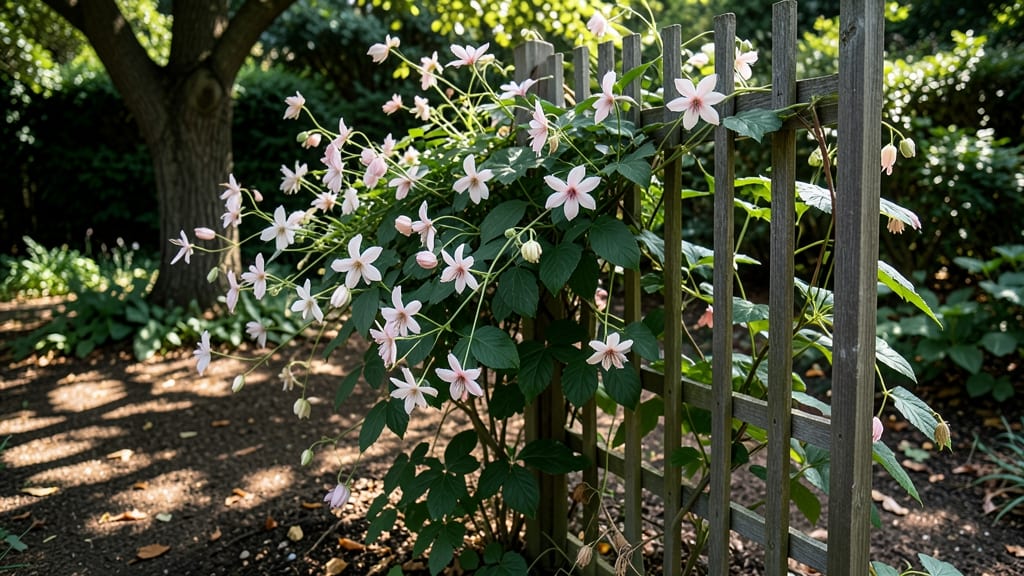
Clematis crave sunlight like we crave coffee—but not all varieties are created equal. ✨ The truth is, most clematis need 6+ hours of sun daily, but some shade-tolerant types handle 3-4 hours beautifully.
My first clematis died from too much shade, but I’ve since learned which varieties thrive in dimmer spots and how to adapt others.
Here’s the game-changer: pruning and positioning. Plant shade-loving varieties like Clematis montana or Clematis armandii in morning sun with afternoon shade. For sun-lovers like Clematis viticella, use reflective surfaces (light-colored walls, gravel) to bounce extra light their way.
Even a 5-foot trellis can make a difference by elevating vines above competing foliage.
You’ll see the difference in bloom quantity and vigor—shade varieties may have fewer flowers but last longer, while sun-lovers explode with color. The key is matching the right vine to the right spot.
My Clematis lanuginosa now thrives in a north-facing corner, proving shade isn’t the enemy—it’s about the right match.
For partial shade, focus on soil moisture and mulch—clematis roots stay cooler in shade, so keep them hydrated but well-drained. And yes, even in low light, they’ll climb, they’ll bloom, and they’ll steal the show. Let’s find your perfect spot!
Root Causes Of Light Struggles
Clematis vines are famously light-hungry, but when they wilt in shade, the issue almost always boils down to one (or more) of these core problems. Understanding the science behind their light needs helps you diagnose—and fix—the issue before it’s too late.
Clematis rely on photosynthesis to power their rapid growth, and shade disrupts this process in two key ways:
- Weakened Chlorophyll: Low light reduces chlorophyll production, the pigment that captures sunlight. Without enough energy, vines produce less glucose (their food), leading to stunted growth, pale leaves, and a lackluster bloom. Think of it like a solar panel covered in dust—the energy just isn’t getting through.
- Carbohydrate Starvation: Shade-stressed clematis can’t store enough starches (their energy reserve). This causes bud dormancy—even in spring—because the plant prioritizes survival over flowering. 💡 Pro tip: If your vine looks "asleep" in early spring, it’s likely malnourished from past shade.
Actionable fix: Aim for 6+ hours of direct sunlight daily (morning sun is ideal). If partial shade is unavoidable, choose a sun-loving cultivar like Clematis montana or Clematis viticella, which tolerate moderate shade better than others.
Shady spots often mean moist, cool soil—and while clematis love water, root rot is their silent killer when combined with poor light. Here’s why:
| Problem | Why It Happens | Signs to Watch For |
|---|---|---|
| 🔥 Stunted Root Growth | Cool soil slows microbial activity, meaning roots can’t absorb nutrients efficiently. Clematis roots need warmth (60–70°F) to thrive. | Yellowing leaves, slow growth, or vines that never push new shoots. |
| 💧 Fungal Infections | Excess moisture in shade creates the perfect breeding ground for Phytophthora (a water mold) and root rot. Shady soils stay damp longer, accelerating decay. | Black, mushy roots; wilting despite wet soil; sudden vine collapse. |
| ❄️ Nutrient Lockout | Cold soil binds phosphorus and nitrogen, making them unavailable to roots. Clematis need these for flower production and vine strength. | Purple-tinged leaves (phosphorus deficiency) or weak stems. |
Actionable fix:
- 🔥 Improve drainage: Amend soil with compost or perlite to aerate roots.
- 🌡️ Warm the roots: Use black mulch or a low-lying heat mat in containers to raise soil temps.
- 💡 Fertilize smart: Apply a balanced fertilizer (10-10-10) in early spring to jumpstart growth before roots wake up.
Shady gardens aren’t just low-light—they’re often crowded. Trees, shrubs, and even neighboring perennials steal nutrients, water, and space that clematis desperately need. Here’s how:
- Root Competition: Deep-rooted plants like oaks or maples absorb 90% of available water and nutrients before clematis roots can access them. This leaves your vine starving even if the soil looks rich.
- Airflow Blockers: Dense foliage traps humidity against clematis vines, promoting powdery mildew and leaf spot. Shady, humid conditions are a disease buffet for fungi.
- Light Theft: Even "partial shade" from a tall shrub can cast dappled, erratic light—confusing clematis into thinking it’s permanently in low light. This triggers etiolation (weak, leggy growth) as the vine stretches for any scrap of sunlight.
Actionable fix:
- 🌳 Prune aggressively: Remove 50% of competing foliage in late winter to open up light. Aim to give clematis unobstructed access to the sky.
- 🚫 Avoid planting under: Trees, large shrubs, or evergreens that cast deep, permanent shade.
- ✨ Use reflective surfaces: Place a light-colored wall or mirror behind the vine to bounce extra light onto leaves.
Key takeaway: Clematis in shade suffer from a domino effect—poor light weakens roots, which then can’t compete for nutrients, leading to disease and dormancy. Break the cycle by addressing light, soil, and competition together.
Revitalizing Clematis in Low Light
Clematis may crave sunlight, but with the right adjustments, you can help them thrive even in shadier spots. Below are practical solutions tailored to common issues caused by insufficient light, along with prevention tips to keep your vines happy long-term.
If your clematis is leggy, sparse, or struggling to climb, it’s likely starving for light. Here’s how to correct it:
🔥 Boost Light Exposure Gradually
- Move to a sunnier spot (even partial sun helps).
If relocating isn’t possible, trim nearby trees or shrubs blocking light. - Use a reflective surface (like a white wall or mirror) to bounce extra sunlight onto the plant. - Prune competing plants to give your clematis more breathing room.
🌡️ Supplement with Grow Lights (Indoor/Containers)
- Place a full-spectrum LED grow light 12–18 inches above the plant for 6–8 hours daily.
- Rotate the plant weekly to prevent uneven growth.
💡 Prevention Tip:
Choose sun-tolerant clematis varieties (like Clematis montana or Clematis viticella) if full sun isn’t an option.
Too much shade + high humidity = powdery mildew or leaf spot. Here’s how to fight back:
✂️ Improve Airflow & Reduce Moisture
- Space vines properly (3–6 feet apart) to allow airflow.
- Water at the base (avoid wetting leaves) and water early in the day so foliage dries quickly.
- Mulch with gravel or bark to keep roots dry while retaining moisture.
🧴 Apply Fungicides Preventively
- Spray with neem oil or copper fungicide every 2–3 weeks during humid seasons.
- Remove and dispose of infected leaves immediately.
🌡️ Prevention Tip:
Plant clematis where it gets morning sun + afternoon shade to balance light and dryness.
If your clematis isn’t flowering, it may need a light + nutrient boost:
🍽️ Feed with High-Phosphorus Fertilizer
- Use a balanced 10-10-10 or bloom-boosting fertilizer (like 5-10-5) every 4–6 weeks in spring/summer.
- Avoid high-nitrogen fertilizers—they promote leaves over flowers.
🌞 Pair with Sun-Loving Companions
- Plant sun-loving perennials (like lavender or catmint) nearby to reflect light onto the clematis.
- Use light-colored mulch (like white gravel) to enhance brightness.
💡 Prevention Tip:
Deadhead spent blooms to encourage new flowers, especially in low-light conditions.
Potted clematis often suffer from root-bound stress + poor light. Try these fixes:
🔄 Repot into a Larger, Lighter Container
- Choose a terracotta or fabric pot (breathable materials prevent root rot).
- Fill with well-draining soil (mix potting soil with perlite or sand).
🪴 Rotate the Pot Weekly
- Turn the pot 1/4 turn every 7 days to ensure even light exposure.
🌡️ Prevention Tip:
Place containers on a rolling stand to move them closer to windowsills or patios when light is scarce.
Final Thought: While clematis prefers sunlight, a little creativity—whether through light tricks, proper care, or smart plant pairings—can turn shade into a manageable (and even rewarding) challenge. With these adjustments, your vines can still flourish, even in less-than-ideal lighting! 🌿✨
Frequently asked questions
Which clematis varieties tolerate shade best?
For shadier spots, choose Clematis montana (fragrant white blooms) or Clematis armandii (evergreen, glossy leaves). These varieties handle 3-4 hours of morning sun better than most. Even Clematis viticella can adapt to partial shade if given afternoon relief from direct sun.
Can I grow clematis indoors near a north-facing window?
Yes, but expect limited blooms. Place your clematis within 3 feet of the glass and supplement with a grow light for 6 hours daily. Rotate the pot weekly for even growth. Dwarf varieties like Clematis 'Jackmanii' work best in containers.
Why does my clematis grow tall but not bloom in shade?
Shade triggers etiolation—long, weak stems searching for light. To fix this, prune back 1/3 of the vine in early spring and move it to morning sun + afternoon shade. Add a balanced fertilizer (10-10-10) to encourage flowering.
How much shade is too much for clematis?
Anything under 3 hours of direct light daily risks stunted growth and poor blooming. Even shade-tolerant varieties need bright indirect light. Watch for yellowing leaves or sparse foliage—signs your vine is struggling.
Can I train clematis to climb a trellis in shade?
Use a 5-foot tall trellis to elevate vines above competing plants. Choose a sun-tolerant variety like Clematis 'Niobe' and prune regularly to maintain shape. The height helps capture more scattered light.