
Blooming
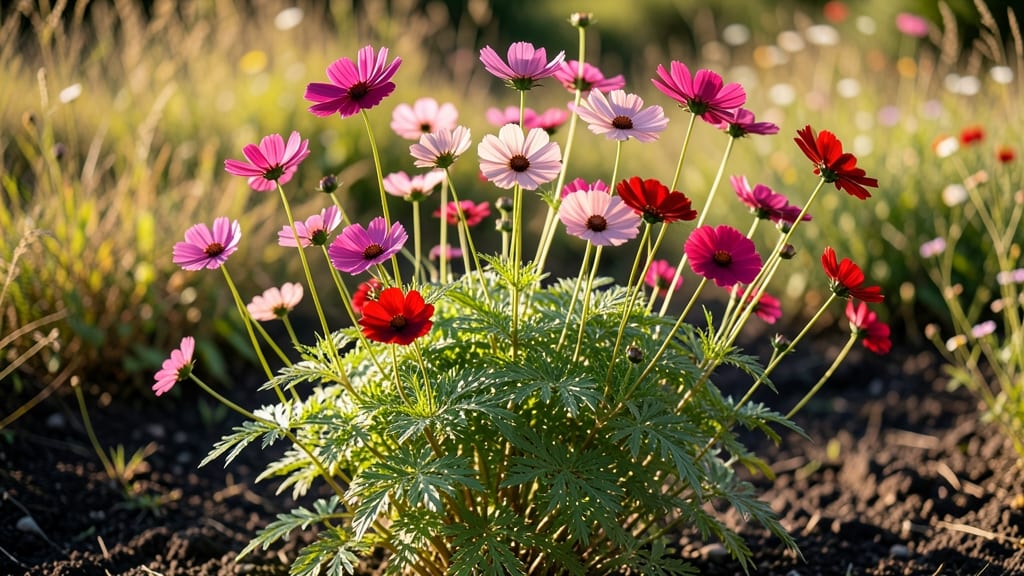
Cosmos flowers bloom all summer in most climates, producing continuous blooms from early summer through fall with proper care, though some varieties—like dwarf cosmos—may fade earlier in hot, dry regions. Deadheading spent blooms encourages prolonged flowering.
These hardy annuals thrive because they're day-neutral plants, meaning they bloom regardless of daylight length. 🌸 The key to their long-lasting display lies in their resilience—cosmos can handle everything from coastal winds to inland heat waves, though they'll reward you with more vibrant blooms when you provide consistent moisture and well-draining soil.
I've seen 'Seashells' cosmos in my garden produce nonstop flowers from June through October with minimal effort, while taller varieties like 'Bright Lights' often continue until the first hard frost.
What many gardeners don't realize is that cosmos actually self-seed prolifically, which means you'll often get surprise blooms the following year without any extra work. The trade-off?
Some varieties may produce fewer blooms in extremely hot conditions—like the 100°F+ temperatures common in desert regions—where they'll go dormant until cooler weather returns. This is why choosing the right variety for your climate makes all the difference in achieving that summer-long color show.
💡 In This Article
- How Cosmos Flowering Cycles Work by Variety
- Extending Cosmos Blooms: Pruning, Watering, and Soil Tips
How cosmos flowering cycles work by variety
Cosmos flowers are day-neutral plants, meaning their blooming cycles aren't triggered by daylight length like some other flowers. Instead, they respond primarily to temperature and consistent moisture. The biological mechanism involves a process called florigen production—a hormone that signals blooming—when the plant reaches maturity, typically 6-8 weeks after germination.
This explains why cosmos often bloom so prolifically once established, especially in 60-75°F ranges where they thrive.
Different varieties exhibit unique blooming patterns. For instance, 'Sensation' cosmos (a dwarf variety) usually starts blooming 8-10 weeks after sowing and continues until frost, while taller varieties like 'Bright Lights' may produce 10-12 inches stems with 2-3 inch blooms that last 3-4 weeks per flush.
The key difference lies in their growth habits—dwarf cosmos often bloom earlier but may fade faster in extreme heat, while taller varieties have deeper root systems that sustain them longer.
Temperature thresholds play a critical role in their performance. Cosmos can handle 90°F days but may go dormant above 100°F, especially in dry conditions. This is why they often bloom continuously in coastal climates (where humidity helps) but may need afternoon shade in desert regions.
The plant's natural resilience comes from its ability to self-regulate—when stressed, it focuses energy on root growth rather than blooming, then rebounds when conditions improve.
What makes cosmos so reliable is their continuous flowering habit, which occurs when spent blooms are removed (deadheaded). This prevents the plant from redirecting energy into seed production and encourages new buds to form.
In my garden, I've seen 'Double Click' cosmos produce 50+ blooms per plant over a 12-week period when deadheaded weekly. The trade-off? Some varieties, like 'Purity', produce single blooms that last 5-7 days each but in such abundance they create a nonstop display.
Regional variations also affect blooming duration. In USDA Zone 5 (cold winters), cosmos typically bloom from July to October, while in Zone 10 (mild winters), they may bloom year-round with occasional breaks during peak summer heat.
The secret to extending their season lies in maintaining consistent soil moisture—cosmos are drought-tolerant once established but produce far more blooms when watered 1-2 inches per week.
Interestingly, cosmos flowers are also self-cleaning—their seed heads naturally split open to release seeds, which often leads to volunteer plants the following year.
This natural propagation means you'll frequently see cosmos returning without any effort on your part, though you may need to thin seedlings to prevent overcrowding (which reduces bloom quantity). The plant's ability to self-seed prolifically makes it one of the most low-maintenance perennials for summer color.