
Blooming
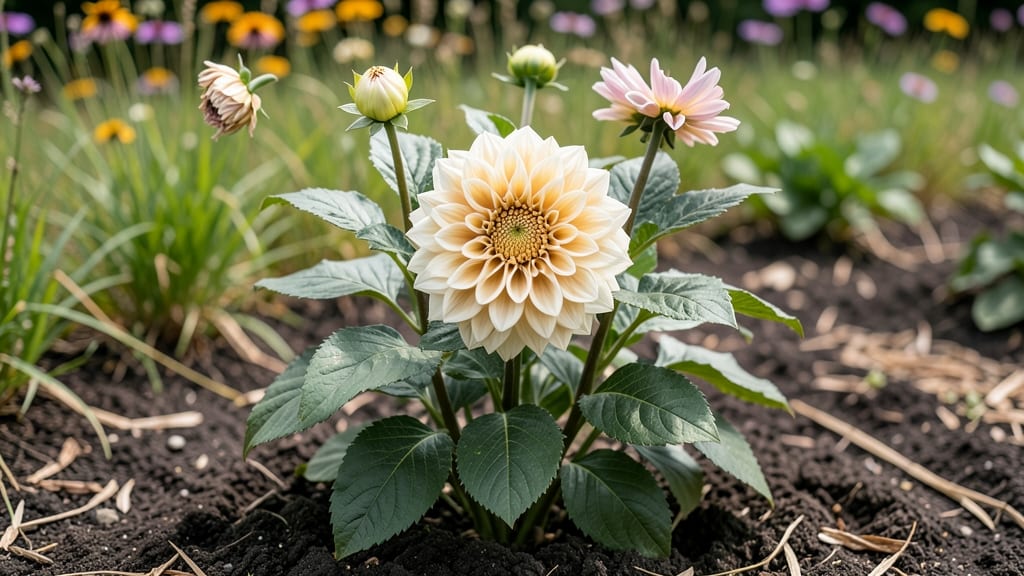
Dahlias bloom all summer long only if they're reblooming varieties, which need consistent care like deadheading, regular watering, and balanced fertilization to keep producing flowers from early summer until frost.
Not all dahlias share this trait—single-bloom varieties typically produce just one stunning flower per stem before fading. 🌸 The secret lies in their genetics: reblooming types like 'Café au Lait' or 'Galaxy' have been bred to produce multiple flower cycles, but they demand diligence.
I've seen gardeners extend blooms by up to 3 months with proper techniques, though even the hardiest varieties need a late-summer growth boost to push new stems before cold weather arrives.
This continuous flowering isn't just about cutting back old blooms—it's a full-season partnership between plant and gardener. Deadheading isn't optional; it's the signal that tells the plant to redirect energy to new buds.
I recommend using clean, sharp shears and removing stems down to the next set of leaves rather than just snipping the flower head, as this prevents disease and encourages stronger regrowth.
💡 In This Article
- Reblooming Dahlias vs. Non-Reblooming Types
- Pro Tips for Extending Dahlia Bloom Season
Reblooming dahlias vs. non-reblooming types
At the heart of the difference lies in their genetic programming. Reblooming dahlias, like the popular 'Karma Choc' or 'Thomas Edison' varieties, have been selectively bred to produce multiple flower cycles throughout the growing season.
These types typically exhibit a polycyclic growth habit, meaning they can generate new stems and buds after their initial bloom. In contrast, non-reblooming varieties (often called "single-bloom" types) focus all their energy on producing just one spectacular flower per stem before entering dormancy.
The botanical mechanism involves their tuber structure and energy allocation. Rebloomers develop multiple buds along their stems, each capable of becoming a flower with proper care.
For example, the variety 'Arabian Night' can produce 3-5 new blooms per stem when properly maintained, while a single-bloom type like 'Bishop' produces just one showstopper before fading. The key difference is in their apical dominance—rebloomers can break this dominance through proper pruning, allowing side buds to develop.
Seasonal timing plays a crucial role too. Reblooming varieties typically have a two-phase flowering pattern: an initial flush of blooms in early summer, followed by a mid-season growth spurt when days shorten slightly. This second wave often produces the most abundant flowers if given proper care.
Non-rebloomers, however, follow a one-and-done pattern, with their energy focused entirely on that first bloom before the plant shifts to tuber development for winter.
Color and form also differ between types. Rebloomers often feature softer, more delicate petals that can withstand multiple blooming cycles without excessive damage, while single-bloomers frequently have larger, more dramatic flowers with thicker petals that would be impractical for repeated blooming.
For instance, 'Café au Lait' (a rebloomer) produces 3-inch blooms that last beautifully in arrangements, while 'Black Narcissus' (a single-bloomer) creates 6-inch velvet-black flowers that would quickly wilt if forced to rebloom.
One fascinating aspect is how light affects these differences. Reblooming varieties have been bred to respond to photoperiod changes—the gradual reduction in daylight hours that triggers their second flush of blooms. This is why they often peak in late summer when days grow shorter.
Non-rebloomers, however, are less sensitive to these changes and focus their energy on early-season display before conserving resources for winter.
The choice between types comes down to your gardening goals. If you want nonstop color from July to frost, rebloomers are essential—but they require more maintenance. For showstopping single-stem displays with less upkeep, non-rebloomers deliver dramatic impact with minimal effort. The trade-off is clear: continuous blooms versus occasional spectacle.