
Blooming
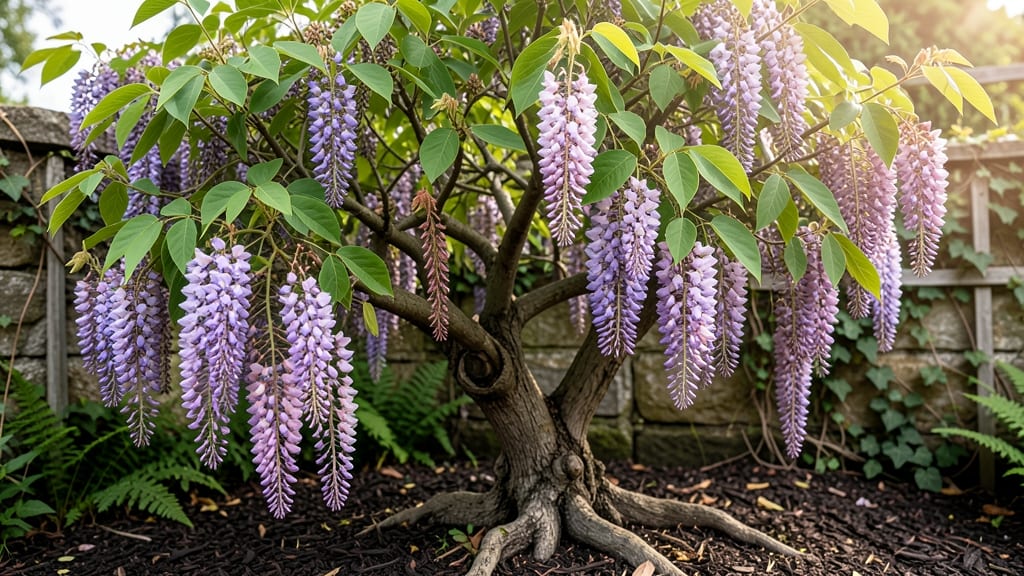
Wisteria blooms all summer only if it's a reblooming variety, like 'Amethyst Falls' or 'Royal Purple,' which produce secondary flowers after pruning. Standard wisteria typically blooms once annually in spring, with pruning timing critical to encourage reblooming.
Most wisteria varieties focus their energy on a single spectacular spring bloom, but reblooming types develop flower buds on both old and new wood. 🌸 This dual-budding system lets them produce secondary blooms throughout summer if you prune correctly—usually after the first flush of flowers.
I've seen 'Amethyst Falls' extend its show from May through September with proper care, while standard varieties like 'Blue Moon' stick to their one-time spring display. The secret lies in when you cut: late winter pruning for spring blooms, while summer pruning encourages those follow-up flowers.
What sets rebloomers apart is their ability to form flower buds on current season's growth, unlike standard wisteria that only buds on last year's wood. This means summer pruning (after blooms fade) stimulates new growth that can flower again.
I always recommend using sharp bypass pruners and never cutting into last year's growth if you want that continuous summer display. The trade-off? Reblooming varieties may have slightly smaller flowers than their single-bloom cousins, but the extended season makes them worth it for gardeners craving summer color.
💡 In This Article
- How Wisteria Bloom Timing Works: Reblooming vs. Single-Bloom Varieties
- Best Pruning Practices for Summer-Blooming Wisteria
How wisteria bloom timing works: reblooming vs. single-bloom varieties
The key difference between wisteria varieties lies in where they form flower buds. Standard wisteria, like 'Blue Moon,' develops buds exclusively on old wood (last year's growth) during late summer or early fall. These buds then bloom in spring after winter dormancy.
The plant's energy focuses entirely on this single flush, which is why you typically see dramatic spring displays but nothing afterward. 🌸 The buds form in clusters along the previous year's stems, and once they bloom, that's it until next year's cycle begins.
Reblooming varieties, however, have a more flexible system. They can produce flower buds on both old wood (for spring blooms) and new wood (for summer blooms). This dual capability comes from genetic variations that allow flower initiation to occur multiple times per season.
For example, 'Amethyst Falls' starts forming spring buds on last year's stems in late summer, then develops additional buds on current year's growth after the first bloom cycle.
The trade-off is that summer flowers often appear slightly later in the season and may be smaller, but the extended display from May through September makes up for it.
The plant's growth cycle plays a crucial role. Wisteria enters dormancy in late fall, which triggers the formation of spring flower buds on old wood. If you prune these stems too aggressively in late winter, you remove potential spring blooms.
However, if you leave some old wood intact and then prune again after the first summer bloom, you encourage new growth that can produce secondary flowers. This is why timing matters—reblooming varieties need two pruning events per year to maximize their potential.
Another fascinating aspect is how temperature affects bud formation. Wisteria requires a period of cold dormancy (typically 10-15°F for 4-6 weeks) to properly set spring buds. Without this chill period, the plant may produce fewer or weaker blooms.
Summer buds, however, form in response to warm weather and proper pruning, making them more dependent on human intervention. This is why reblooming varieties often need more careful management—they're essentially running two bloom cycles instead of one.
Consider this comparison: Standard wisteria is like a single-act play, while reblooming varieties are more like a Broadway musical with an extended run. The botanical mechanism involves different types of meristematic tissue (growth points) that become active at different times.
In standard varieties, these growth points only become flower buds once per year. In rebloomers, some growth points remain capable of forming new buds throughout the growing season, given the right conditions. 🌿 This dual capability is what allows varieties like 'Royal Purple' to keep producing flowers well into summer.
What most gardeners don't realize is that even reblooming varieties have limits. The second flush of flowers often appears 4-6 weeks after the first bloom**, and the plant needs adequate nutrients and water to support this extended display.
Without proper care, the summer blooms may be sparse or fail to appear altogether. This is why experienced growers recommend a balanced fertilizer program (with equal parts nitrogen, phosphorus, and potassium) and consistent moisture throughout the growing season.