
Plants
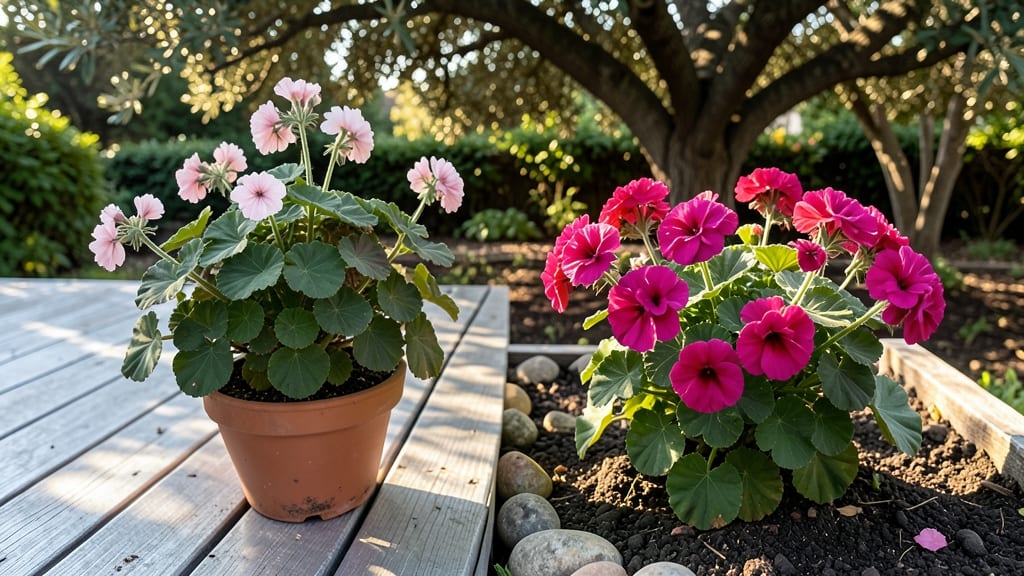
Most geraniums crave sunlight because they rely on strong light for vibrant blooms and sturdy stems. 🌿 Without enough light, they stretch toward any available rays, creating those weak, leggy stems we all hate.
I’ve seen shade-tolerant varieties like Geranium macrorrhizum thrive in filtered light, but they still need at least 3-4 hours of indirect sun to produce decent flowers. The key is matching the right variety to your garden’s light conditions—some simply won’t perform well in deep shade.
For example, Geranium phaeum handles partial shade better than others, but even it may produce fewer blooms compared to its sun-loving cousins. If you’re working with limited light, focus on soil quality and regular pruning to encourage bushier growth.
A little extra care can make a big difference in keeping your geraniums happy, even when sunlight is scarce.
💡 In This Article
- How Sunlight Affects Geranium Growth and Flowering
- Best Shade-Tolerant Geranium Varieties for Low-Light Gardens
How sunlight affects Geranium growth and flowering
Geraniums rely on sunlight to power their photosynthesis engine, which produces the energy needed for robust growth and vibrant blooms. When exposed to 4-6 hours of direct sunlight daily, they synthesize chlorophyll efficiently, creating the green pigment that drives energy production.
In shade, chlorophyll production slows, forcing plants to stretch toward any available light—a process called etiolation—resulting in those weak, leggy stems we all dread. 🌞 This happens because the plant prioritizes reaching light over thickening stems or producing flowers.
The trade-off in low light is stark: geraniums grown in deep shade may produce fewer flowers (sometimes up to 70% less than sun-exposed plants) and weaker stems prone to snapping. Studies show that shade stress also reduces antioxidant production in leaves, making them more susceptible to pests and diseases.
For example, a geranium in full sun develops a sturdy, compact structure, while one in deep shade may grow 30-50% taller but with sparse foliage and minimal blooms.
Vibrant blooms are directly tied to sunlight exposure because flowers require energy to develop. Geraniums grown in partial shade (3-4 hours of sun) may still bloom, but the flowers tend to be smaller and less vivid.
The anthocyanins—the pigments responsible for red, purple, and blue hues—need sunlight to activate fully. Without it, colors fade to pale shades. This is why Geranium phaeum, a shade-tolerant variety, produces deeper purple blooms in partial shade but struggles to compete with sun-loving types like Geranium Rozanne.
Leaf health also suffers in shade. Sunlight helps geraniums develop thicker cuticles, which protect against moisture loss and fungal infections. In low light, leaves become thinner and more prone to powdery mildew, a common issue in shaded gardens.
The stomata (tiny pores on leaves) also behave differently: in shade, they remain open longer, increasing water loss and stressing the plant. This is why geraniums in shaded areas often look dull and wilted even when watered adequately.
Temperature plays a hidden role too. Shaded geraniums experience cooler soil temperatures, which slow root growth and nutrient uptake. Roots need warmth (60-75°F) to absorb water and minerals efficiently. In shade, soil temps can drop 10-15°F cooler than in full sun, further stunting growth.
This is why shade-tolerant varieties like Geranium macrorrhizum often grow better in morning sun with afternoon shade—they get enough light for photosynthesis without overheating.
If you’re dealing with a shaded garden, focus on pruning regularly to encourage bushier growth and using reflective mulches (like white gravel) to bounce extra light onto the plants. Even a 10-15% increase in light exposure can transform a leggy geranium into a bushy, blooming powerhouse.
The key is working with the plant’s natural tendencies rather than fighting them.