
Blooming
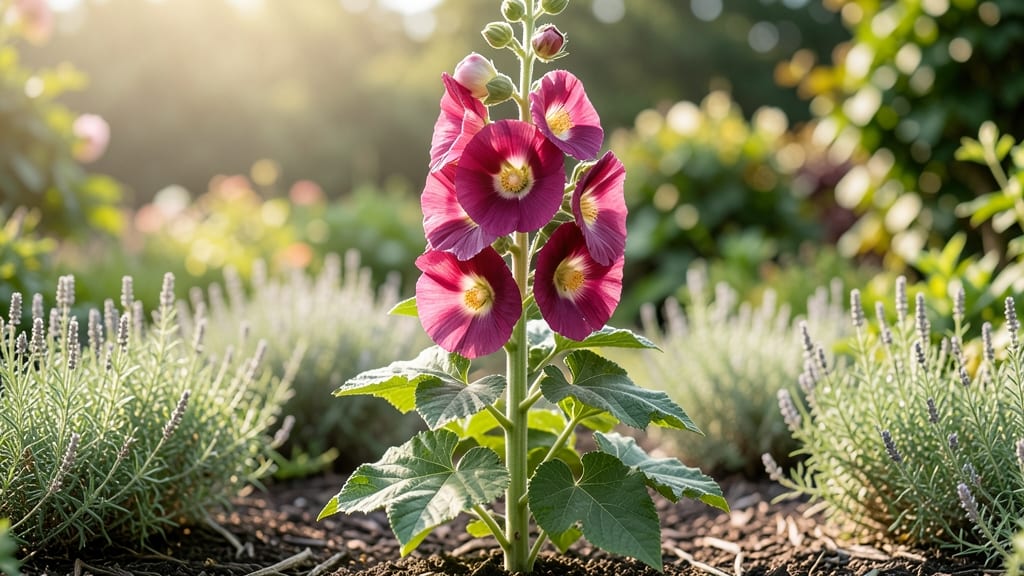
Hollyhocks do not bloom every year—they are biennials or short-lived perennials, producing their first flowers in their second year before declining. Some varieties may rebloom if deadheaded, but most require replanting every 2-3 years for consistent blooms.
Hollyhocks follow a two-year flowering cycle where they focus on leaf growth first, storing energy before blooming. 🌸 This biennial pattern means your first flowers appear in their second spring, after which many varieties fade.
The good news? With proper care—like removing spent blooms and protecting roots in winter—you can coax some varieties to rebloom, though most gardeners find replanting every few years yields the best results.
What makes this tricky is climate—hollyhocks in milder regions may act more like perennials, returning year after year, while colder zones often see them behave as true biennials. The key is understanding your local growing conditions and adjusting care accordingly.
💡 In This Article
- Hollyhock Lifecycle: Biennial vs Perennial Growth Patterns
- Maximizing Hollyhock Blooms: Planting and Care Tips
Hollyhock lifecycle: biennial vs perennial growth patterns
Hollyhocks exhibit a fascinating two-phase growth cycle that explains why they don't bloom annually. When you plant hollyhock seeds, they first enter a rosette stage, producing only leaves for the first 6-12 months while building energy reserves in their roots.
This is their survival strategy—similar to how biennial vegetables like carrots or onions store nutrients before flowering. The key trigger for blooming occurs when daylight hours lengthen in spring, stimulating the plant to redirect energy from roots to flower production.
The biennial nature becomes evident in their second year when they produce those iconic 5-8 foot tall spikes covered in ruffled, papery blooms. After flowering, the plant's energy is exhausted, and it often declines—unless you're in a mild climate where some varieties may persist as short-lived perennials.
In colder regions (USDA zones 3-7), hollyhocks typically die back completely after their first bloom cycle, while in warmer zones (8+), they might return for 2-3 years with proper care. 🌱
What most gardeners miss is how temperature affects this cycle. Hollyhocks planted in fall often bloom earlier the following year because they experience winter chilling, which breaks dormancy. This is why many gardeners swear by autumn sowing—it gives the plant a head start on its energy storage phase.
The trade-off? Fall-planted hollyhocks may produce slightly smaller blooms in their first year compared to spring plantings, but they establish stronger root systems for future growth.
Here's where climate plays a critical role: In regions with hot summers, hollyhocks may struggle to complete their biennial cycle because the intense heat stresses the plant before it can fully develop.
This is why you'll see hollyhocks thriving in cooler maritime climates like the Pacific Northwest, where they can behave more like perennials. The secret lies in providing consistent moisture—hollyhocks need 1-2 inches of water weekly during their active growth phases to maintain their energy reserves.
Botanically speaking, hollyhocks belong to the Alcea genus and share this growth pattern with other biennials like foxgloves and sweet William. The difference? Hollyhocks have evolved to store more starch in their thick taproots, allowing them to survive lean periods.
This is why you'll often see hollyhocks returning for a second bloom cycle if you remove spent flowers—a technique called deadheading that tricks the plant into thinking it still has energy to spare. 💫
The science behind their decline lies in their reproductive strategy. After flowering, hollyhocks produce seeds and then prioritize seed dispersal over their own survival. This is why most gardeners find they need to replant every 2-3 years—the plant's life cycle naturally ends after it completes its reproductive phase.
Understanding this helps explain why some varieties (like the 'Chater's Double' series) may rebloom more reliably than others—they've been selectively bred to store more energy in their roots.
For gardeners in colder climates, winter protection is crucial. Mulching with 4-6 inches of straw around the base helps insulate roots during freezing temperatures, which can make the difference between a plant that returns next year and one that dies back completely.
This simple technique can extend a hollyhock's lifespan by 1-2 additional years, giving you more time to enjoy those classic cottage-garden blooms. The payoff? Healthier plants that produce more robust stems and larger flowers in subsequent seasons. ✨