
Blooming
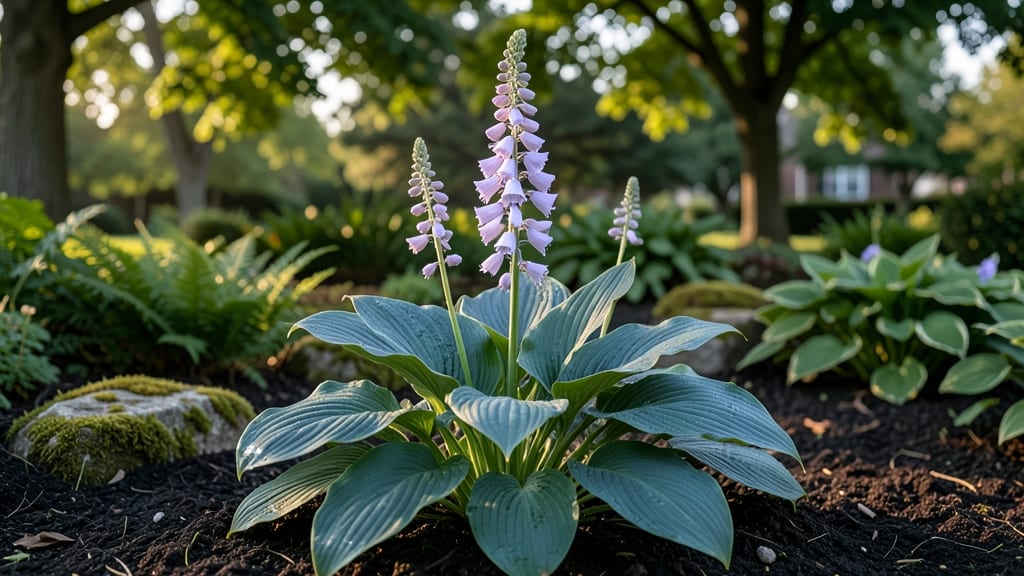
Yes, hostas do bloom flowers, producing tall spikes of bell-shaped blooms in late spring to early summer, though their striking foliage remains the main draw. Reblooming types may produce secondary flowers in late summer with proper care.
Hostas are famous for their lush leaves, but their delicate flowers add seasonal interest too. 🌸 The blooms—often lavender, white, or pale purple—appear on tall stalks that can reach 3-5 feet, depending on the variety.
What's fascinating is how their flowering cycle responds to light: more sun exposure can trigger earlier blooms, while shade may delay them. Some varieties like 'June' bloom reliably in early summer, while others like 'Halcyon' produce secondary flowers if given the right conditions.
If you want to encourage reblooming, focus on balanced care. Fertilize in early spring with a low-nitrogen formula to promote flowering, and deadhead spent blooms promptly. Consistent moisture without soggy soil is key—hostas thrive in partial shade but need well-draining soil to prevent rot.
The right conditions can turn a single bloom into multiple cycles of color throughout the season.
💡 In This Article
- Hosta Flowering Season and Variety-Specific Bloom Times
- Encouraging Reblooming in Hostas: Care Tips and Best Practices
Hosta flowering season and variety-specific bloom times
The timing of hosta blooms is governed by a fascinating interplay of photoperiodism and temperature cues. Hostas are short-day plants, meaning they respond to decreasing daylight hours in late spring to trigger flowering.
When daytime light drops below 14 hours, the plant's internal clock signals the buds to open. 🌿 This is why most varieties bloom between late May and early July, aligning with the gradual lengthening of nights after the summer solstice.
Cooler temperatures (50-65°F) further accelerate this process, which is why northern climates often see earlier blooms than southern regions.
Variety plays a crucial role in bloom timing, with some hostas exhibiting early-, mid-, or late-season tendencies.
For example, 'Blue Angel' typically blooms in early June, producing lavender flowers on 3-foot stalks, while 'Halcyon'—a reblooming variety—often puts on its first show in late May and may produce secondary blooms in August if conditions are ideal.
The 'June' variety, as its name suggests, peaks in mid-June, offering a reliable mid-season display. These differences stem from genetic variations in how quickly each cultivar responds to light and temperature shifts.
Mature hostas (those 3-5 years old) consistently produce more robust blooms than younger plants. This is because flowering demands significant energy, and the plant's root system must be well-established to support the 30-50 flower buds that can form on a single stalk.
Immature hostas may produce only a few blooms or none at all, as their resources prioritize foliage growth. 🌱 The size of the foliage also correlates with bloom potential—larger leaves indicate a healthier plant capable of sustaining the energy demands of flowering.
Color variations in hosta blooms—ranging from pale lavender to near-white—are influenced by both genetics and environmental factors. For instance, blue-leaved varieties like 'Halcyon' often produce lighter-colored flowers, while golden-leaved types may have slightly deeper hues.
This isn't just aesthetic; the pigment intensity can affect how visible the blooms are against the foliage. Some gardeners report that hostas in partial shade with dappled sunlight produce more vibrant flowers, likely due to balanced photosynthesis without leaf scorch.
What most gardeners overlook is how soil fertility impacts bloom timing. Hostas planted in well-draining, slightly acidic soil (pH 6.5-7.5) with adequate phosphorus and potassium tend to bloom earlier and more prolifically.
A soil test revealing low phosphorus (20 ppm or less) can delay flowering by 2-3 weeks, as phosphorus is critical for energy transfer in the plant. This is why a balanced fertilizer (10-10-10) applied in early spring can make a noticeable difference in bloom earliness.