
Size
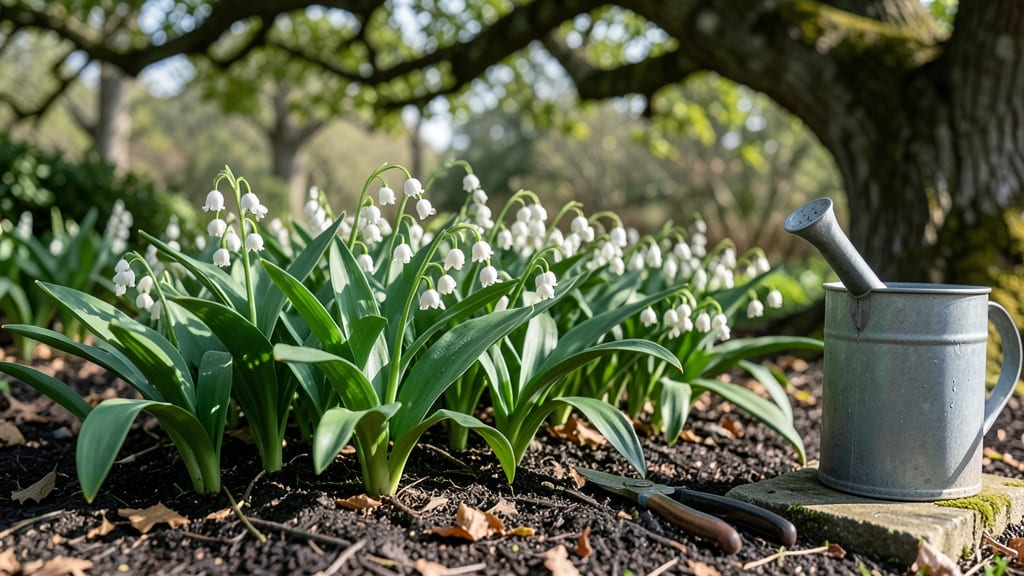
Lily of the valley grows best in shade, thriving in partial to full shade where it receives gentle, filtered sunlight—ideal for wooded areas or beneath tree canopies. Its blooms perform best with just 2-4 hours of morning light or dappled shade daily.
This shade preference isn't just a quirk—it's rooted in the plant's biology. 🌿 Lily of the valley's broad leaves are designed to capture low-light efficiently, while its rhizomes store energy for spring blooming.
Too much direct sun can actually bleach its signature white flowers or scorch delicate foliage, which is why gardeners often plant it under deciduous trees that provide summer shade. The key is mimicking its natural woodland habitat, where dappled light creates the perfect balance.
For gardeners working with limited sunlight, varieties like 'Variegata' (with cream-edged leaves) and 'Pallida' (known for its pale blooms) are particularly shade-tolerant. These cultivars handle deeper shade better than standard types, making them excellent choices for north-facing gardens or heavily shaded borders.
Pairing them with ferns or hostas creates a cohesive woodland garden aesthetic that thrives together.
💡 In This Article
- Lily of the Valley Light Requirements Explained
- Best Shade-Loving Lily of the Valley Varieties
Lily of the valley light requirements explained
Lily of the valley's preference for shade stems from its woodland origins, where it evolved to thrive under tree canopies receiving only 10-30% of full sunlight.
The plant's broad, lance-shaped leaves contain high concentrations of chlorophyll that efficiently capture low-light wavelengths (around 400-700 nanometers), allowing it to photosynthesize effectively in dim conditions.
This adaptation explains why it can produce vibrant blooms even in spaces receiving just 2-4 hours of morning sun—the gentlest light of the day.
The plant's shallow rhizomes (horizontal underground stems) store carbohydrates during dormancy, which fuels its spring blooming cycle. When exposed to intense midday sun, these rhizomes can overheat, causing the foliage to yellow or develop brown scorching marks within 3-5 days.
The delicate white flowers contain anthocyanin pigments that protect against UV damage, but prolonged direct sun can still cause them to bleach or develop greenish tints—a clear sign of light stress. 🌿
This shade tolerance makes lily of the valley an excellent choice for gardeners with limited sunlight. Unlike sun-loving perennials that require 6+ hours of direct sun, this plant can flourish in spots where even hostas or ferns struggle.
The secret lies in its ability to maintain a balanced water-to-light ratio—its thick, waxy leaves reduce water loss while still allowing sufficient gas exchange for photosynthesis in low-light conditions.
For optimal growth, aim to replicate its natural habitat by providing dappled shade (light filtering through tree leaves) or positioning it 1-2 feet away from building walls that receive morning sun but afternoon shade.
In deeper shade (like under conifers), the plant may produce fewer blooms but will maintain lush foliage. The key is avoiding harsh afternoon sun, which can raise leaf temperatures above 85°F—the threshold where damage begins.
Interestingly, lily of the valley's shade tolerance extends to its ability to grow in woodland understory conditions where light levels can drop as low as 5% of full sun.
This makes it one of the most adaptable shade plants, capable of thriving in environments where even shade-tolerant annuals would fail. The trade-off? It may take 2-3 years to establish fully in very low-light conditions compared to 1 year in ideal partial shade.
What most gardeners don't realize is that lily of the valley's rhizomes can actually detect light intensity through specialized cells called photoreceptors. When exposed to too much light, these cells trigger the production of protective pigments that darken the foliage—a natural defense mechanism.
This is why plants in full sun often develop deeper green leaves, while those in deeper shade maintain their classic pale green hue. 💚