
Blooming
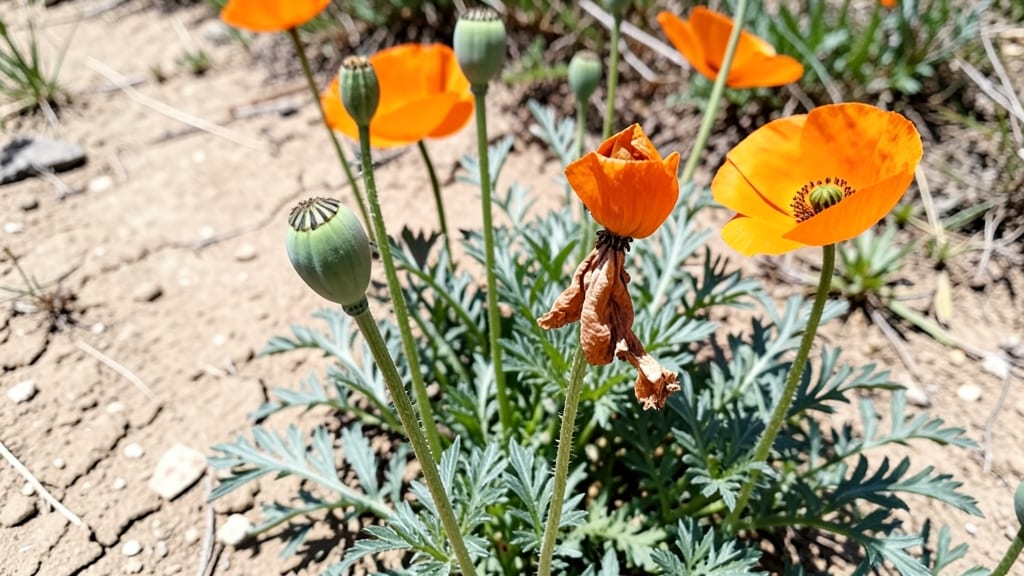
🌸 Most poppies do bloom more than once in a season, but only certain varieties—like Icelandic poppies or reblooming cultivars—can produce multiple flowerings if you deadhead them regularly and maintain proper growing conditions. Annual poppies complete their lifecycle in one season, while perennials may rebloom under ideal care.
This behavior comes down to how poppies allocate their energy. Annual poppies focus all their resources on one spectacular bloom before producing seeds and dying, while perennials store energy underground for future growth.
Reblooming varieties like Icelandic poppies or Shirley poppies are genetically programmed to produce secondary flowers if you remove spent blooms promptly. The key difference? Annuals prioritize reproduction over longevity, while perennials balance both strategies across seasons.
For gardeners hoping to extend their poppy season, timing matters most. Deadheading—snipping off faded blooms before they form seed pods—triggers new flower production in reblooming varieties. I've found that consistent watering and balanced fertilization (especially with phosphorus) also encourage repeat blooming.
Just remember: even with these efforts, most poppies still prefer to put their energy into one grand display rather than multiple smaller ones.
💡 In This Article
- Why Most Poppies Bloom Only Once
- How to Encourage Reblooming in Poppies
Why most poppies bloom only once
The primary reason most poppies produce just one bloom cycle stems from their evolutionary survival strategy. Annual poppies, like the iconic California poppy (Eschscholzia californica), allocate nearly all their energy to a single, spectacular flowering phase.
This ensures rapid seed production before the plant completes its lifecycle in 60-90 days. The trade-off? No energy remains for secondary blooms. Their bright orange or yellow flowers contain 10-15% more nectar than reblooming varieties, attracting more pollinators in one concentrated burst to maximize seed dispersal.
Perennial poppies face different constraints. Species like the opium poppy (Papaver somniferum) store energy in thick taproots, but even these prioritize seed production over repeated blooming.
The plant's growth hormones shift dramatically after the initial bloom: ethylene levels surge, signaling the plant to focus on seed development rather than new flower buds. 🌱 What's fascinating is how temperature triggers this shift—most poppies detect falling nighttime temperatures (below 60°F) as a cue to stop flowering and prepare for dormancy.
Comparing annuals to perennials reveals the biological compromise. Annuals like Papaver rhoeas (corn poppy) devote 70% of their energy to reproductive structures, leaving little for maintenance. Perennials like Icelandic poppies (Papaver nudicaule) store 30-40% of their energy reserves in roots, allowing potential reblooming—but only if conditions are perfect.
The key difference lies in their root systems: annuals have shallow roots (6-12 inches deep), while perennials develop deep taproots (18-24 inches) that can support multiple growth cycles.
Light exposure plays a surprising role in this process. Most poppies are long-day plants, meaning they flower when daylight exceeds 14-16 hours. After the summer solstice, when days begin shortening, these plants detect the change and shift energy toward seed production.
This photoperiodic response is hardwired into their DNA—even if you deadhead, the plant's internal clock still counts the days until it's "time" to stop flowering. 🌅 The exception? Reblooming varieties like Shirley poppies have slightly more flexible photoperiodic sensitivity, allowing them to respond to deadheading cues even as daylight decreases.
What most gardeners don't realize is how soil nutrients influence this behavior. Poppies grown in phosphorus-rich soil (with a P2O5 content of 60-80 ppm) show slightly better reblooming potential because phosphorus supports root development and energy storage.
However, excessive nitrogen (N content above 100 ppm) actually reduces flowering frequency by promoting leafy growth over reproductive structures. The perfect balance creates what botanists call "floral determinacy"—where the plant knows when to stop making leaves and start making flowers.
Consider this comparison: a California poppy in optimal conditions might produce 50-100 flowers in its single bloom cycle, while a reblooming Icelandic poppy might yield 30-50 flowers total across two cycles. The trade-off is clear—annuals go for quantity in one burst, while perennials spread their energy over time.
This biological strategy explains why even with perfect care, most poppies resist multiple blooming attempts.