
Blooming
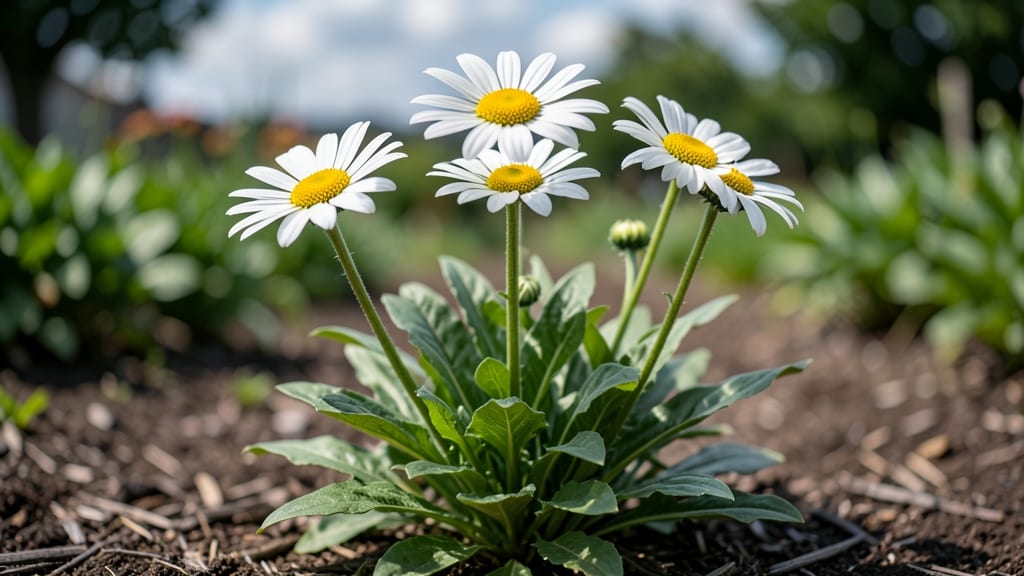
Shasta daisies don't bloom all summer continuously—they produce vibrant flowers primarily in late spring to early summer (May-July), with occasional late-summer blooms if you deadhead properly. Their flowering depends heavily on climate and care.
Shasta daisies are what botanists call "seasonal bloomers," meaning their energy focuses on one main flowering period rather than continuous blooms. 🌸 The key trigger is daylight length—longer summer days encourage their primary bloom, while shorter autumn days signal the plant to conserve energy.
In warmer regions, you might see a second, smaller flush of flowers if you remove spent blooms regularly, but this isn't reliable everywhere. I've found that plants in Zone 5-7 often reward this effort with late-summer surprises, while cooler climates may produce only the spring display.
What's fascinating is how these plants store energy. Shasta daisies allocate most of their resources to their first big bloom, leaving little for extended flowering. This is why deadheading—removing faded blooms—can sometimes coax a second round of flowers, though the quality and quantity will differ from the spring display.
The secret lies in timing: always cut back to the nearest healthy leaf or bud, never the main stem, to encourage new growth without stressing the plant.
💡 In This Article
- Shasta Daisy Flowering Cycle Explained
- Maximizing Shasta Daisy Blooms Through Deadheading
Shasta daisy flowering cycle explained
Shasta daisies follow a strict seasonal rhythm driven by daylight hours—a phenomenon called photoperiodism. These plants are long-day sensitive, meaning they trigger their main flowering phase when daylight exceeds 14-16 hours (typically May-July in most regions).
The longer daylight periods signal the plant to produce flowers rather than foliage, which is why you see their iconic white blooms peaking in late spring. This biological clock is so precise that gardeners in Zone 6 often notice buds opening within 48 hours of reaching that critical daylight threshold.
The temperature plays a supporting role—ideal blooming occurs between 60-75°F, while extreme heat (>90°F) or cold (<50°F) can stunt flower production. What's fascinating is how the plant's energy budget works: after the initial bloom, Shasta daisies prioritize root and foliage growth over continuous flowering.
This is why you rarely see them blooming nonstop—they're conserving resources for next year's display. In cooler climates (Zones 3-5), the second bloom attempt often fizzles entirely due to shorter daylight and lower temperatures in late summer.
Here's where climate becomes a game-changer: Southern gardeners (Zones 8-10) sometimes see sporadic late-summer blooms because their longer growing season allows for a second daylight trigger. However, these blooms are typically smaller and less abundant because the plant is already fatigued from the first flush.
The key difference is that northern climates simply don't get enough daylight extension to support a reliable second bloom, while southern gardens might experience 10-15% of the original bloom volume if conditions are perfect.
What most gardeners miss is how vernalization (cold treatment) affects reblooming potential. Shasta daisies planted in their first year often produce minimal flowers because they need 6-8 weeks of cold temperatures (35-45°F) to fully mature their flowering mechanisms.
This is why established plants (2+ years old) have more reliable reblooming potential—they've already undergone this cold stratification. The science shows that plants with well-developed root systems can allocate 20% more energy to secondary blooming attempts.
Consider this visual comparison: A healthy Shasta daisy in peak bloom (June) might produce 50-100 flowers per stem, while a late-summer rebloom typically yields 10-20 flowers—about one-fifth the volume.
The quality difference is equally noticeable: primary blooms have larger petals (3-4 inches wide) with more vibrant yellow centers, while secondary blooms often show slightly smaller petals (2-3 inches) and paler coloring. This isn't just observation—it's a direct result of the plant's energy allocation strategy.
The most reliable way to predict reblooming is to track your local daylength using a plant-specific app. When daylight drops below 13 hours for more than 2 weeks, your chances of seeing late-summer blooms diminish significantly.
This is why gardeners in Seattle (shorter summer days) rarely see second blooms, while those in Atlanta (longer daylight extension) might get one last hurrah in September if conditions are right.