
Blooming
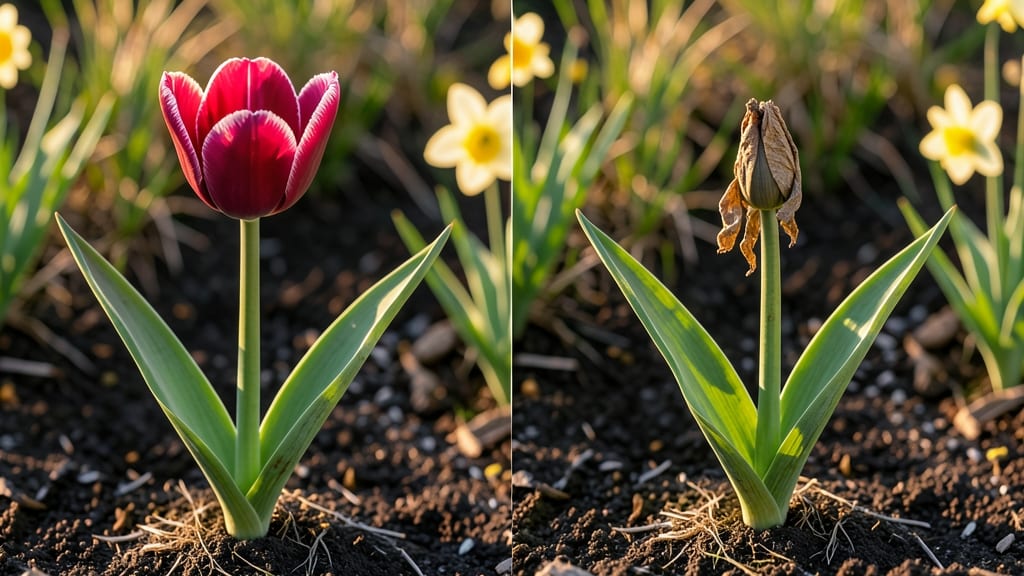
Most tulips bloom only once per season because they allocate their energy to flower production before entering dormancy. However, certain hybrid varieties like Darwin and Parrot tulips can rebloom with proper care, sunlight exposure, and fertilization.
Tulips follow a natural life cycle where their bulbs prioritize flower production over foliage growth.
After blooming, they focus on storing energy for next year's growth, which is why most varieties produce flowers just once. 🌸 The key to encouraging reblooming lies in supporting the plant through its dormant phase—this means providing balanced nutrients, consistent moisture, and selecting varieties bred for multiple blooms.
For gardeners eager to see tulips return year after year, the secret is patience and the right approach. After flowers fade, leave the foliage intact to photosynthesize and feed the bulb. Applying a slow-release fertilizer in early spring and again after blooming helps replenish nutrients.
Some gardeners swear by dividing bulbs every 3-4 years to prevent overcrowding, which can also boost reblooming potential.
💡 In This Article
- Tulip Bloom Cycle: Why Most Varieties Flower Once
- How to Encourage Reblooming in Tulips
Tulip bloom cycle: why most varieties flower once
Tulips follow a strict biological rhythm where their bulbs prioritize flower production over foliage growth. During their growing season, tulips allocate about 70-80% of their energy to developing blooms, leaving minimal resources for leaf production.
This is why their leaves often wilt quickly after flowering—the plant is already shifting focus to storing nutrients in the bulb for next year's growth. 🌱 The process begins in late winter when increasing daylight triggers the bulb to send up a stem, but once the flower opens, the plant's priority shifts to photosynthesis in the leaves to replenish the bulb.
Seasonal dormancy plays a critical role in this cycle. Tulips are cool-season plants that require a period of cold (40-50°F) to break dormancy, typically lasting 12-16 weeks.
After blooming, the plant enters a rest phase where it conserves energy, making it impossible to produce another flower without significant intervention. This dormancy is triggered by shortening daylight hours and cooler temperatures, signaling the bulb to focus on storage rather than growth.
Some gardeners mistakenly remove foliage too soon after blooming, which starves the bulb of the nutrients it needs to prepare for next season.
The energy allocation system in tulips is similar to how other monocots (like onions or garlic) operate, but tulips are more extreme in their single-bloom focus. For example, a Darwin Hybrid tulip might produce a 6-inch bloom, but its bulb only stores enough energy for one spectacular display.
The trade-off is that this single bloom is often larger and more vibrant than what you'd get from a reblooming variety, which spreads its energy more thinly across multiple flowers. This is why most gardeners accept the once-a-year blooming pattern—it's a natural survival strategy for the plant.
Light exposure also influences blooming patterns. Tulips need at least 6 hours of direct sunlight daily to produce flowers, but after blooming, they require 4-6 more weeks of sunlight to fully recharge their bulbs. Without adequate light, the plant can't photosynthesize enough to store sufficient nutrients for next year.
This is why tulips planted in shaded areas often fail to rebloom—their energy reserves never fully recover. The chlorophyll in the leaves works overtime during this period, converting sunlight into glucose that's transported to the bulb, where it's stored as starch for next season's growth.
Temperature fluctuations during the growing season can also impact blooming. Ideal spring temperatures (50-65°F) encourage steady growth, while extreme heat or cold can stress the plant.
For instance, a sudden heatwave after blooming can cause the foliage to senesce (turn yellow and die back) prematurely, robbing the bulb of its energy stores. This is why gardeners in warmer climates often struggle with tulips—the plants can't complete their natural cycle without the proper temperature cues.
The interplay between light, temperature, and energy storage creates a delicate balance that most tulips can't disrupt without human intervention.
Understanding this cycle helps explain why tulips are often called "spring ephemerals"—they bloom early in the season when few other flowers are in competition for pollinators, then quickly fade to conserve energy. This strategy allows them to thrive in temperate climates where winters are long and summers can be harsh.
The trade-off is that their single-bloom pattern makes them less reliable for continuous garden color compared to perennials that bloom multiple times. 🌿