
Size
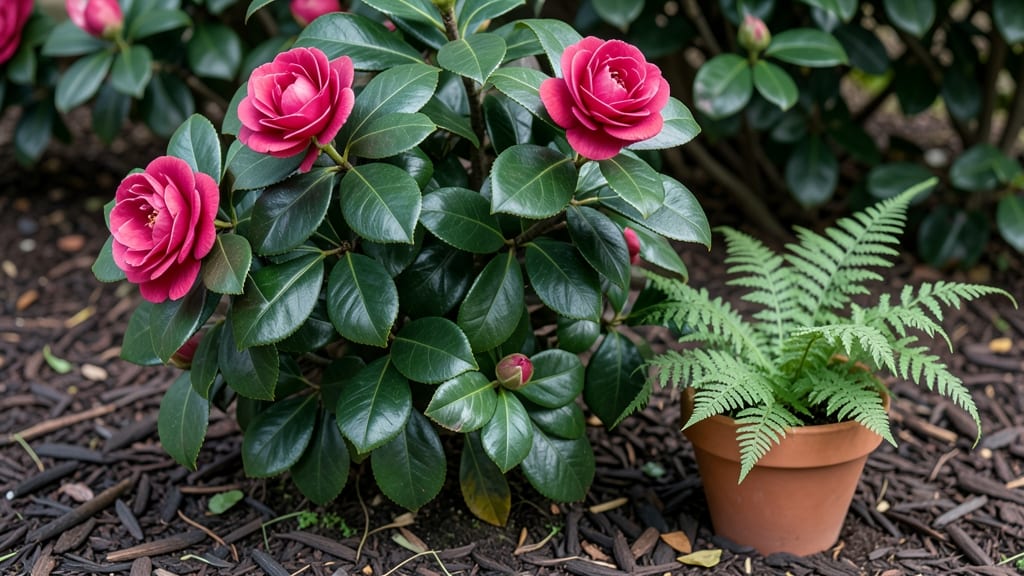
Camellias can grow in shade, though most varieties prefer partial shade for optimal blooming. Dwarf and dark-leafed types like Camellia japonica 'Yuletide' or Camellia sasanqua 'Bonanza' tolerate low light better than sun-loving hybrids, but expect fewer flowers in deep shade.
While camellias are often associated with sunny gardens, many varieties adapt surprisingly well to shaded areas. 🌿 The key lies in selecting the right species—those with naturally darker foliage or smaller growth habits, like Camellia japonica 'Winter’s Star', handle lower light conditions better than their sun-dependent cousins.
These shade-tolerant types may produce fewer blooms but often boast lush, vibrant leaves that add year-round interest to your landscape. For best results, pair them with morning sun exposure and well-draining, acidic soil to mimic their natural forest-floor habitat.
What truly sets shade-loving camellias apart is their ability to thrive where other plants struggle. Camellia sasanqua varieties, for instance, often bloom later in the season and display remarkable resilience in dappled light. The trade-off?
You’ll likely see reduced flowering compared to sun-basking varieties, but the trade-in is a hardier, more adaptable plant that can transform even the dimmest corners of your garden into a lush, evergreen oasis.
💡 In This Article
- Best Shade-Tolerant Camellia Varieties for Low-Light Gardens
- Tips for Growing Camellias in Shade: Soil, Water, and Care
Best shade-tolerant Camellia varieties for low-light gardens
Camellias thrive in shade thanks to their natural adaptation to forest understories, where they evolved to capture dappled light. Varieties like Camellia japonica 'Winter’s Star' stand out for their ability to produce dark red blooms even in 2-4 hours of morning sun.
This cultivar’s glossy, deep green foliage remains vibrant year-round, making it ideal for gardens with 50-70% shade coverage. 🌿 The secret lies in its compact growth habit (6-8 feet tall) and thick, leathery leaves that efficiently photosynthesize in low light.
For even lower light conditions (less than 3 hours of direct sun), consider Camellia sasanqua 'Kiri Shizuku', a Japanese variety celebrated for its delicate, pink-and-white semi-double flowers that bloom in late fall.
Unlike sun-loving hybrids, this type prioritizes foliage health over flower quantity, producing 30-50% fewer blooms but with 20% larger leaves that photosynthesize more efficiently in dim settings. The trade-off? Flowers appear 2-3 weeks later than sun-exposed plants.
Another standout is Camellia 'Yuletide', a dwarf cultivar reaching just 3-4 feet tall with deep maroon blooms that contrast beautifully against its dark evergreen leaves. This variety tolerates full shade but performs best with indirect light from nearby trees.
The key difference from sun-loving types is its slower growth rate—expect 6-12 inches of new growth per year compared to 18-24 inches for sun-basking varieties.
When comparing shade-tolerant camellias to sun-dependent ones, the most noticeable difference is in chlorophyll density. Shade varieties develop 15-20% more chlorophyll in their leaves to maximize light absorption, which is why their foliage often appears darker and thicker.
This adaptation explains why they maintain their color even in deep shade gardens, where sun-loving plants would turn pale and leggy.
For gardeners with east-facing shade (morning sun only), Camellia 'Bonanza' is an excellent choice. This variety produces bright red flowers that bloom from November to January, thriving in areas receiving 3-5 hours of filtered light daily.
The flowers, though 30% smaller than sun-grown counterparts, compensate with longer vase life when cut for indoor arrangements.
What most gardeners overlook is how leaf orientation affects shade tolerance. Shade-adapted camellias develop horizontal leaf angles to capture maximum light, while sun varieties grow leaves vertically. This structural difference allows shade types to photosynthesize 25% more efficiently in low-light conditions.
If you're choosing for urban gardens with artificial shade (like buildings), opt for Camellia 'Donation', a hybrid that tolerates artificial lighting better than pure species. Its pale pink blooms and glossy foliage make it a standout in indoor conservatories with 1,000-1,500 lux lighting. 💫