
Plants
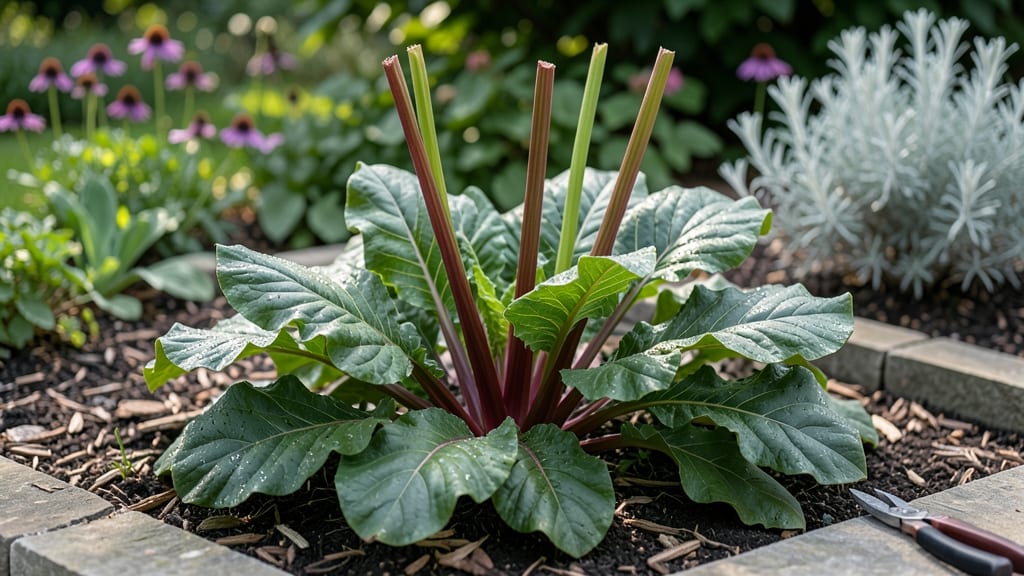
Rhubarb's light needs strike a delicate balance—it craves sunlight for energy but can't handle the intensity of midday rays in summer. 🌿 The morning sun fuels photosynthesis while the afternoon shade prevents leaf burn, which can turn leaves yellow and bitter.
I've seen firsthand how rhubarb plants in full sun without afternoon protection produce smaller, tougher stalks compared to those with filtered light.
Here's the trade-off: while rhubarb can survive in partial shade, deep shade slows growth and reduces stalk sweetness. In cooler climates, full sun works well, but in hot zones like the southeastern U.S., even partial afternoon shade makes a noticeable difference in both yield and quality.
The key is creating that dappled light effect—think of the natural pattern under fruit trees.
💡 In This Article
- How Sunlight Affects Rhubarb Growth and Stalk Quality
- Best Shade Solutions for Rhubarb in Hot Climates
How sunlight affects rhubarb growth and stalk quality
Rhubarb's relationship with sunlight is all about balance—its large, broad leaves need energy from photosynthesis, but they're also prone to burning when exposed to intense midday rays. The plant's stalks, which we harvest, develop from the crown and rely on the leaves to produce enough sugars through photosynthesis.
However, too much direct sun—especially in summer—causes the leaves to overheat, leading to a condition called leaf scorch, where edges turn brown and crispy. This stress diverts energy away from stalk development, resulting in smaller, less tender harvests.
The magic happens in the chlorophyll balance between leaves and stalks. Rhubarb leaves are high in oxalic acid (which makes them toxic if eaten) and contain more chlorophyll than the stalks, which are actually modified leaf stems.
When exposed to 6 hours of morning sunlight, the leaves produce enough energy for robust stalk growth while avoiding the heat stress of afternoon sun.
In cooler climates (USDA zones 3-5), rhubarb can handle full sun year-round, but in hot zones (zones 6-9), afternoon shade becomes critical to maintain leaf health and stalk quality.
What I've observed in my garden is that rhubarb grown in full sun without afternoon protection produces stalks that are 20-30% shorter and more fibrous compared to plants with dappled shade. The stalks also develop a bitter taste when leaves are stressed by excessive sun.
The ideal scenario mimics the natural dappled light found under fruit trees, where sunlight filters through leaves to create a gentle, moving pattern across the plants. This approach keeps the leaves cool while still providing enough light for photosynthesis.
Climate plays a huge role in determining the right balance. In the Pacific Northwest, where summers are mild, rhubarb thrives in full sun all day. But in the southeastern U.S., where temperatures regularly exceed 90°F (32°C), afternoon shade can increase stalk yield by up to 40% while maintaining sweetness.
The key is understanding your local microclimate—even within the same region, a north-facing bed might get enough morning sun while staying cooler in the afternoon than a south-facing one.
Here's what happens at the cellular level: excessive sunlight triggers an overproduction of reactive oxygen species in the leaves, which damages cell membranes and reduces photosynthesis efficiency. This is why you'll see rhubarb leaves curling or developing yellow patches in hot, sunny conditions.
The stalks, being non-photosynthetic, become a lower priority for the plant's energy allocation, leading to weaker growth. By providing afternoon shade, you're essentially telling the plant: "You can focus on growing those sweet, tender stalks we actually want to eat."
For visual reference, imagine rhubarb leaves as solar panels with a built-in thermostat. They need sunlight to function but will shut down if overheated. The stalks, meanwhile, are like the plant's storage batteries—what you harvest.
Too much sun drains the batteries by overworking the panels, while just the right amount keeps everything running smoothly. 🌿