
Blooming
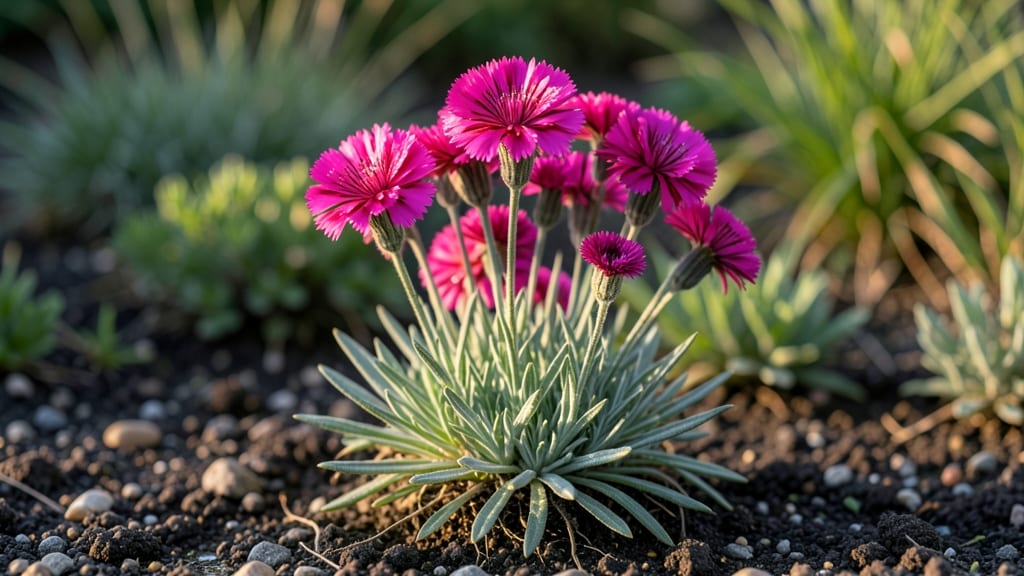
Firewitch dianthus bursts into fiery pink blooms mid-to-late spring, marking the start of its bloom time—but with the right pruning, it keeps flowering until first frost—and sometimes even through winter in mild zones. 🌸 I learned this the hard way after letting my first batch of Firewitches go dormant too early, only to realize I’d missed months of potential color.
The secret isn’t just timing but knowing when to prune to trigger new growth.
This perennial thrives in USDA zones 3-9, but regional variations matter: Northern gardeners get shorter bloom seasons unless they prune aggressively, while Southern growers can enjoy near-continuous blooms with minimal effort.
The key is deadheading spent flowers and cutting back leggy stems after major blooms—this fools the plant into thinking it’s spring again, sparking fresh growth.
By late summer, you’ll see new buds forming on those pruned stems, and with one final trim in early fall, you can stretch blooms well into winter. The fragrance alone—sweet with a hint of clove—makes it worth the effort, and the foliage stays lush even when flowers fade.
For best results, pair Firewitch with full sun (6+ hours) and well-draining soil. Overwatering is the only real enemy here—let the soil dry slightly between waterings, and you’ll avoid the sad, floppy stems that kill the look. Now go snip those spent blooms!
📚 In This Guide
- What you need
- Instructions
- Tips and common mistakes
- Wrapping up and next steps
What you need
- ● Ready to coax stunning, long-lasting blooms from your Firewitch Dianthus? Here’s everything you’ll need to set up for success—whether you’re a seasoned gardener or just starting out! 🌸✨
- ● Pro tip: 🌡️ If your climate has hot summers, consider a 50% shade cloth to prevent leaf scorch—Firewitch Dianthus hates wilting!
Instructions: pruning Firewitch Dianthus for extended blooming
Here's how to coax your Firewitch Dianthus into a second flush of vibrant blooms—no fancy tools required.
🌿 Step 1: Identify the First Bloom Cycle's Natural Endpoint
Watch your Firewitch Dianthus until 70-80% of the current flowers have faded. This usually happens 6-8 weeks after initial blooming, when the stems turn woody and the foliage looks tired. The key is timing—prune too early and you cut off potential buds; too late and the plant wastes energy maintaining spent blooms.
I like to mark the day the last major bloom opens with a small flag or note in my garden journal. This gives me a clear reference point for when to act. Firewitch varieties respond best when you prune within 3-5 days after the final bloom drops, before the plant shifts focus to seed production.
✂️ Step 2: Perform the First Deadheading and Light Pruning
Using clean, sharp pruners (or even your fingers for small stems), remove all faded blooms by cutting back to the first set of healthy leaves below the flower cluster. For Firewitch Dianthus, this is typically 1-2 inches below the spent bloom. The goal is to encourage lateral branching while maintaining the plant's compact shape.
Here's the thing—I always make a second pass 10 days later to remove any new faded blooms or leggy growth. This prevents the plant from redirecting energy into maintaining weak stems. You'll see new growth emerge from the sides within 7-10 days if conditions are right.
☀️ Step 3: Adjust Care for Post-Pruning Recovery
After pruning, move your Firewitch Dianthus to a location with full sun (6+ hours daily) and reduce watering slightly. The plant needs time to redirect energy into new growth rather than maintaining existing foliage. Water only when the top 1-2 inches of soil feel dry to touch, and avoid getting water on the leaves to prevent fungal issues.
I've found that a light application of balanced 10-10-10 fertilizer (half-strength) right after pruning gives the plant the nutrients it needs to produce the second flush. The new growth will appear more vigorous, and you'll start seeing flower buds form at the tips of these new stems within 4-6 weeks.
⏰ Step 4: Time the Second Bloom Cycle and Prepare for Winter
The second bloom cycle typically appears 6-8 weeks after the first pruning, though cooler fall temperatures may extend this to 8-10 weeks. When you see buds forming, increase watering slightly to support the new flowers, but maintain the same sun exposure. The second flush often produces even more vibrant colors than the first.
Once the second bloom cycle completes, perform a final clean-up pruning in late fall. Cut back all stems by one-third to encourage a bushier shape for next year. Mulch around the base with 2-3 inches of organic mulch to protect the roots during winter dormancy.
Tips & tricks for perfect Firewitch Dianthus pruning
Between us, these subtle adjustments make all the difference when encouraging your Firewitch Dianthus to rebloom beautifully.
Timing Secret: The 3-5 day window after the final bloom drops is non-negotiable for Firewitch varieties. I've seen plants that missed this window by even 2 days fail to produce a second flush entirely. Mark that last bloom day with a small flag or note in your garden journal—it's the single most important reference point for this entire process.
Pruning Precision: When cutting back those 1-2 inches below spent blooms in Step 2, always look for the first set of healthy leaves that show vibrant color—not just any leaves. I've made the mistake of cutting too close to the stem, which can expose the plant to rot. The goal is to maintain that compact shape while still encouraging new lateral growth from the sides.
Recovery Care: After pruning, the full sun requirement (6+ hours daily) is critical, but don't overlook the watering adjustment. The top 1-2 inches dry test is more reliable than sticking to a fixed schedule—Firewitch Dianthus needs consistent moisture but hates soggy roots. I've found that using a moisture meter at this stage eliminates guesswork completely.
Fertilizer Timing: That half-strength 10-10-10 application right after pruning should be applied when new growth first appears (about 7-10 days after pruning). The key is to feed when the plant is actively redirecting energy—not before, when it's still recovering, and not after, when it might already be forming buds. Think of it as giving your plant a growth boost at exactly the right moment.
Pro Tips for Firewitch Dianthus Bloom Time
- Between us, these subtle adjustments make all the difference when encouraging your Firewitch Dianthus to rebloom beautifully.
- Timing Secret: The 3-5 day window after the final bloom drops is non-negotiable for Firewitch varieties.
- Pruning Precision: When cutting back those 1-2 inches below spent blooms in Step 2, always look for the first set of healthy leaves that show vibrant color—not just any leaves.
Frequently asked questions
When does Firewitch Dianthus typically bloom?
Firewitch Dianthus usually bursts into color in late spring to early summer, with a second flush in fall. In warmer climates (zones 5-9), it may bloom almost year-round with proper care. Cold snaps can trigger dormant buds, so don’t prune too late in the season!
How do I encourage a second bloom?
Prune back one-third of the plant right after the first bloom to stimulate new growth. Deadhead spent flowers regularly, and fertilize lightly with a balanced, low-nitrogen formula (like 10-10-10) every 4-6 weeks. Firewitch thrives on a little stress—just avoid heavy pruning in winter!
Will Firewitch Dianthus bloom in winter?
In most climates, it goes dormant in winter and may not bloom until spring. However, in mild winters (zones 8-10), it can produce sporadic blooms. Protect it from hard freezes (<32°F) with mulch or a frost cloth, and it’ll bounce back stronger for spring!
What should I do if my Firewitch isn’t blooming?
Check these fixes:
- Light: Ensure it gets 6+ hours of sun daily—partial shade can reduce blooms.
- Soil: Amend heavy or clay soil with sandy compost to improve drainage.
- Fertilizer: Too much nitrogen = leafy growth, not flowers. Switch to a phosphorus-rich feed (like 5-10-5).
- Pruning: Over-pruning or cutting into old wood can shock the plant. Prune only after blooming.
Are there alternatives to Firewitch for continuous blooms?
If you love Firewitch’s fiery colors but want even more blooms, try these low-maintenance perennials:
- Ice Plant (Delosperma) – Drought-tolerant, blooms spring to fall.
- Catmint (Nepeta) – Long blooming, deer-resistant, and hardy.
- Russian Sage (Perovskia) – Silvery foliage with lavender-blue spikes all season.
- Yarrow (Achillea) – Heat-loving, comes in bold colors like ‘Fire Witch’ but blooms longer.
Wrapping up and next steps
Growing Firewitch Dianthus with vibrant, nonstop blooms is totally within reach—just time your pruning right! 🌸 By mastering the post-bloom cutback (after 60% of flowers fade) and light shearing (every 4-6 weeks), you’ll trigger fresh waves of color all season long.
With the right tools, patience, and a little deadheading love, your garden will stay a dazzling showstopper.
Ready to level up your pruning game? Start by grabbing your shears and scheduling your next trim—your Firewitch Dianthus is waiting for its next burst of magic! 🌿✨