
Light Requirements
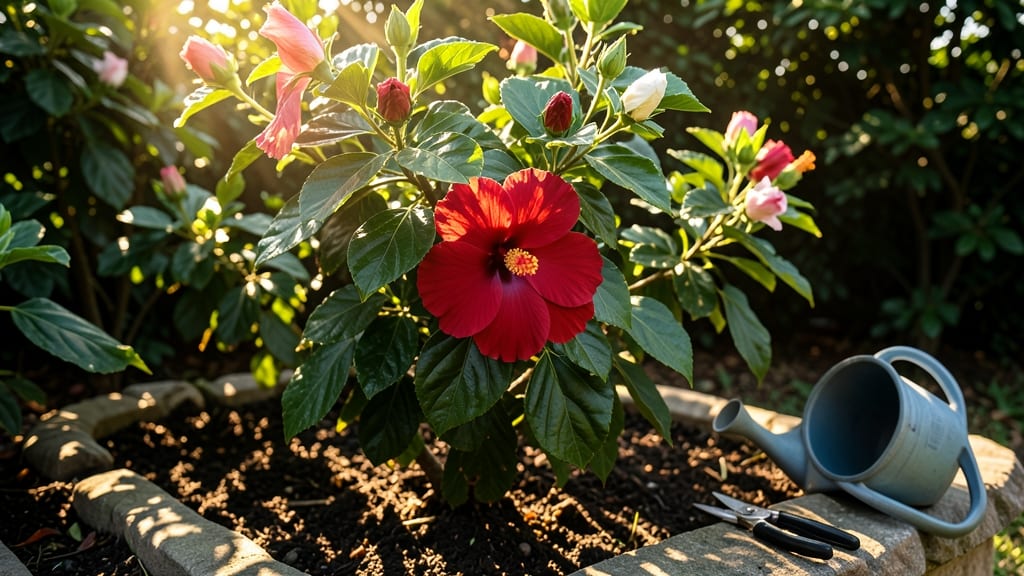
Deciding whether hibiscus thrives in full sun or shade depends entirely on the variety you choose—and the right pick can mean the difference between vibrant blooms and sparse foliage.
Struggling to decide where to plant your hibiscus? Whether your garden basks in full sun or sits in partial shade, the right variety can thrive—and bloom spectacularly—with the perfect light conditions.
Sun-loving hibiscus like Hibiscus rosa-sinensis demand at least 6 hours of direct sunlight daily, while hardier types such as Hibiscus syriacus adapt better to partial shade in hotter climates.
Below, I’ll break down the best options for your light situation, plus how to spot (and fix) signs of stress like yellowing leaves or weak growth.
You’ll also discover how to transition your hibiscus between sun and shade without shocking the plant, plus regional tips for USDA Zone 6a gardens where spring planting kicks off in April.

Best hibiscus varieties for full sun gardens
If your garden is a sun-soaked paradise with 6+ hours of direct sunlight daily, you’re in luck—hibiscus plants thrive in full sun and reward you with bold, vibrant blooms all season long. The key is choosing the right variety, as not all hibiscus handle scorching heat equally.
For tropical hibiscus (Hibiscus rosa-sinensis), full sun is a must, while hardy hibiscus (Hibiscus syriacus) can tolerate it with proper care. Let’s dive into the best sun-loving varieties and how to keep them flourishing under the blazing sky.
First, understand that full sun varieties need more than just light—they crave consistent moisture and protection from intense afternoon heat. In USDA Zones 8-11, tropical hibiscus can bask in unfiltered sun all day, but in cooler zones (6-7), afternoon shade helps prevent leaf scorch.
Always prioritize well-draining soil to avoid root rot, especially when watering deeply during heatwaves. With the right prep, these hibiscus will become the showstopper of your summer garden.
| Variety | Sun Needs | Bloom Season | Drought Tolerance | Height |
|---|---|---|---|---|
| Hibiscus rosa-sinensis ('Tropical Hibiscus') | 6-8+ hours | Spring-Fall (year-round in frost-free zones) | Low (needs consistent water) | 3-15 ft |
| Hibiscus syriacus ('Rose of Sharon') | 6+ hours (afternoon shade in hot zones) | Late Summer-Fall | Moderate | 8-12 ft |
| Hibiscus moscheutos ('Swamp Hibiscus') | Full sun to partial shade | Summer-Fall | High (tolerates wet soil) | 6-10 ft |
| Hibiscus rosa-sinensis 'Lili' (Dwarf) | 6+ hours | Spring-Fall | Low | 3-5 ft |
For tropical hibiscus (Hibiscus rosa-sinensis), 6-8 hours of full sun is ideal, but in Zone 10 and above, they can handle direct midday sun without issue.
In hotter climates, provide light afternoon shade to prevent leaf burn, especially for dark foliage varieties like 'Lady Baltimore' or 'Pink Giant'. These varieties are heat-tolerant but water-intensive, so mulch heavily to retain moisture. Prune spent blooms and leggy growth in early spring to encourage bushier, more vibrant flowering.
If you’re in a cooler zone (6-7), Hibiscus syriacus ('Rose of Sharon') is your best bet—it blooms prolifically in full sun and handles heatwaves better than tropical types.
This hardy shrub thrives with 6+ hours of sun and well-draining soil, making it perfect for USDA Zones 5-9. Deadhead faded blooms regularly to extend the flowering season, which typically runs from late summer to fall.
For added drought resistance, choose cultivars like 'Blue Chiffon' or 'Autumn Embers', which boast brighter foliage and longer bloom cycles.
Don’t overlook Hibiscus moscheutos ('Swamp Hibiscus')—it’s a full-sun powerhouse that also tolerates wet soil conditions, making it ideal for pond edges or rain gardens. This variety thrives in Zones 4-9 and produces massive, dinner-plate blooms in shades of pink, white, and red.
Unlike tropical hibiscus, it’s perennial in cooler zones and drought-tolerant once established. Pair it with ornamental grasses for a dramatic, textured border that thrives in full sun.
For container gardening, opt for dwarf tropical hibiscus like 'Lili' or 'PFitzer's Miniature', which stay under
Top shade-tolerant hibiscus varieties for Low-light gardens
If you thought hibiscus only thrived in full sun, think again! Many varieties adapt beautifully to partial shade, producing stunning blooms with just 3–6 hours of indirect light.
My garden’s Hibiscus moscheutos (swamp hibiscus) proves this every summer, bursting with pink and white flowers under my oak tree’s dappled shade. The key is choosing the right species and providing consistent moisture—shade-loving hibiscus hate drying out.
Contrary to popular belief, not all hibiscus need scorching sun. While tropical hibiscus (Hibiscus rosa-sinensis) craves heat, hardy varieties like ‘Diana’ rose of Sharon (Hibiscus syriacus) and ‘Lady Baltimore’ swamp hibiscus flourish in cooler, shadier spots.
These plants trade intense sun exposure for longer bloom seasons and healthier foliage in temperate climates. Let’s explore the best shade-tolerant options and how to coax the most blooms from them.
Hibiscus in Full Sun vs. Shade
🌞 Full Sun (6+ hours)
- ✅ Pros: Boldest blooms, faster growth, heat-tolerant varieties
- ✅ Best for: Tropical hibiscus (H. rosa-sinensis), ‘Arnold Promise’ rose of Sharon
- ✅ Care tip: Water deeply 2–3x/week in summer
🌳 Partial Shade (3–6 hours)
- ✅ Pros: Extended bloom seasons, fewer pests, cooler foliage
- ✅ Best for: ‘Diana’ (H. syriacus), ‘Lady Baltimore’ (H. moscheutos)
- ✅ Care tip: Mulch heavily to retain moisture
Let’s start with Hibiscus moscheutos, the swamp hibiscus, which is a shade champion. This native North American beauty thrives with morning sun and afternoon shade, making it perfect for woodland gardens or under large trees.
Varieties like ‘Lady Baltimore’ (pink blooms) and ‘Marshmallow’ (white) produce 6–8 inch flowers that last 1–2 days each. To maximize blooms, prune back dead flowers regularly and fertilize with balanced 10-10-10 in spring.
For a compact, shade-loving option, try Hibiscus syriacus ‘Diana’, a rose of Sharon cultivar that tolerates as little as 3 hours of light. This 3–5 foot shrub sports lavender-blue flowers from midsummer to frost.
Unlike sun-loving hibiscus, ‘Diana’ thrives in USDA zones 4–9, making it ideal for northern gardens. Plant it near a north-facing wall or under deciduous trees that provide filtering shade in summer.
Don’t overlook Hibiscus coccineus, the scarlet hibiscus, which handles partial shade better than full sun in hot climates. Its red tubular flowers attract hummingbirds and bloom from mid-summer to fall.
To prevent leaf drop in shade, ensure the soil stays consistently moist—these plants hate drying out. A 5-gallon container with well-draining potting mix works well for container gardens in shady spots.
To troubleshoot poor blooming in shade, check for these common issues: over-fertilizing with nitrogen (promotes leaves, not flowers), root-bound pots, or inadequate light. If your hibiscus produces fewer than 5 blooms per stem, move it to a sunnier spot gradually—sudden exposure can scorch leaves.
For indoor hibiscus (like H. rosa-sinensis), place it near a south-facing window or use a grow light for 12–14 hours/day.
Remember, shade-tolerant hibiscus aren’t lazy plants—they still need attention to thrive. My ‘Diana’ rose of Sharon rewards me with weeks of blooms when I mulch annually and water at the base (not overhead).
With the right variety and care, your low-light garden can become a hibiscus paradise—no scorching sun required! 🌿