
How To
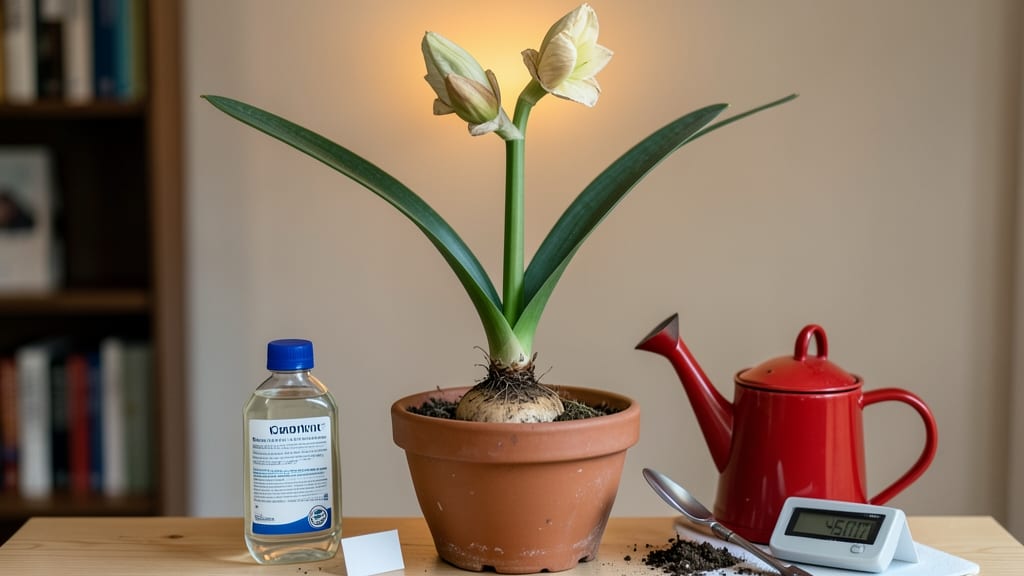
Your amaryllis is sending up long leaves but refusing to bloom after it grows them? 🌱 That stubborn bulb just needs a little coaxing—think of it like waking a sleepy friend with the right routine.
The key lies in mimicking its natural cycle: 6 weeks of darkness, cool temps, and careful watering before it’ll reward you with those dramatic flower spikes.
Most people get this wrong by keeping their amaryllis in bright light all year or overwatering during dormancy. I’ve nursed back three "leaf-only" plants using this method—even one that had gone five years without blooms.
The secret is patience: stop fertilizing in summer, let the soil dry slightly between waterings, and move it to a 60-65°F spot for 10-12 weeks before forcing.
You’ll see the first sign of success when those flower buds appear—usually within 2-3 weeks of bringing it back into light. The blooms last 7-10 days, but the real magic is knowing you’ve cracked the code for next season. No more leaf monsters, just reliable, show-stopping flowers.
Works for both indoor amaryllis and those in bright windows—just adjust the timing based on your last frost. Here’s the exact schedule that finally got mine to cooperate after years of frustration.
Root Causes Of Delayed Blooms
If your amaryllis has sprouted long, lush leaves but refuses to bloom, the issue likely stems from one (or more!) of these common biological triggers. Understanding the why behind the delay is the first step to coaxing those stunning flowers into action.
Let’s break down the science—and what’s really holding your plant back.
Amaryllis bulbs need bright, indirect light (or direct morning sun) to trigger flowering. When placed in low-light conditions—like a dim corner or behind curtains—the plant prioritizes leaf growth over energy-intensive blooms. Here’s why:
- Photosynthesis slowdown: Leaves produce energy via sunlight, but weak light means less glucose is generated. Without enough reserves, the bulb can’t support flower buds.
- Daylength sensitivity: Amaryllis (like many bulbs) detect photoperiods—natural light cycles. Too few hours of light (below 12–14 hours/day) signals the plant to delay blooming until conditions improve.
- Chlorophyll imbalance: Low light causes elongated, pale leaves (a sign of etiolation). These leaves are less efficient at capturing energy, further stalling flower production.
Actionable fix: Move your plant to a south- or east-facing window (or use a grow light for 12–14 hours daily). Rotate the pot weekly for even exposure.
Watering is a double-edged sword for amaryllis. Too much moisture—especially in poorly draining soil—can suffocate the bulb’s roots and trigger stress responses that delay blooming. Here’s the science:
- Root asphyxiation: Bulbs store nutrients and water in their scales. Excess moisture forces roots to suffocate, starving the plant of oxygen. This triggers anaerobic respiration, a survival mode that diverts energy away from flowers.
- Rot and pathogen risk: Waterlogged soil breeds fungi (like Fusarium) that attack the bulb’s base, where flower buds form. A rotting bulb can’t bloom.
- Nutrient leaching: Overwatering flushes out essential minerals (like phosphorus and potassium), which are critical for flower development.
Actionable fix:
- Use a well-draining mix (cactus soil + perlite + orchid bark).
- Water only when the top 2 inches of soil are dry—then soak thoroughly and drain excess.
- Avoid saucers; place pots on elevated trays to prevent soggy roots.
Amaryllis bulbs are tropical but finicky about temperature cues. If your home stays too warm year-round (or too cold during critical growth phases), the plant may skip flowering entirely. The key triggers:
- Lack of seasonal contrast: Amaryllis need a cool-down period (50–55°F/10–13°C for 6–8 weeks) to mimic winter dormancy. Without this, the bulb stays in a perpetual "growth mode" and never signals flower production.
- Heat stress: Temperatures above 85°F (29°C) can scramble the plant’s internal clock, halting bud formation. High heat also increases transpiration (water loss), stressing the bulb.
- Cold shock: Draughts or temps below 50°F (10°C) can damage leaves, reducing the plant’s ability to photosynthesize and store energy for blooms.
Actionable fix:
- Place the bulb in a cool, dark spot (60–65°F/15–18°C) for 6–8 weeks after leaves die back (natural dormancy trick).
- Keep daytime temps between 65–75°F (18–24°C) during growth.
- Avoid placing near HVAC vents or drafty windows.
Amaryllis bulbs are energy hoarders, but they need the right fuel to bloom. If your plant is deficient in key nutrients—or overfed with the wrong ones—the result is leafy growth without flowers. The culprits:
| Nutrient Issue | Why It Stops Blooms | Fix It With |
|---|---|---|
| ⚠️ Low Phosphorus (P) | Phosphorus is the "flowering nutrient." Without it, the bulb can’t initiate bud formation, even with excess nitrogen (which promotes leaves). | A balanced 20-20-20 fertilizer or a bone meal supplement (high in P). |
| ⚠️ Too Much Nitrogen (N) | Nitrogen fuels leafy growth but suppresses blooms. It tricks the plant into thinking it’s still in the vegetative phase. | Switch to a low-N, high-P fertilizer (e.g., 5-10-10) once leaves are 6+ inches tall. |
| ⚠️ Potassium Deficiency (K) | Potassium regulates flowering hormones and stress responses. A deficiency weakens the bulb’s ability to support heavy blooms. | Use a potassium-rich fertilizer (like wood ash or banana peel tea) or a 5-5-10 blend. |
Actionable fix:
- Fertilize lightly every 4–6 weeks during growth (spring–fall) with a balanced bloom booster (e.g., 10-30-20).
- Avoid compost tea or fish emulsion—they’re high in N and can delay blooms.
- Test soil pH: Amaryllis prefer 6.0–6.5. Adjust with lime (to raise) or sulfur (to lower).
Even with perfect care, some amaryllis bulbs refuse to bloom due to internal or external stress. Common culprits:
- Overcrowded roots: If the bulb has been in the same pot for 2+ years, roots may circle the container, starving the center where flower buds form.
- Young or weak bulbs: Bulbs under 3 inches in diameter or those that haven’t matured (2+ years old) may focus on growth rather than blooming.
- Transplant shock: Recently repotted bulbs divert energy to root recovery, delaying flowers for 6–12 months.
- Disease or damage: A bulb with soft rot, mealybugs, or physical trauma (like crushed scales) may abort flower development.
Actionable fix:
Revive Your Amaryllis Bloom Game
Ready to coax those stunning blooms from your leafy amaryllis? The key is understanding what your plant needs—not just what it’s missing. Below, we break down the most common reasons your amaryllis skips flowering and how to fix them, step by step.
Think of this as your cheat sheet to turning those long leaves into a floral showstopper! 🌱✨
If your amaryllis is basking in dim corners or behind curtains, it’s like asking a singer to perform in a whisper—it just won’t hit the right notes. Bulbs need bright, indirect light (think east or west-facing windows) for at least 6–8 hours daily to trigger blooming.
How to Fix It:
🔥 Move it closer to a window – Rotate the pot weekly so all sides get equal light. 🍳 Supplement with grow lights – A simple LED grow light (12–14 hours/day) works wonders if natural light is scarce. 👨🍳 Avoid direct sunburn – South-facing windows can scorch leaves; use sheer curtains to diffuse harsh rays.
Prevention Tips:
💡 Monitor leaf color – Yellowing or stretching leaves = more light needed. 🌡️ Watch for bud formation – If buds appear but wilt, it’s often due to sudden temperature drops near the window.
Amaryllis bulbs are sensitive to moisture—drown them, and they rot; neglect them, and they sulk. The goal? Consistent dampness without soggy soil.
How to Fix It:
🔥 Check soil moisture – Stick your finger 1–2 inches into the soil. Water only when it’s dry to the touch. 🍳 Use the right pot – Ensure it has drainage holes to prevent root rot. 👨🍳 Adjust your schedule – Water less in winter (when growth slows) and more in spring/summer (when leaves sprout).
Prevention Tips:
💡 Bottom-watering trick – Place the pot in a tray of water for 10–15 minutes, then drain excess. This keeps roots happy without overdoing it. ✨ Avoid wetting the bulb – Direct water on the soil, not the bulb itself, to prevent rot.
Amaryllis bulbs need a cool-down period to "reset" and prepare for blooming. If they’re kept too warm year-round, they’ll just keep growing leaves—no flowers in sight!
How to Fix It:
🔥 Simulate winter dormancy – After blooming, move the plant to a cool (55–65°F), dark spot for 8–10 weeks (e.g., a basement or garage). 🍳 Reduce watering during dormancy – Let the soil dry out completely; water sparingly. 👨🍳 Bring it back to light – After dormancy, repot (if needed) and return to bright light to encourage new growth.
Prevention Tips:
💡 Set a calendar reminder – Mark the 8–10 week dormancy period to avoid skipping it. 🌡️ Watch for leaf drop – Natural leaf yellowing during dormancy is normal; don’t panic!
Too little fertilizer = weak bulbs. Too much = burned roots. Amaryllis need a balanced, bulb-specific fertilizer to bloom beautifully.
How to Fix It:
🔥 Fertilize at the right time – Use a 20-20-20 or 10-10-10 fertilizer only when leaves emerge in spring. 🍳 Dilute it properly – Half-strength applications every 2–4 weeks prevent root burn. 👨🍳 Switch to bloom booster – Once buds form, switch to a phosphorus-heavy fertilizer (e.g., 10-30-20) to support flowering.
Prevention Tips:
💡 Flush the soil – Every few months, water thoroughly to leach excess salts. 🌱 Observe leaf color –
- Yellow leaves = Overwatering or nutrient burn.
- Purple stems = Phosphorus deficiency.
- Brown tips = Fluoride buildup (use distilled water).
If your amaryllis has been in the same pot for 2+ years, its roots may be circling the bulb, starving it of energy for flowers.
How to Fix It:
🔥 Repot every 2–3 years – Choose a pot 1–2 inches larger in diameter than the bulb. 🍳 Refresh the soil – Use a well-draining mix (cactus/succulent soil + perlite). 👨🍳 Trim dead roots – Gently separate the bulb from old soil and snip any mushy or tangled roots.
Prevention Tips:
✨ Check for root escapees – If roots are growing out of drainage holes, it’s time to upgrade! 🎯 Use terracotta pots – They wick away excess moisture better than plastic.
Need flowers now? Try these fast-acting tricks:
- 🔥 Cold shock method – Place the potted bulb in a dark, cool (50–55°F) spot for 6–8 weeks, then move to bright light.
- 🍳 Ethylene gas trick – Place a ripe apple near the bulb (or use an ethylene-releasing product) to trick it into blooming faster.
- 👨🍳 Bottom heat – Set the pot on a heating pad (low setting) to mimic tropical conditions.
With these fixes, your amaryllis should be reaching for the sky—and the light— in no time. Remember: Patience is key, but so is consistency. Happy blooming! 🌸💐
Frequently asked questions
Why does my amaryllis keep growing leaves but never blooms?
The most common reasons are lack of dormancy, too much nitrogen fertilizer, or insufficient light. Amaryllis need 6-8 weeks of cool, dark rest after blooming to recharge. Without this break, they focus all energy on leaves instead of flowers. Also check your fertilizer—too much nitrogen (like in lawn food) promotes foliage at the expense of blooms.
How long should I wait before forcing my amaryllis to bloom?
Start the forcing process 8-10 weeks before you want flowers. This means placing the potted bulb in cool (60-65°F), dark conditions for 6-8 weeks (like a closet or basement), then moving it to bright light. Buds typically appear within 2-3 weeks after bringing it back into light, with flowers following 4-6 weeks later.
Can I make my amaryllis bloom faster than the usual 6-8 week process?
While you can't completely skip the dormancy period, you can shorten it slightly using the "cold shock" method. Place the bulb in a 50-55°F environment for 4-6 weeks instead of 8, then return to light. For immediate results, try the ethylene trick: place a ripe apple near the bulb (or use an ethylene-releasing product) to stimulate blooming within 3-4 weeks.
What should I do if my amaryllis has no flower stalk after forcing?
Don't panic! First check for hidden buds—sometimes they form at the base or inside the bulb. If truly absent, your bulb may be too young (3+ years old needed) or stressed. Try bottom heat (place pot on a heating pad) or increase phosphorus (use 10-30-20 fertilizer) for next season. Often, bulbs "save" their energy for the following year.
Is it normal for my amaryllis to bloom and then die back completely?
Yes! This is completely natural and actually healthy. After blooming, amaryllis enter dormancy where leaves yellow and die back. This is their way of conserving energy. Simply reduce watering, let the soil dry completely, and store in cool (55-65°F), dark conditions for 8-10 weeks before bringing back into light for next season's growth.