
How To
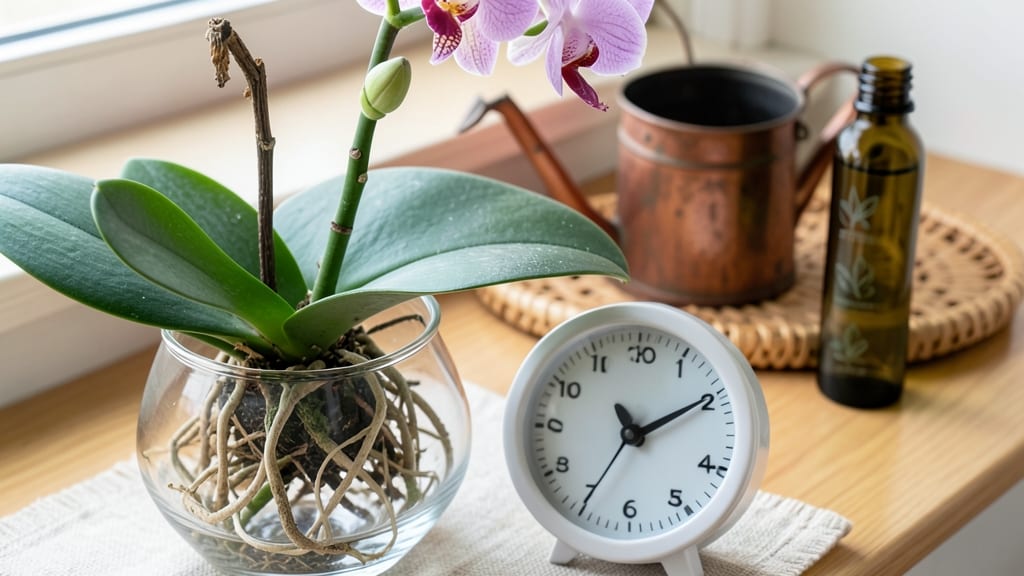
Orchids take anywhere from 3 to 12 months to bloom again after their first flowering, depending on the type and care routine you follow.
If you’ve ever watched your 🌸 orchid put out a stunning show—only to wonder why it’s taking forever to repeat the performance—you’re not alone. The truth is, reblooming isn’t just about time; it’s about the right balance of light, temperature shifts, and even dormancy periods.
Without these factors in sync, your orchid might just be biding its time.
Some varieties, like the popular Phalaenopsis, can rebloom as soon as 4 to 6 months under ideal conditions, while others, such as Cattleyas, might need a full year to recover and produce new spikes.
Knowing your orchid’s type and seasonal needs is the key to avoiding frustration and wasted care efforts.
Below, I’ll break down the reblooming timelines by orchid type, the critical care factors that speed up (or delay) the process, and troubleshooting tips to get your orchid back on track—so you can enjoy those show-stopping blooms year after year.
Orchid reblooming timeline by type: when to expect flowers
If you're waiting for your orchid to bloom again, timing depends entirely on the variety. Some orchids like Phalaenopsis (moth orchids) can rebloom in as little as 6 months with proper care, while others like Dendrobium need 3-6 months of dormancy before producing flowers.
Understanding these natural cycles will set realistic expectations and help you adjust your care routine.
Each orchid type has unique seasonal triggers—some respond to temperature shifts, others to light changes. For example, Cattleya orchids often bloom in late winter or spring, while Oncidium (dancing lady orchids) may rebloom twice a year under ideal conditions.
Let’s break down the reblooming timelines for the most popular orchid varieties so you can plan ahead.
🌸 Pro Tip: Most orchids need 10-14 hours of light daily to trigger reblooming. If your orchid isn’t getting enough light, it may skip its bloom cycle entirely.
My Phalaenopsis orchid typically blooms twice a year—once in early spring and again in late fall—if I provide the right conditions. The key is mimicking its natural environment: bright indirect light and a slight temperature drop to trigger flower spikes.
Without this shift, the plant may just produce more leaves instead of blooms.
For Dendrobium orchids, the reblooming process starts with a 3-month dormancy period in cooler temperatures. During this time, reduce watering to every 2-3 weeks and avoid fertilizing.
Once you see new growth in spring, resume regular care and expect flowers by summer or early fall. Skipping dormancy often results in no blooms at all.
💡 Light Matters: Place your orchid near an east-facing window for gentle morning light, or use a grow light for 12-14 hours daily. Too little light = no blooms; too much direct sun = leaf burn.
If you’re growing Cattleya orchids, pay attention to temperature fluctuations. These orchids need a 10°F drop at night to set flower buds.
In indoor settings, move your Cattleya to a cooler room (like a garage with insulation) or use a cooling pad under the pot to simulate seasonal changes. Without this trigger, reblooming can take 2 years or longer.
Oncidium orchids are the most forgiving when it comes to reblooming. With consistent warmth and humidity, they can produce flowers year-round. However, they still need a rest period—reduce watering slightly in winter to encourage stronger spikes. Mine has bloomed in both spring and fall when I’ve maintained these conditions.
One common mistake I see is assuming all orchids rebloom on the same schedule. Phalaenopsis and Oncidium are more frequent bloomers, while Cymbidium or Paphiopedilum (lady slipper orchids) may only bloom once every 2-3 years.
Always check your orchid’s specific care requirements—what works for one type may fail for another.
To encourage reblooming, I always fertilize with high-phosphorus food (like 20-10-20)
Key factors that speed up (or delay) orchid reblooming
Orchids like Phalaenopsis and Cattleya can rebloom more frequently with the right care, but many gardeners unknowingly delay their next bloom cycle. The key lies in understanding how light exposure, temperature shifts, and fertilizer schedules interact to trigger flower spikes.
For example, a sudden drop in temperature can shock your orchid into producing a flower spike within 4-6 weeks, while inconsistent light may keep it dormant for months.
I’ve found that light exposure is the most critical factor—too little light means no blooms, while too much can scorch leaves. Place your orchid near an east-facing window for gentle morning sun, or use grow lights for 12-14 hours daily.
Without proper light, your orchid may produce leggy growth instead of flower spikes, wasting precious energy. Even a small adjustment, like moving your plant 2 feet closer to a window, can make a difference in reblooming timing.
Temperature swings also play a surprising role. Many orchids need a 10-15°F drop at night to trigger blooming. If your home stays consistently warm, your orchid may never signal it’s ready to rebloom.
Try placing your plant near a cool drafty window at night or use a small fan to simulate natural temperature shifts. This mimics outdoor conditions and can encourage flower spikes within 6-8 weeks after the temperature change.
⚖️ Orchid Reblooming Factors: Pros & Cons
✅ Speed Up Reblooming
- Bright indirect light (12-14 hrs/day)
- Temperature drop (10-15°F at night)
- High-phosphorus fertilizer (every 2-4 weeks)
- Well-draining mix (avoid soggy roots)
❌ Delay Reblooming
- Low light conditions (leggy growth)
- No temperature shift (no spike trigger)
- Overwatering (root rot risk)
- Lack of dormancy (exhausted energy)
Fertilizer schedules are another game-changer. Most orchids need high-phosphorus fertilizer (like 20-10-20) during active growth to encourage blooming. I recommend fertilizing every 2-4 weeks in spring and fall, then reducing to monthly in summer.
Over-fertilizing can burn roots, while skipping fertilizer entirely may leave your orchid nutrient-starved and unable to produce flower spikes. Always use ½-strength doses to avoid damage.
Dormancy periods are often overlooked but crucial. Some orchids, like Dendrobium, need a 2-3 month rest after blooming to recharge. During this time, reduce watering and stop fertilizing. This mimics their natural cycle and ensures they have enough energy for the next bloom.
Without dormancy, your orchid may bloom weakly or not at all, leaving you wondering why it’s not reblooming on schedule.
Finally, patience and consistency are key. Orchids don’t bloom on a strict schedule—some may rebloom in 6 months, while others take 12 months or longer. Track your orchid’s care routine and note any changes when a flower spike appears.
Over time, you’ll spot patterns and adjust your approach to encourage more frequent blooming. With the right balance of light, temperature, and nutrients, your orchid can become a year-round bloomer! 🌸