
Blooming
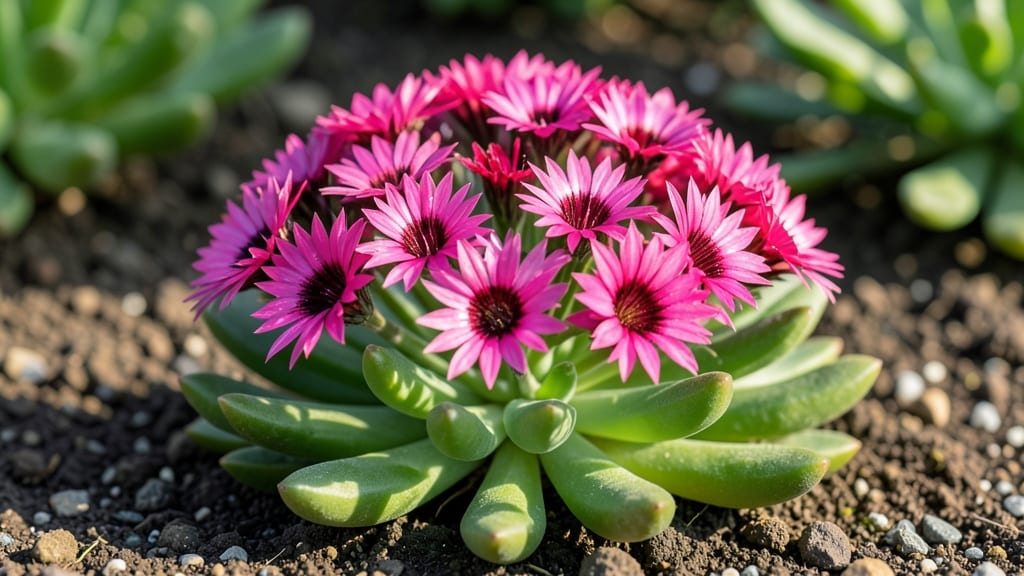
Ice plants bloom in spring and summer 🌸, but their exact timing depends on where you live and how you care for them.
If you love vibrant, low-maintenance flowers that defy seasonal norms, ice plants (Delosperma and Lampranthus) could be your perfect garden solution—but their bloom windows vary wildly depending on your climate zone.
In cooler regions like Zone 6a, expect bursts of color from June through September, while warmer areas might enjoy year-round blooms with the right variety. The key? Full sun, well-draining soil, and a little strategic deadheading to keep those flowers coming.
Below, I’ll break down how to time your ice plant blooms by region, plus pro tips to extend their flowering season—because who doesn’t want a garden that stays bright all year?
Ice plant bloom time by USDA climate Zones: when to expect flowers
Ice plants (Delosperma and Lampranthus) are renowned for their year-round color in warm climates, but their bloom windows shift dramatically based on your USDA zone. In colder regions, they may dormant in winter, while tropical areas enjoy continuous flowering.
Understanding these patterns helps you plan your garden for maximum impact.
For Zones 3-5, cold-hardy varieties like Delosperma cooperi bloom late spring to early fall, while Zones 6-9 see spring and fall blooms with summer dormancy.
In Zones 10-11, ice plants often flower year-round with peaks in spring and fall. Let’s break down the exact months for each zone.
| USDA Zone | Primary Bloom Window | Cold-Hardy Varieties | Tropical Adaptations |
|---|---|---|---|
| Zones 3-5 | Late May – September | Delosperma cooperi, Lampranthus spectabilis | Winter dormancy; mulch heavily |
| Zones 6-7 | April – October | Delosperma nubigenum, Lampranthus glaucus | Spring/fall blooms; summer rest |
| Zones 8-9 | March – November | Delosperma 'Fire Spinner' | Year-round with peak seasons |
| Zones 10-11 | January – December | N/A (tropical species) | Lampranthus aurantiacus, Delosperma echinatum |
Bloom times vary by 2-4 weeks based on microclimates and care practices.
In Zones 3-5, ice plants typically wait until late spring to bloom because cold temperatures delay growth. Plant Delosperma cooperi in full sun and use rock mulch to protect roots from freeze-thaw cycles. These varieties often rebloom in fall if deadheaded promptly.
For Zones 6-7, expect April kickoffs with Lampranthus spectabilis leading the charge. These zones benefit from spring fertilization to jumpstart blooms, but avoid overwatering—ice plants hate soggy roots. In Zone 7, some varieties may dormant in summer heat but revive with fall rains.
Zones 8-9 offer the best of both worlds with extended bloom seasons. Here, Delosperma 'Fire Spinner' thrives, producing bright magenta flowers from March through November. To maximize blooms, prune back leggy growth in early spring and water deeply but infrequently—these plants store water in their leaves.
If you live in Zones 10-11, congratulations—you can enjoy ice plants year-round! Varieties like Lampranthus aurantiacus bloom continuously with peaks in spring and fall. In these climates, shade cloth in summer prevents heat stress, while well-draining cactus mix keeps roots happy.
Some gardeners even grow ice plants in containers for portable color.
Pro tip: Deadhead spent blooms to encourage new flowers and extend the season by 4-6 weeks. In colder zones, cut back foliage in fall and cover with straw mulch to protect from winter dieback.
With the right variety and care, ice plants can brighten your garden for nearly 12 months.
For container gardening, choose compact varieties like Delosperma 'Ice Dance', which blooms late spring to early fall in Zones 5-9. These thrive in 5-gallon pots with succulent soil and drainage holes. Move containers to sheltered spots in winter to prevent frost damage.
Remember, microclimates matter. A south-facing wall can extend bloom time by 3-4 weeks in cooler zones, while elevated beds improve drainage for tropical varieties. Experiment with different locations to find your ideal ice plant bloom schedule.
🌸
How to extend ice plant bloom time with simple gardening hacks
Ice plants (Delosperma and Lampranthus) are famous for their drought tolerance and vibrant blooms, but their flowering periods can feel disappointingly short—especially if you're dreaming of year-round color. The good news?
With a few targeted gardening hacks, you can coax your ice plants into producing multiple bloom cycles throughout the growing season. The key lies in understanding their natural triggers and giving them the right conditions to keep flowering.
Most ice plants bloom in response to temperature shifts and daylight changes, but they also need proper care to sustain energy for continuous blooming. By focusing on deadheading, soil health, and watering strategies, you can extend their bloom time by 30-50% or more.
Let’s dive into the simplest, most effective methods to keep your ice plants in full bloom longer than ever before.
- 🌸 Deadhead daily – Snip spent blooms at the base to redirect energy to new flowers. Use clean, sharp pruning shears to avoid damaging stems.
- 💧 Water deeply but infrequently – Soak the soil once a week in summer (morning hours only) to encourage strong root growth and drought resilience.
- 🌡️ Adjust soil pH to 6.0-7.0 – Test your soil and amend with lime (to raise pH) or sulfur (to lower pH) for optimal nutrient uptake.
- ✂️ Prune lightly after blooming – Trim back 1/3 of the plant in late summer to stimulate a second flush of flowers before winter.
- 🌿 Plant with succulents – Companion plants like sedum or echeveria create microclimates that retain moisture and reduce stress on ice plants.
One of the easiest ways to extend bloom time is through consistent deadheading. Ice plants are prolific bloomers, but they’ll stop producing if old flowers aren’t removed. Grab your pruning shears and snip off faded blooms at the base every 2-3 days during peak flowering.
This simple act tricks the plant into thinking it’s still in its prime blooming phase, prompting it to produce new buds within days. Pro tip: Deadhead in the morning when blooms are dry to prevent fungal issues.
Soil pH plays a surprisingly large role in bloom longevity. Ice plants thrive in slightly acidic to neutral soil (pH 6.0-7.0). If your soil is too alkaline (common in many regions), the plant struggles to absorb essential nutrients like phosphorus, which is critical for flowering.
Test your soil with a home pH kit and amend it with elemental sulfur if needed. For alkaline soils, a 1-inch layer of compost can also help balance pH naturally over time.
Watering might seem counterintuitive for a drought-tolerant plant, but ice plants actually need deep, infrequent watering to encourage strong root systems. Watering shallowly or too frequently leads to weak stems and fewer blooms.
Aim for a deep soak once a week during summer (adjust to every 10-14 days in fall) and always water in the early morning to reduce evaporation and fungal risks. Overwatering is the #1 killer of ice plant blooms—so let the soil dry out completely between waterings.
For a second bloom cycle in late summer or early fall, give your ice plants a light pruning after their first flush of flowers fades. Cut back 1/3 of the plant’s height using clean shears, and avoid trimming into old, woody growth.
This stimulates new growth from the base, often resulting in a surprise round of blooms just as other plants start winding down. Pair this with a light application of balanced fertilizer (5-10-10) to give the plant the nutrients it needs for another go.
Finally, companion planting can work wonders for extending bloom time. Ice plants pair beautifully with succulents and ornamental grasses, which create a protective microclimate that retains moisture and reduces temperature fluctuations. Avoid planting near aggressive spreaders like mint or creeping thyme, as they can crowd out your ice plants.
Instead, opt for sedum or lavender—both thrive in similar conditions and add to the visual appeal of your garden.