
Blooming
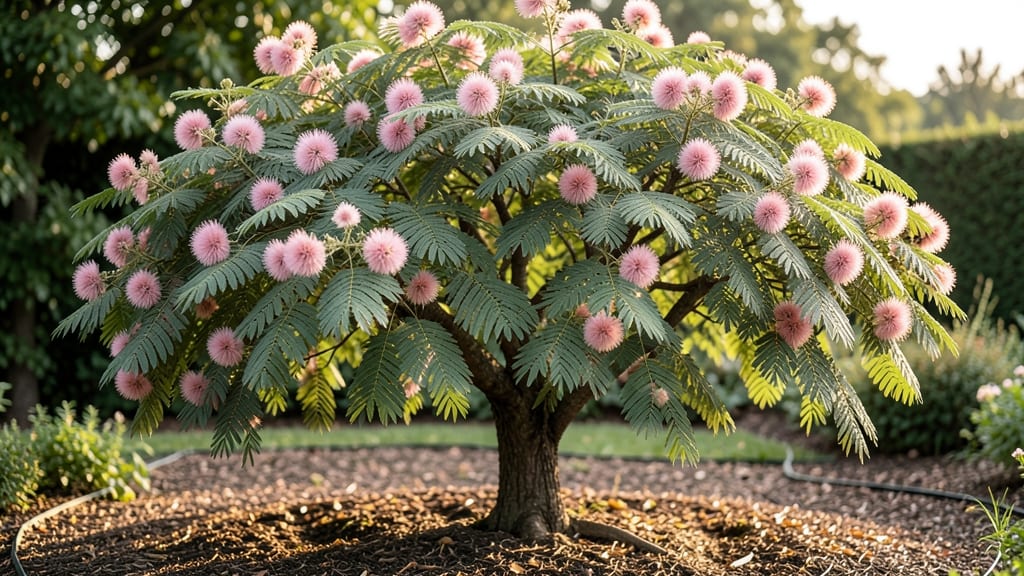
The mimosa tree blooms in late spring to early summer 🌸, turning your yard into a fluffy pink cloud—but only if you time your care right.
If your mimosa tree’s delicate fuzzball blooms never seem to live up to their full potential, timing might be the missing piece—especially when it comes to pruning for next season’s showstopper display.
In USDA Zone 6a and warmer, the bloom window shifts with the last frost, usually landing between May and June. But here’s the catch: aggressive pruning at the wrong time can rob you of next year’s show.
Below, I’ll break down the exact pruning schedule to maximize blooms, regional adjustments for your climate, and the 5 biggest mistakes that kill flowering potential—so you can finally get that dreamy, cloud-like display every year.
Understanding mimosa tree bloom time by region and variety
The mimosa tree (Albizia julibrissin) is famous for its fluffy, pink bloom clusters that appear like clouds in spring. But the timing of these showstopper flowers varies dramatically depending on your USDA zone and the specific variety you’re growing.
In warmer climates, you might see blooms as early as late winter, while cooler regions wait until late spring. Let’s break down what to expect where you live.
For gardeners in USDA zones 6-7, mimosa trees typically bloom between May and June, right after the last frost. These regions often experience cooler springs, which delay the tree’s emergence from dormancy.
Meanwhile, gardeners in zones 8-10 can expect blooms as early as March or April, sometimes even February in the warmest microclimates. Understanding these patterns helps you time pruning and fertilization for maximum impact.
| Variety | USDA Zones | Typical Bloom Window | Climate Notes |
|---|---|---|---|
| Albizia julibrissin (Common Mimosa) | 6-7 | Late May - Early June | Blooms after last frost; prune in late winter. |
| Albizia julibrissin 'Summer Chocolate' | 7-9 | April - May | Earlier blooms; drought-tolerant once established. |
| Albizia julibrissin 'Pink Cascade' | 8-10 | March - April | Heat-loving; may rebloom lightly in fall. |
| Albizia julibrissin 'Silk Tree' | 6-10 | May - June (varies by zone) | Adapts to urban heat; prune lightly after blooms. |
The Silk Tree (another name for Albizia julibrissin) often blooms slightly later than its 'Pink Cascade' cousin, especially in cooler microclimates. If you live in zone 6, expect your tree to wait until June to burst into color, while zone 10 gardeners might see early March blooms.
These differences are critical for pruning timing—cutting too early can remove next year’s flower buds.
In southern regions (zones 8-10), mimosa trees sometimes produce a second, lighter bloom in late summer or early fall. This happens when the tree senses consistent warmth and minimal stress.
To encourage this, avoid heavy pruning in summer and keep the soil moist but well-draining. Overwatering, however, can lead to root rot, which stunts blooms entirely.
For gardeners in transition zones (7-8), bloom timing can be unpredictable. A late frost in April might delay blooms until mid-June, while an early warm spell could bring flowers as early as March.
Pay attention to your local last frost date and adjust your pruning schedule accordingly. If you prune too late in spring, you risk removing next year’s flower buds, which form on new growth.
If your mimosa tree isn’t blooming at all, check its light exposure. These trees need full sun (6+ hours daily) to produce flowers. In shadier climates, like zone 6 under dense canopies, blooms may be sparse or nonexistent.
Consider transplanting to a sunnier spot or thinning nearby trees to improve airflow and sunlight penetration.
Soil quality also plays a huge role in bloom timing. Mimosa trees thrive in well-draining, slightly acidic soil (pH 6.0-7.0). If your soil is clay-heavy or alkaline, amend it with compost or peat moss before planting.
Overly rich soil can lead to leafy growth at the expense of flower production, so avoid over-fertilizing with high-nitrogen mixes.
Finally, age matters. Young mimosa trees (under 3 years old) focus energy on root and trunk growth rather than blooms. Don’t expect flowers until your tree reaches mature size (10+ feet tall).
Patience is key—once established, a healthy mimosa can produce abundant blooms for decades with proper care.
By aligning your pruning, watering, and soil prep with your local bloom window, you’ll unlock the full potential of your mimosa tree’s spring show.
Start by checking your USDA zone and variety, then adjust your care routine accordingly. Your tree will thank you with years of fluffy pink clouds! 🌸
The critical pruning timeline to maximize next year’s blooms
Timing your mimosa tree pruning correctly is the secret to showstopping spring blooms. Since these trees bloom on new wood, strategic cuts encourage fresh growth where next year’s fuzzy pink flowers will appear.
The key is understanding when to prune for optimal bloom production—and avoiding cuts that could delay or reduce flowering.
Mimosa trees typically bloom in late spring (April–May in most regions), but their flowering potential depends entirely on how you prune throughout the year. Cut at the wrong time, and you might sacrifice blooms for leafy growth instead.
The solution? Follow this seasonal pruning schedule tailored to your tree’s natural cycle.
- 1
- 2
- 3
- 4
Prune dormant branches to remove dead, diseased, or crossing wood. Focus on shaping the canopy—cut back 1/3 of the oldest growth to encourage new flowering stems.
Avoid heavy pruning now—this is when flower buds form. Only remove suckers or water sprouts that appear at the base. Lightly trim overgrown branches to improve airflow.
Prune only to control size—never more than 10% of the canopy. Remove weak or leggy growth to redirect energy to next year’s blooms. Never prune after mid-August in colder zones.
Light maintenance only—remove any remaining dead wood or stubborn suckers. Avoid heavy cuts; the tree needs to harden off before winter. Mulch around the base to protect roots.
After pruning in late winter, apply a balanced fertilizer (10-10-10) to fuel new growth. Mimosa trees respond well to regular deep watering during dry spells, which helps strengthen stems for next season’s blooms. Remember: Less is more—over-pruning can delay flowering for up to 2 years.
For young mimosa trees (under 3 years old), focus on structural pruning to establish a strong framework. Older trees benefit from rejuvenation cuts every 3–4 years to revitalize bloom production. Always use sterilized tools to prevent disease spread.
Pro tip: Mark pruning dates on your calendar to avoid missing the optimal window. A well-timed cut in late winter sets the stage for next spring’s fuzzball extravaganza. With this schedule, your mimosa will reward you with denser, longer-lasting blooms year after year. 🌸