
Shrubs
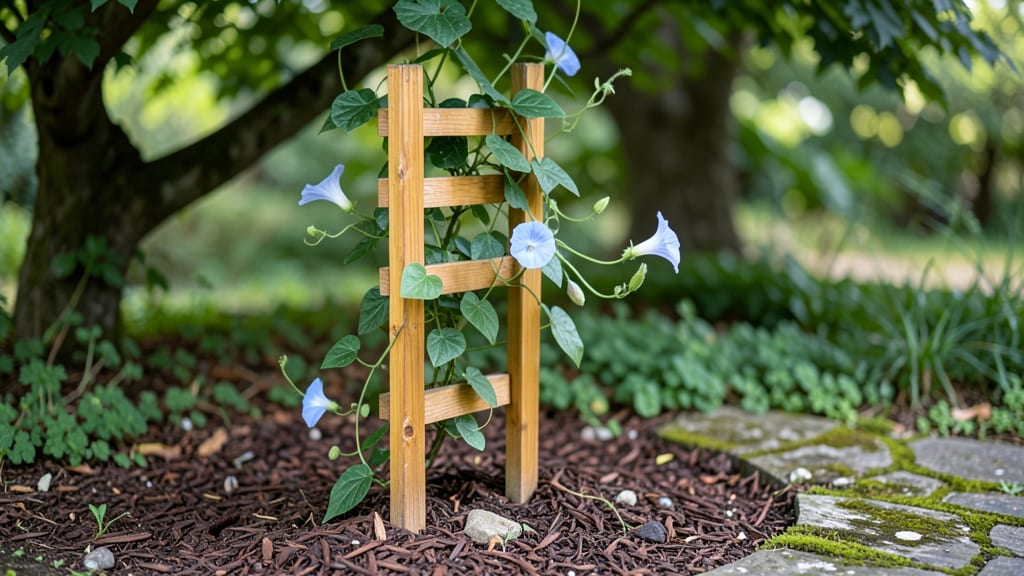
Morning glories can thrive in shade—yes, really! 🌿 I thought these sun-loving climbers would never work under my oak tree, but the right varieties bloom just as spectacularly with only a few hours of dappled light each day.
The secret lies in selecting shade-tolerant types and mimicking their natural woodland habitat.
Start with varieties like 'Heavenly Blue' or 'Blackie'—both handle shade better than traditional morning glories. They prefer well-draining soil rich in organic matter, so mix in compost before planting.
Water consistently to keep roots moist but never soggy, as shade slows evaporation. A 5-gallon container works well for testing varieties before committing to the garden.
You'll see those signature trumpet-shaped blooms opening in just 60-90 days from seed, though they may be slightly smaller in shade. The foliage stays lush and green, and vines grow vigorously even without full sun. Lean the trellis toward the light source to maximize what little sun they get.
Watch for leggy growth—this is normal in shade. Prune back overlong vines to encourage bushier blooms, and fertilize lightly with a balanced formula every 4-6 weeks. With the right care, these shade-loving morning glories will outperform sun-starved alternatives and keep your garden vibrant all season.
📚 In This Guide
- What you need
- Instructions
- Tips and common mistakes
- Wrapping up and next steps
What you need
- ● Shade-tolerant morning glory seeds or seedlings: Choose varieties like Ipomoea nil (e.g., 'Black Scorpion,' 'Heavenly Blue') or Ipomoea quamoclit (cypress vine). Aim for 3–5 plants per 10 sq. ft. for full coverage.
- ● Well-draining potting mix or garden soil: For containers: 1 gallon per plant of a mix with 30% perlite or compost to improve aeration.
- ● For in-ground: Amend clay soil with 2–3 inches of compost or coconut coir.
- ○ Containers (optional but helpful): Fabric grow bags (12–18 inches deep) or ceramic pots with drainage holes.
- ● Support structures: Trellises (4–6 ft tall), obelisks, or wire cages for climbing varieties.
- ● Watering can or hose with a gentle spray nozzle.
- ● Garden trowel or transplanting spade (for in-ground planting).
- ● Pruning shears (for trimming leggy vines or deadheading).
- ● Mulch (straw or shredded leaves) to retain moisture and suppress weeds.
- ● Slow-release fertilizer (5-10-5 ratio) or compost tea for nutrient boosts.
- ● Partial to full shade location: Dappled sunlight (2–4 hours/day) or filtered light (e.g., under trees). ⚠️ Avoid deep, dark shade—these beauties need some light!
- ● Epsom salt (1 tbsp/month) for magnesium-rich blooms.
- ● Shade cloth (30–50% coverage) if your spot gets too much indirect light.
- ● Garden gloves to protect hands from prickly vines.
- ● String lights or decorative stakes to enhance your shade garden aesthetic.
Step-by-step guide to growing morning glories in shade
Here's how to cultivate vibrant morning glories in low-light spots where most vines struggle.
🌱 Step 1: Select the Right Shade-Tolerant Varieties
Not all morning glories thrive in shade, so choose proven performers like 'Heavenly Blue' or 'Blackie'—both tolerate partial shade better than sun-loving varieties. I always check seed packets for "partial shade" labels before buying. These varieties produce fewer blooms than sun-lovers but still deliver stunning color in dappled light.
If your space gets only 2-3 hours of direct light daily, stick to deep purple or blue varieties—they handle lower light better than whites or pinks. Avoid 'Heavenly Blue' if your spot stays completely dark; it needs at least some filtered light to set buds. Watch for seedlings with broad, rounded leaves—they're your first sign of shade-adapted stock.
🪴 Step 2: Prepare Lightweight, Well-Draining Soil
Morning glories in shade need soil that drains quickly to prevent root rot—a common issue in low-light conditions. Mix equal parts potting mix and perlite for containers, or amend garden beds with 2 inches of compost and 1 inch of coarse sand. I always test drainage by pressing a finger into the soil—it should feel moist but not soggy.
Add a slow-release fertilizer at planting time to compensate for reduced photosynthesis in shade. Use a balanced 10-10-10 mix at half strength—too much nitrogen promotes leafy growth over blooms. Work in a handful of worm castings for extra nutrients without overwhelming the roots. The goal is soil that holds moisture but never stays waterlogged.
☀️ Step 3: Plant in Late Spring After Frost Risk
Wait until soil temperatures reach at least 60°F before planting—cold soil delays germination and weakens seedlings. I plant mine 2-3 weeks after my last frost date, which gives the soil time to warm while avoiding summer heat stress. Dig holes twice as wide as the root ball but only as deep as the container.
Space plants 6-8 inches apart in containers or 12-18 inches apart in garden beds. Morning glories in shade need this spacing to avoid competition for light. Water immediately after planting to settle the soil and remove any air pockets around the roots. You'll know the roots are happy when new leaves appear within 7-10 days.
💧 Step 4: Water Consistently Without Overdoing It
Shade-grown morning glories need 1 inch of water weekly, but check soil moisture daily during hot spells. Stick your finger 1 inch deep—if it feels dry, water thoroughly until it runs out the drainage holes. I water in the morning so leaves dry quickly, preventing fungal issues common in shaded areas.
Mulch with 2-3 inches of shredded bark to retain moisture and regulate soil temperature. Avoid organic mulches like straw—they can compact and suffocate roots. You'll notice healthier vines when the mulch stays slightly damp but never soggy. Reduce watering slightly once blooms appear—they signal the plant is established.
✂️ Step 5: Provide Support and Prune Strategically
Install 5-6 foot tall trellises or stakes at planting to give vines something to climb immediately. Morning glories in shade grow slower than sun-lovers, so they need extra support to reach light. I use bamboo stakes for a natural look and tie vines with soft plant ties every 12 inches as they grow.
Prune back leggy growth to encourage bushier plants with more blooms. Cut back one-third of the longest stems when they reach 3 feet tall. This redirects energy to lateral shoots that produce more flowers. Deadhead spent blooms regularly—even in shade, this encourages continuous flowering. You'll see a second flush of blooms within 3-4 weeks after pruning.
Tips & tricks for thriving morning glories in shade
Morning glories in shade need special attention to flourish—here's how to give them the best chance at stunning blooms.
Variety Selection: When choosing seeds, look for labels specifying "partial shade tolerance." 'Heavenly Blue' and 'Blackie' are my go-to varieties—they handle shade better than sun-loving types. For spots with only 2-3 hours of direct light, deep purple or blue varieties perform best. I always verify light conditions by observing where dappled sunlight hits during the day's peak hours (10 AM-2 PM).
Soil Preparation: The soil mix of equal parts potting mix and perlite is crucial for preventing root rot in shaded conditions. I test drainage by pressing my finger 1 inch deep—it should feel moist but not saturated. For garden beds, the 2 inches of compost and 1 inch of coarse sand amendment creates the perfect balance of nutrients and drainage. If your soil feels compacted, add extra perlite to improve aeration.
Planting Timing: Waiting until soil reaches 60°F ensures proper germination, but don't delay too long—planting 2-3 weeks after your last frost date gives the soil time to warm while avoiding summer heat stress. I always check soil temperature with a thermometer for accuracy. For containers, use the same timing but monitor moisture more closely as they dry out faster.
Support System: Installing 5-6 foot tall trellises at planting time is essential for shade-grown morning glories—they grow slower and need extra support to reach light. I use bamboo stakes for a natural look and tie vines every 12 inches as they grow. This prevents the vines from sprawling on the ground where they compete with weeds for nutrients.
Pro Tips for Morning Glory In Shade
- Morning glories in shade need special attention to flourish—here's how to give them the best chance at stunning blooms.
- Variety Selection: When choosing seeds, look for labels specifying "partial shade tolerance."
- Soil Preparation: The soil mix of equal parts potting mix and perlite is crucial for preventing root rot in shaded conditions.
Frequently asked questions
Got questions about growing morning glories in shade? You’re not alone! Here are answers to the most common concerns—so you can confidently cultivate these stunning vines even in low-light spots.
Can morning glories thrive in deep shade?
Most morning glories prefer partial shade (4–6 hours of dappled light daily), but a few varieties—like Ipomoea quamoclit (cypress vine) or Ipomoea nil—tolerate light to moderate shade. For deep shade (<3 hours of light), opt for shade-tolerant vines like Ipomoea batatas (sweet potato vine) or pair them with a fast-growing support (e.g., trellis) to maximize indirect light.
How long does it take for morning glories to bloom in shade?
In shade, blooming may take 2–4 weeks longer than in full sun. Start seeds indoors 4–6 weeks before the last frost, or use established shade-tolerant plants. Patience pays off—once established, they’ll reward you with vibrant blooms (though possibly fewer flowers) from late spring to fall.
What’s the best shade-tolerant morning glory alternative?
If traditional morning glories struggle, try these low-light champions:
- Ipomoea batatas (sweet potato vine): Fast-growing, trailing, and thrives in shade.
- Thunbergia alata (black-eyed Susan vine): Bright orange blooms in partial shade.
- Cobaea scandens (cup-and-saucer vine): Unique flowers and tolerates dappled light.
Why aren’t my shade-grown morning glories blooming?
Check these common issues:
- Not enough light: Move to a brighter spot (e.g., near a north-facing window or under a tall tree’s canopy).
- Over-fertilizing: Too much nitrogen = leafy growth, fewer flowers. Use a low-nitrogen, high-phosphorus fertilizer (e.g., 5-10-10).
- Poor support: Morning glories need a trellis or fence to climb—without it, they’ll flop and focus energy on vines, not blooms.
Do morning glories need extra care in shady, humid climates?
Yes! Shade + humidity = fungal risks (e.g., powdery mildew). To prevent issues:
- Space plants 12–18 inches apart for airflow.
- Water at the base (avoid wetting foliage).
- Apply neem oil preventatively if humidity is extreme.
Wrapping up and next steps
Growing morning glories in shade proves that even the most delicate blooms can thrive in unexpected spaces! These deep-shadow varieties bring vibrant color and charm to gardens where sunlight is scarce, offering low-maintenance beauty without compromising on impact.
Whether you’re a seasoned gardener or just starting, embrace the shade—your garden will thank you with lush, cheerful displays.
Ready to transform your shady spots? Pick your favorite variety, gather your supplies, and get planting! For extra inspiration, explore shade-friendly companion plants to create a thriving, low-light oasis. Happy gardening! 🌿✨