
Shrubs
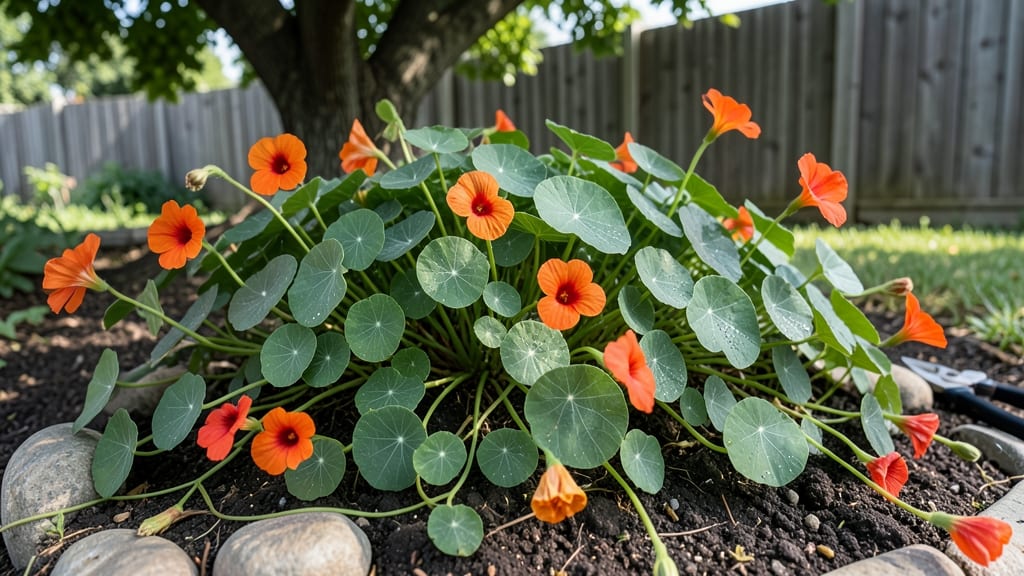
Nasturtiums in shade perform best with partial sunlight (4-6 hours daily) and shade-adapted varieties like 'Alaska' or 'Empress of India,' though you'll see fewer blooms. Focus on fast-draining soil, regular mulching, and careful watering to avoid root rot in dimmer spaces.
Nasturtiums actually have a surprising tolerance for shade once you choose the right types. 💫 The key lies in their leaf structure—thicker foliage varieties handle lower light better by converting more sunlight energy.
For example, 'Empress of India' produces deep burgundy blooms even with just morning sun, while 'Alaska' stays compact and colorful in dappled light. What's interesting is that these shade varieties often prioritize leaf production over flowers, which is why you'll need to prune regularly to encourage blooming.
Another pro tip is to pair nasturtiums with taller plants that create natural light tunnels. I've seen amazing results when planting them near sun-loving companions like sunflowers—they get that extra light boost while still benefiting from the shade's cooler temperatures.
For container growing, choose shallow pots with excellent drainage and place them where they'll catch reflected light from nearby surfaces.
💡 In This Article
- Shade-Tolerant Nasturtium Varieties for Low-Light Gardens
- Pro Tips for Maximizing Nasturtium Blooms in Shade
Shade-tolerant nasturtium varieties for low-light gardens
Shade-tolerant nasturtiums succeed in low-light conditions thanks to their unique leaf adaptations. These varieties develop thicker, waxier leaves that reduce water loss and contain higher concentrations of chlorophyll, allowing them to photosynthesize more efficiently in dimmer environments.
The deep burgundy or bronze foliage you often see in shade varieties isn't just for show—it contains anthocyanin pigments that act as natural sunscreens, protecting the plant from potential UV damage while still absorbing available light.
Let's look at three standout varieties: 'Alaska' grows as a compact bush reaching 12-18 inches tall, producing bright orange flowers that thrive with just 3-4 hours of morning sun.
Its peppery leaves make it a dual-purpose edible plant perfect for salads. 'Empress of India' features striking mahogany-red blooms and can handle 6 hours of dappled sunlight, though it prefers cooler shade conditions.
The third option, 'Jewel of Africa', offers a mix of red, orange, and yellow flowers on trailing vines that work beautifully in hanging baskets with 4-5 hours of indirect light.
The root systems of these shade varieties also play a crucial role. They develop shallower, more fibrous roots that spread horizontally rather than growing deep, allowing them to access moisture and nutrients more efficiently in the topsoil layer where light penetration is strongest.
This adaptation explains why they perform better in containers or raised beds where soil conditions can be more carefully controlled. 🌿 What's fascinating is that while these varieties produce fewer flowers than sun-loving types, each bloom tends to be larger and more vibrant, making them visually rewarding despite the lower quantity.
Color variations in shade nasturtiums serve functional purposes too. The deeper red and bronze hues contain more anthocyanins, which help protect the plant from photoinhibition—a condition where excessive light actually damages chlorophyll. This pigmentation allows shade varieties to handle brief periods of direct sunlight better than their pale green counterparts.
When selecting seeds or seedlings, look for descriptions mentioning "shade-tolerant" or "low-light adapted" to ensure you're getting plants with these built-in advantages.
Edible benefits remain consistent across shade varieties. All parts of these nasturtiums—leaves, flowers, and seed pods—contain capsaicin-like compounds that provide that signature peppery kick.
The flavor intensity actually tends to be slightly more pronounced in shade-grown varieties because the plants allocate more energy to chemical defenses when light levels are limited. This makes them particularly valuable for container gardening on patios or balconies where space is constrained but shade is abundant.
Consider these key factors when choosing shade varieties:
- Growth habit: Bush types like 'Alaska' work well for borders, while trailing varieties like 'Jewel of Africa' excel in hanging baskets
- Color preferences: Deep reds and burgundies handle shade better than bright yellows which need more light
- Edible focus: Varieties with larger leaves (like 'Empress of India') provide more harvestable foliage
- Climate adaptation: Some varieties tolerate cooler shade better, making them ideal for northern gardens
For best results, plant shade nasturtiums in early spring when soil temperatures reach 50°F—this gives their root systems time to establish before summer heat arrives. The key is to balance their shade tolerance with their need for some light exposure to trigger flowering. 💫