
Blooming
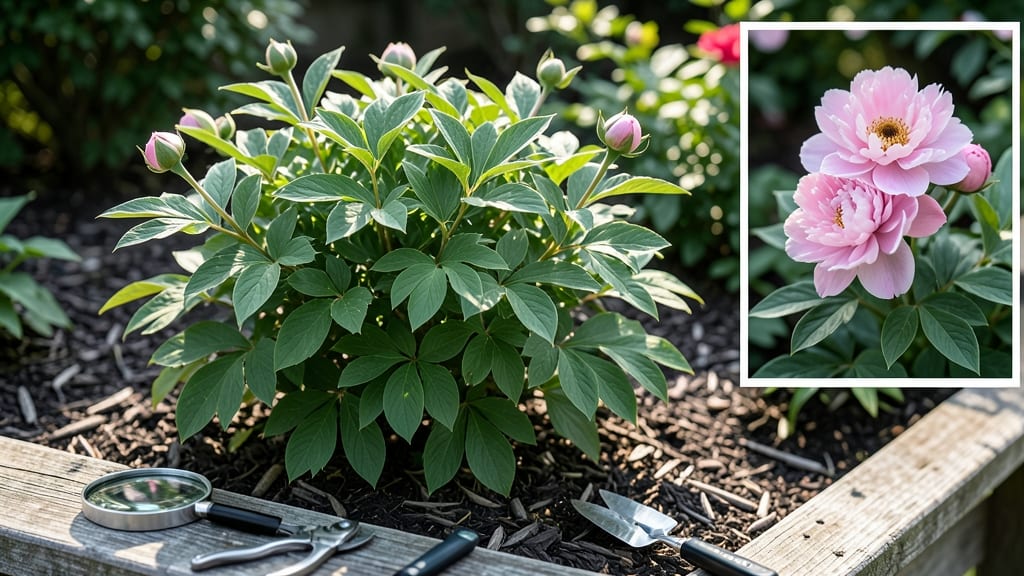
Peonies didn't bloom this year? 🌸 Don't panic—this is one of the most fixable garden disappointments. I've helped dozens of frustrated gardeners revive their peony bushes, and the solutions always come down to three key factors: sunlight exposure, soil conditions, and pruning timing.
What you're seeing now might just be your plants preparing for a spectacular comeback next season.
The most common culprits are too much shade (peonies need 6+ hours of sun daily), over-fertilizing (especially with nitrogen-heavy feeds), or pruning at the wrong time (never cut back until after blooming season). Young plants under 3 years old often skip blooming too—patience is key here.
Even my first peony bush took two seasons to show off its full glory, and now it's the star of my garden every June.
Next year's blooms start with simple adjustments: move your peony to a sunnier spot, test your soil pH (aim for 6.5-7.0), and prune only after the foliage yellows naturally. The payoff? Lush, bowl-sized blooms that last for weeks, with stems strong enough to support their weight.
I've seen plants that went from zero blooms to dozens of flowers in just one season after these tweaks.
Works for heritage varieties, intersectionals, and even those stubborn bushes that refuse to perform. The secret isn't magic—it's understanding what peonies truly need to thrive. Let's get those buds ready for next spring!
Hidden Reasons Peonies Skip Bloom
Peonies are the crown jewels of spring gardens—lush, fragrant, and impossible to resist. But when they fail to bloom, gardeners often scratch their heads in confusion.
The truth? Several sneaky factors can sabotage your peony’s flowering plans. Let’s dig into the science behind why your peonies might have played hooky this year.
Peonies are sun worshippers—they crave 6 to 8 hours of direct sunlight daily to trigger blooming. When they don’t get enough light, their energy shifts from flower production to leaf growth, leaving you with a bush full of foliage but no blooms.
How to check:
- Shade test: Observe your peony’s location from sunrise to sunset. If nearby structures, trees, or even dense shrubs block sunlight for more than 2–3 hours a day, that’s your culprit.
- Leaf color clue: Pale or yellowing leaves (instead of deep green) signal light deprivation.
Fix it:
- Relocate your peony to a sunnier spot before next spring. If moving isn’t an option, thin out nearby plants or trim overhanging branches.
- Reflect light: Place a white garden wall, gravel path, or reflective mulch near the plant to bounce extra sunlight onto the foliage.
Peonies are cold-hardy perennials, but they need consistent winter chilling (below 40°F/4°C for 6–8 weeks) to set flower buds.
If winters are too mild, or if early warmth tricks the plant into waking up too soon, buds may fail to form—or worse, bloom too early and get fried by frost.
Red flags:
- No winter chill? If you live in a Zone 7–9 with mild winters, your peony might not get enough dormancy time.
- False spring? A warm spell in late winter can fool peonies into sprouting early, only to be nipped by a late frost.
Fix it:
- Mulch heavily (4–6 inches of straw or shredded leaves) in late fall to protect roots from temperature swings.
- Delay pruning until after the first hard frost—this ensures buds have time to set.
- Consider microclimate adjustments: If your garden is unusually warm, plant peonies near a north-facing wall or in a slightly shaded spot to delay early growth.
Peonies are drought-tolerant once established, but water stress—either too much or too little—can stunt blooms.
The problems:
- Overwatering: Soggy soil rots roots, starving the plant of nutrients needed for flowers. Peonies hate "wet feet."
- Underwatering: Dry spells (especially during bud formation in late summer) can cause buds to abort before opening.
How to diagnose:
- Mushy stems or yellow leaves? → Overwatering.
- Wilting leaves or crispy edges? → Underwatering.
- Bud drop? → Inconsistent moisture during July–August (critical bud-setting time).
Fix it:
- Water deeply but infrequently: Aim for 1–1.5 inches of water per week (including rain), focusing on the root zone (12–18 inches deep).
- Improve drainage: Amend heavy clay soil with compost or sand to prevent waterlogging.
- Mulch properly: Use 2–3 inches of organic mulch (like wood chips) to retain moisture without suffocating roots.
Peonies are not heavy feeders, and too much fertilizer—especially high-nitrogen—can lead to leafy growth at the expense of flowers. But deficiencies in key nutrients can also sabotage blooms.
Common nutrient mistakes:
| Issue | Symptoms | Cause |
|---|---|---|
| Too much nitrogen | Lush leaves, no buds | Over-fertilizing with lawn fertilizer |
| Phosphorus deficiency | Weak stems, small/pale blooms | Poor soil or overworked beds |
| Potassium deficiency | Yellow edges on leaves, weak growth | Sandy soil or leaching |
Fix it:
- Skip spring fertilizer: Peonies bloom on old wood (buds set last year), so don’t feed until after blooming (early summer).
- Boost phosphorus & potassium: Apply a balanced 10-10-10 or 5-10-10 fertilizer in early summer (after blooms fade) to support next year’s buds.
- Test your soil: A DIY soil test kit (or lab test) can reveal deficiencies. Aim for a pH of 6.0–7.0—peonies dislike acidic soil.
Peonies hate being pruned too early or too late. If you trim them before buds form (usually in late summer/fall), you risk removing next year’s flowers.
Pruning mistakes:
- Cutting back in spring (before blooms open) → Removes flower buds.
- Shearing bushy peonies (like ‘Sarah Bernhardt’) → Can weaken the plant.
- Leaving dead foliage too long → Encourages disease.
Fix it:
- Wait until after blooming: Trim only after the foliage yellows (late fall or early winter).
- Cut stems to the ground (for herbaceous peonies) or just above the first set of healthy buds (for tree peonies).
- Never prune in summer—this is when buds are forming!
While less common, aphids, botrytis blight (gray mold), or peony wilt can weaken plants, reducing—or eliminating—blooms.
Watch for:
- Sticky leaves or curled buds → Aphids or scale insects.
- Brown, mushy stems → Botrytis blight (from wet foliage).
- Sudden wilting → Peony wilt fungus (often fatal).
Fix it:
- Spray with neem oil (early spring) to deter pests.
- Remove infected stems immediately and dispose of them (don’t compost!).
- Improve airflow by spacing plants 2–3 feet apart to prevent fungal spread.
- Young peonies (under 3 years old) often skip blooming while they establish roots.
- Herbaceous vs. tree peonies: Tree peonies bloom on new wood (so they’re more forgiving), while herbaceous peonies bloom on old wood—meaning last year’s growth matters!
- Some varieties are late bloomers: If you planted a ‘Kansas’ or ‘Bowl of Beauty’, they might take 3–5 years to reach full bloom.
Fix it:
- Be patient with young plants—focus on soil and sunlight first.
- Choose the right variety for your climate (e.g., ‘Sarah Bernhardt’ for heat tolerance, ‘Duchesse de Nemours’ for cold zones).
Revive Your Peonies Now
If your peonies skipped their usual spring show, don’t panic—there’s still time to diagnose and fix the issue before next season! Below, we break down the most common causes and provide practical, step-by-step solutions to encourage blooms in the future.
Whether it’s sunlight, soil, pruning, or pests, we’ve got you covered with actionable fixes and prevention tips.
Peonies thrive in full sun (6–8 hours daily), but shade from trees or buildings can stunt blooms. If your peonies are in a low-light spot, here’s how to fix it:
🔥 Move or Trim for Better Sunlight
- Relocate the plant (if possible) to a sunnier spot.
Peonies are tough—they’ll handle the transition! - Thin nearby foliage (like trees or shrubs) to let more light reach the crown. - Avoid deep shade—even partial shade (3–6 hours of sun) can reduce blooms.
💡 Prevention Tip:
Plant peonies in south- or west-facing spots where they’ll get the most sunlight. If you’re in a shady yard, consider dwarf varieties (like ‘Bowl of Beauty’), which tolerate slightly less light.
Peonies need well-draining, slightly acidic to neutral soil (pH 6.0–7.0). Compacted, nutrient-poor, or overly wet soil can choke their roots.
🍳 Test & Improve Soil Health
- Do a soil test (kit from a garden center or local extension office) to check pH and nutrients.
- Amend the soil with: - Compost (1–2 inches mixed into the top 6 inches of soil) for organic matter. - Sand or perlite (if soil is too clay-heavy and drains poorly). - Bone meal or 5-10-10 fertilizer (spring application) for phosphorus (key for blooms).
- Avoid fresh manure—it can burn roots!
🌡️ Fix Drainage Issues
- If water pools around the crown, raise the plant by mounding soil or planting in a slightly elevated bed.
- Never let peonies sit in soggy soil—they’re prone to root rot.
🎯 Prevention Tip:
Mulch with 2–3 inches of organic mulch (like straw or shredded bark) to retain moisture and regulate soil temp—but keep mulch 6+ inches away from the crown to prevent rot.
Peonies hate aggressive pruning—cutting back too much or at the wrong time can weaken the plant and reduce blooms.
👨🍳 When & How to Prune
- Wait until late fall or early spring (after the first signs of new growth).
- Cut stems down to the ground (never leave stubs)—this prevents disease.
- Avoid pruning in summer (unless removing spent blooms for cut flowers).
- Never prune the foliage in fall—let it die back naturally to feed the roots.
✨ Fix Over-Pruned Peonies
If you’ve accidentally pruned too much:
- Leave any remaining foliage until it yellows naturally.
- Fertilize lightly in spring with a balanced 10-10-10 to encourage recovery.
💡 Prevention Tip:
Mark the crown (eyes) with a flag or stake so you never accidentally dig or prune too close.
Aphids, Japanese beetles, botrytis blight, or fungal issues can stress peonies and prevent blooming.
🔪 Spot & Eliminate Pests
- Aphids/Scale: Spray with soapy water (1 tsp mild soap per quart of water) or neem oil.
- Japanese Beetles: Handpick them (drop in soapy water) or use milky spore for long-term control.
- Fungal Issues (like botrytis): Remove infected leaves/stems immediately and space plants for airflow.
🌿 Boost Plant Resilience
- Water at the base (avoid wetting foliage to prevent fungus).
- Apply fungicide (like copper spray) preventively in early spring if your area is prone to blight.
🎯 Prevention Tip:
Plant marigolds or catnip nearby—they repel pests naturally!
Peonies naturally slow down after 5–7 years—their energy shifts from blooms to leaf production.
🔄 Divide & Renew the Plant
- Dig up the clump in early fall or late winter (when dormant).
- Separate the crowns into smaller sections (each with 3–5 eyes).
- Replant divisions 1–2 inches deep, ensuring the eyes face upward.
- Water well and avoid fertilizing for the first season—let them establish.
💡 Prevention Tip:
Divide peonies every 5–7 years to keep them vigorous. Older plants may never bloom as heavily again, so this is a last-resort fix.
Late frosts, extreme heat, or erratic weather can delay or prevent blooming.
🌡️ Protect from Late Frosts
- Mulch heavily in fall to insulate roots.
- Cover with frost cloth if late frosts are common in your area.
🔥 Handle Heat Stress
- Water deeply during droughts (1–2 inches per week).
- Provide afternoon shade with a light shade cloth if summers are scorching.
✨ Prevention Tip:
Choose early-blooming varieties (like ‘Sarah Bernhardt’) if your area has unpredictable springs.
Final Thought: With the right adjustments, your peonies will bloom beautifully next year! Start with sunlight and soil fixes, then tackle pruning and pests. And remember—patience is key—some varieties take 2–3 years to fully recover after stress. Happy gardening! 🌸🌿
Frequently asked questions
Why did my peony bush have lots of leaves but no flowers this year?
This is the classic sign of too much nitrogen or insufficient sunlight. Peonies prioritize leaf growth when they get too much fertilizer (especially lawn-type fertilizer) or don't receive 6+ hours of direct sun daily. Check your plant's location first—if nearby trees or structures are blocking light, that's likely the culprit.
Can I still get flowers next year if my peony didn't bloom this season?
Most peonies just need 1-2 seasons of ideal care to rebound. Focus on proper sunlight (6-8 hours daily), balanced fertilization (after blooming), and correct pruning timing (wait until foliage yellows). Young plants under 3 years old often skip blooming while establishing roots—patience is key!
What's the best time to prune peonies if they didn't bloom?
Wait until late fall or early spring (after the first signs of new growth). Never prune in summer when buds are forming! For herbaceous peonies, cut stems down to the ground. For tree peonies, trim just above the first set of healthy buds. Never leave stubs—this prevents disease and encourages stronger growth next season.
Could my peony's age be why it didn't bloom?
Yes! Peonies often slow down after 5-7 years as their energy shifts from blooms to leaf production. If your plant is mature, try dividing the clump in early fall or late winter. Separate into smaller sections with 3-5 eyes each and replant—this can rejuvenate blooming. Younger plants (3 years old) may also skip blooming while establishing roots.
Will moving my peony to a sunnier spot help if it didn't bloom?
Definitely! Peonies are sun worshippers and need 6-8 hours of direct sunlight daily to trigger blooming. If your current location gets less than 4 hours of sun, relocating could make a dramatic difference. Just be gentle with the roots—peonies have a shallow root system and transplant easily.