
Light Requirements
Struggling to make your north-facing garden beds bloom? These 10 shade-loving plants thrive in partial shade, offering vibrant foliage, fragrant blooms, and low-maintenance beauty without sacrificing sunlight.
Hostas for Lush Green Ground Cover

Empty garden spots begging for color? Hostas are the unsung heroes of partial shade gardens, offering broad, textured leaves in shades of green, blue, gold, and variegated patterns that transform dull corners into lush focal points. With over 3,000 varieties, you can mix and match sizes, colors, and leaf shapes to create a custom ground cover that thrives with minimal fuss.
These shade-loving perennials thrive in 3–6 hours of morning sun or dappled shade, making them perfect for north-facing beds or under tree canopies. Plant them in well-draining, moist soil enriched with compost, and water consistently until established—after that, they’ll reward you with year-round foliage interest and occasional summer blooms. Deer-resistant varieties like 'Halcyon' or 'Patriot' make them ideal for problem areas.
Hostas are the ultimate beginner-friendly plant, offering instant impact with almost no maintenance. Whether you're filling gaps between shrubs or creating a woodland-style garden, their versatile foliage will keep your shade garden thriving year after year. 🌿
Japanese Painted Fern with Silvery Fronds

Looking for a year-round focal point that doesn’t require sun? The Japanese painted fern (Athyrium niponicum var. pictum) delivers architectural elegance with its silvery-blue fronds and deep green stems, creating stunning contrast even in the darkest corners of your garden.
This moisture-loving perennial thrives in partial shade to full shade, making it perfect for under trees, along north-facing walls, or in containers where it adds texture without competing for light. Its fine, feathery fronds grow 18-24 inches tall, providing vertical interest that softens harsh edges in borders. For best results, keep the soil consistently moist but well-drained—a mulch layer helps retain humidity while suppressing weeds.
Urban gardeners and container enthusiasts will love how this fern adapts to small spaces, while its deer-resistant nature makes it a low-stress choice for rural plots too. 🌿
Bleeding Heart Flowers for Spring Delight

Craving a romantic touch for your partial shade garden? Bleeding heart flowers (Dicentra spectabilis) bring dreamy, heart-shaped blooms in soft pink or white that cascade like a waterfall from arching stems—perfect for cottage-style or woodland landscapes where light dapples gently through trees.
These shade-loving perennials thrive in moist, well-draining soil and 3–6 hours of filtered sunlight, making them ideal for north-facing beds or understory plantings. For best results, plant in early spring before foliage emerges and stake taller varieties to prevent flopping. After blooming, prune back stems to encourage fresh growth—though they’ll reward you with year-round interest from their lush, fern-like foliage.
Bleeding hearts are a must-have for pollinator gardens, attracting bees and butterflies while adding vertical drama. Cottage gardeners and woodland enthusiasts will love their whimsical charm, but even urban gardeners can grow them in large containers with proper moisture. 🌷
Heuchera Coral Bells with Vibrant Leaves

Tired of dull, monotonous shade gardens? Heuchera Coral Bells injects bold color with their purple, silver, or lime green foliage, creating striking contrasts that elevate modern landscapes or define shady pathways with precision. Unlike traditional shade plants that focus on flowers, these perennials deliver year-round visual impact through their textured, glossy leaves that glow in filtered light.
Thriving in partial shade to full shade, Heuchera adapts to almost any soil type as long as it’s well-draining, making them ideal for urban containers or woodland gardens. Varieties like 'Palace Purple' or 'Lime Rickey' offer dramatic foliage that holds its color even in winter. For best results, plant in spring or early fall and water moderately—these drought-tolerant plants reward minimal care with maximum visual punch.
Modern gardeners and minimalist landscapers will love how Heuchera adds structural color without needing pruning or staking. Pair them with hostas or ferns for a layered, low-maintenance shade garden that never goes out of style. ✨
Astilbe Plumes for Airy Summer Blooms

Need to add height and drama to your shade garden without sacrificing sunlight? Astilbe plumes deliver airy, feathery blooms in shades of pink, white, and red that reach 12–36 inches tall—perfect for cutting gardens or borders where vertical interest is key. Unlike sun-loving perennials, these shade specialists thrive in 3–6 hours of morning sun or dappled light, making them ideal for north-facing beds or understory plantings.
These clump-forming perennials prefer moist, well-draining soil enriched with organic matter, and their long-lasting summer blooms (June–August) attract butterflies while providing fresh cut flowers. For best results, plant in spring and stake taller varieties to prevent flopping. Deadhead spent blooms to encourage reblooming, and divide clumps every 3–4 years to maintain vigor.
Cutting garden enthusiasts and modern designers will love how astilbe’s delicate plumes soften harsh edges while adding textural contrast to borders. Pair with hostas or heuchera for a layered, low-maintenance shade garden that blooms effortlessly. ✨
Lungwort for Medicinal and Ornamental Value

Want a plant that does double duty as both a pollinator magnet and a medicinal powerhouse? Lungwort (Pulmonaria) combines striking silver-spotted foliage with early spring blooms in shades of blue, pink, or white—creating a two-season show while supporting your garden's ecosystem.
This hardy perennial thrives in partial shade to full shade, making it perfect for woodland gardens, understory plantings, or as an understory companion to shrubs. Its moisture-retentive roots make it drought-tolerant once established, while its self-seeding habit ensures natural propagation. Historically used in herbal medicine for respiratory health, lungwort also attracts bees and butterflies with its nectar-rich flowers.
Herbal gardeners and woodland enthusiasts will appreciate its versatile uses, while its low-maintenance nature makes it ideal for busy gardeners. Plant it in well-draining, humus-rich soil for the most vibrant foliage and blooms. 💚
Sweet Woodruff for Fragrant Ground Cover

Want to turn your shady pathways or tree understories into a fragrant retreat? Sweet woodruff (Galium odoratum) creates a lush, self-spreading carpet that releases a delicate vanilla-like scent when brushed—like a natural perfume for your garden. Unlike other ground covers, it thrives in partial shade to full shade, making it perfect for areas where other plants struggle.
This hardy perennial spreads quickly through self-seeding, creating dense coverage that suppresses weeds while requiring minimal care. Once established, it’s drought-tolerant, making it ideal for dry shade spots under oak trees or along north-facing borders. For best results, plant in well-draining, slightly acidic soil and water regularly until roots take hold—after that, enjoy its low-maintenance beauty with almost no upkeep.
Gardeners who love fragrant pathways or woodland-style plantings will adore sweet woodruff’s dual benefits: it’s both visually appealing and sensory-rich. Pair it with hostas or ferns for a layered, aromatic shade garden that feels like a secret retreat. 🌱
Toad Lily for Dramatic Summer Flowers

Want to inject tropical drama into your darkest garden corners without sacrificing shade? Toad lilies (Tricyrtis) deliver exotic orange or yellow hooded blooms that emerge in late summer to early fall, thriving where most plants struggle. Their unique, lantern-like flowers contrast beautifully against deep green, sword-like foliage, creating a striking focal point that feels like a secret jungle retreat.
These perennial workhorses flourish in deep shade to partial shade (even under dense tree canopies) and prefer well-draining, humus-rich soil—ideal for woodland gardens or north-facing beds. Unlike many shade plants, toad lilies reward patience with prolonged blooming periods (4-6 weeks) and deer-resistant foliage, making them a low-maintenance star. For best results, plant in spring or early fall and water moderately—overwatering can cause bulb rot in their rhizomatous roots.
Tropical gardeners and woodland enthusiasts will love how toad lilies bridge the gap between shade-loving perennials and exotic foliage plants, offering year-round structure with their evergreen leaves. Pair them with hostas or ferns for a layered, high-impact shade garden that feels both wild and intentional. ✨
Foamflower for Early Spring Color

Ready to beat the spring slump in your partial shade garden? Foamflower (Tiarella) emerges as one of the first perennials to bloom, offering delicate white flowers that resemble frothy foam—hence its name. Unlike many shade plants that wait until summer, foamflower delivers early-season color (March–May) when gardens feel bare, making it perfect for filling gaps before hostas or astilbes wake up.
This low-growing perennial (6–12 inches tall) thrives in partial shade to full shade and tolerates a wide range of soils, though it prefers moist, well-draining conditions. Varieties like 'Jacobsen' or 'Spring Symphony' offer double blooms and attractive silver-marked foliage that adds texture year-round. Plant in spring or fall and water regularly until established—after that, it’s nearly self-sufficient, spreading gently to form a lush ground cover.
Gardeners with early-season interest or woodland-style beds will love how foamflower brightens shady corners with minimal effort. It’s also deer-resistant and pairs beautifully with bleeding hearts or ferns for a cohesive spring display. 🌱
Hydrangea Macrophylla for Bold Shade Blooms

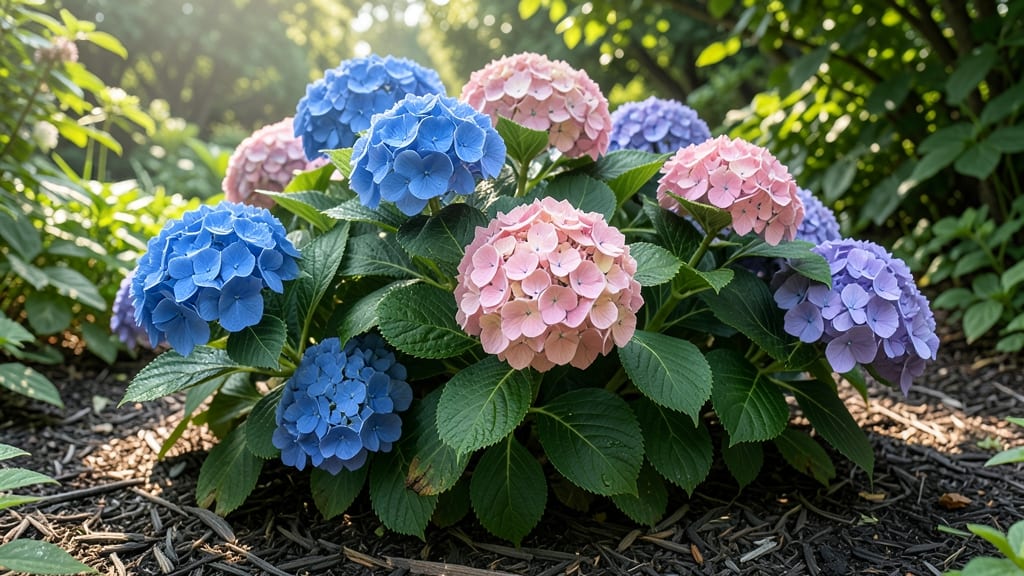
Want to turn your shady garden into a bold, statement-making border without sacrificing sunlight? Hydrangea macrophylla delivers showstopping blooms in blue, pink, or even purple—all while thriving in partial shade. This classic shrub isn’t just pretty; it’s a mood ring for your garden, with flower colors that shift based on soil pH (add lime for blue, aluminum sulfate for pink!).
Perfect for large shade gardens, these shrubs grow 3–6 feet tall and wide, creating a lush backdrop for borders or focal points. Plant them in well-draining, moist soil enriched with organic matter, and prune spent blooms in late winter to encourage fresh growth. Varieties like 'Nikko Blue' or 'Endless Summer' offer reliable blooms year after year, even in dappled light.
Landscape designers and homeowners with statement-making goals will love how hydrangeas add drama while attracting pollinators. Just remember: they’re thirsty plants—mulch well to retain moisture and keep those blooms vibrant all season. 🌻