
Size
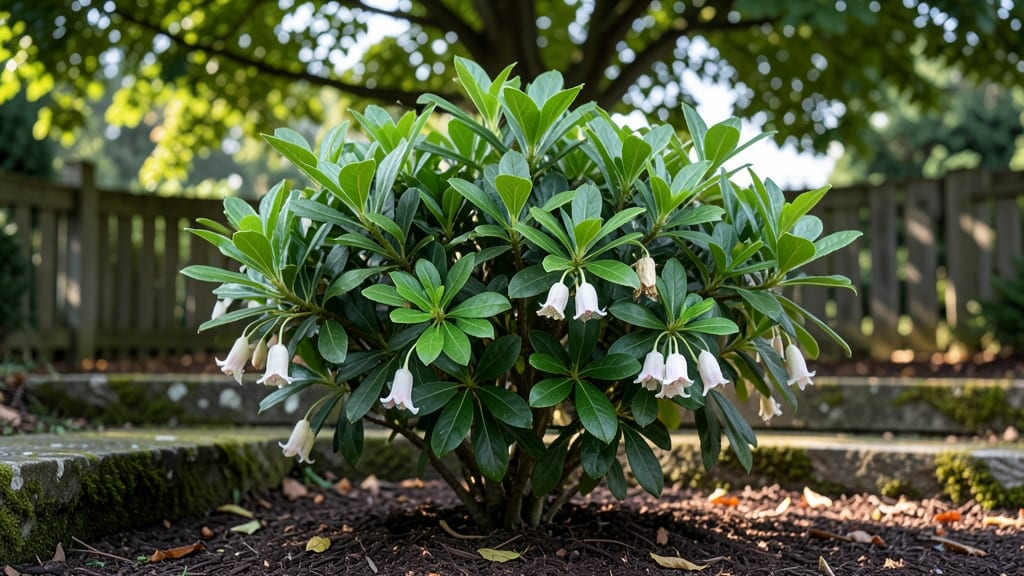
These privacy hedges that grow in shade can transform your dim corner into a verdant, year-round screen—if you pick the right ones.
The key lies in matching plant habits to your shade type: dappled light suits faster growers like Leucothoe, while deep shade demands tougher types such as Rhododendron or Pieris.
Spacing matters too—plant them 3-5 feet apart for a tight hedge in 5-10 years, but closer (2-3 feet) if you’re okay with slower filling. What you’ll end up with is a wall of glossy foliage that blocks views, muffles noise, and stays green even when neighbors’ lawns turn brown.
The best part? These plants reward patience with seasonal blooms (spring flowers on Pieris) and winter structure that keeps your space feeling enclosed all year. Works for urban backyards, woodland edges, or north-facing patios. Let’s pick the right one for your light level—here’s how to choose!
📚 In This Guide
- What you need
- Instructions
- Tips and common mistakes
- Wrapping up and next steps
What you need
- ● Privacy hedge plants (shade-tolerant varieties): 6–10 Holly (Ilex spp.) (e.g., 'Blue Princess' or 'Sky Pencil'—evergreen, dense, and shade-friendly)
- ● 6–10 Boxwood (Buxus spp.) (e.g., 'Green Velvet'—compact and great for tight spaces)
- ● 6–10 Yew (Taxus spp.) (e.g., 'Hicksii'—tough, slow-growing, and thrives in low light)
- ● 6–10 Camellia (Camellia spp.) (e.g., 'Yuletide'—flowering, glossy, and shade-loving)
- ● 6–10 Pieris (Pieris japonica) (e.g., 'Little Heath'—compact, evergreen, and drought-tolerant)
- ○ Soil amendments (optional but helpful): 5–10 lbs of peat moss or compost (to improve drainage and fertility)
- ● 1–2 lbs of slow-release organic fertilizer (e.g., 10-10-10 or a plant-specific blend)
- ● Shovel or trowel (for digging)
- ● Garden gloves (to protect your hands)
- ● Measuring tape (to space plants evenly, typically 3–5 ft apart)
- ● Pruners (sharp, clean pair for trimming)
- ● Watering can or hose with a gentle spray nozzle
- ● Mulch (2–3 inches of pine bark or shredded leaves to retain moisture)
- ○ Optional: Soil pH tester (to check acidity—many shade plants prefer slightly acidic soil)
- ● Edging tool (for clean lines if defining the hedge shape)
- ● Stakes and twine (for young, flexible plants like willow or young yew)
- ● Full or partial shade area (dappled light or <6 hours of direct sun daily)
- ● Well-draining soil (amend if clay-heavy—add compost or sand)
- ● Patience! Shade hedges grow slower but reward you with year-round privacy.
Step-by-step guide to planting evergreen privacy hedges in shade
Creating a lush, evergreen privacy screen in shady spots is easier than you think—here’s how to select and plant the best shade-tolerant species for lasting privacy.
Choose the Right Shade-Tolerant Evergreen Species
Not all evergreens thrive in low light, but these four proven varieties deliver year-round privacy in shady corners: Inkberry Holly (Ilex glabra), Leucothoe (Doghobble), Pieris (Andromeda), and Rhodoodendron (Azalea). Each handles shade differently—Inkberry tolerates full to partial shade, while Pieris and Leucothoe prefer dappled light or filtered shade. Rhododendrons need morning sun and afternoon shade to prevent leaf scorch.
Check your site’s light conditions carefully: deep shade (less than 3 hours of sun) suits Inkberry best, while partial shade (3-6 hours of sun) works for the others. I always test light exposure for a week before planting—hold a white sheet of paper in the spot at noon. If it stays mostly white, you’ve got deep shade; if it yellows, it’s partial.
Prepare the Planting Site for Optimal Growth
Shade-tolerant evergreens need well-draining, acidic soil (pH 4.5-6.0) to thrive. Test your soil with a kit—if it’s alkaline, amend with sulfur or peat moss before planting. For 4 plants, mix 2 gallons of compost and 1 gallon of pine bark fines into the top 12 inches of soil in a 4-foot-wide trench (one for each plant).
Dig holes twice as wide as the root ball but only as deep as the container’s root level. This prevents root suffocation. I like to loosen the sides of the hole with a fork to encourage root spread. If your soil is heavy clay, add 1 part perlite to the backfill mix to improve drainage. Water the holes deeply before planting to settle the soil.
Plant Hedges in a Staggered Pattern for Full Coverage
Space plants 4-6 feet apart for a dense screen—closer spacing (3-4 feet) speeds up coverage but requires more pruning later. Remove plants from containers and soak the root balls for 10 minutes to hydrate roots before planting. Place each plant in its hole, ensuring the top of the root ball sits 1 inch above ground level (evergreens rot if buried too deep).
Backfill with the amended soil mix, tamping gently to remove air pockets. Water immediately after planting to settle soil and eliminate gaps. Mulch with 3 inches of pine needles or shredded bark (not wood chips) to retain moisture and acidify the soil. Keep mulch 6 inches away from stems to prevent rot. Water deeply once a week for the first month—shade plants need consistent moisture to establish roots.
Prune for Shape and Encourage Bushier Growth
Wait 6-8 weeks after planting before pruning—this lets roots recover. Use clean, sharp pruners to trim back any brown or damaged branches first. For Inkberry Holly, cut just above a leaf bud to encourage dense growth. For Pieris and Rhododendron, lightly shear the outer edges to shape the hedge, but avoid cutting more than one-third of the foliage in a season.
I prune mine in early spring (before new growth) to avoid stressing plants. Avoid pruning in fall or winter—evergreens need energy to survive cold months. After pruning, apply a slow-release, acid-loving fertilizer (like 10-10-10) to support new growth. Water thoroughly after fertilizing to prevent root burn.
Maintain Soil Acidicity and Moisture Year-Round
Shade-loving evergreens need consistent moisture—water deeply every 7-10 days during dry spells (check soil 2 inches down with your finger). If leaves yellow or drop, it’s often a sign of too much water or poor drainage. In summer, increase watering to once a week unless rainfall provides 1 inch of water.
Replenish mulch annually in early spring to maintain soil acidity. Every 2-3 years, spread 1 pound of aluminum sulfate (follow package rates) to lower pH if needed. I also monitor for spider mites or scale insects—shade plants are more prone to pests when stressed. Spray with neem oil at the first sign of infestation. With proper care, your hedge will reach 6-8 feet tall in 3-5 years, providing full privacy.
Tips & tricks for planting evergreen privacy screens in shade
Took me years to figure out these shade gardening lessons—here’s how to avoid the common pitfalls and get a thriving evergreen hedge.
Light Testing Matters: The 3-hour rule for deep shade is critical, but I’ve learned to test even more precisely. Place a white sheet of paper in your planting spot at noon for a full week—if it stays mostly white, you’ve got deep shade perfect for Inkberry Holly. If it yellows even slightly, you’re in partial shade, which works better for Pieris or Leucothoe. This simple test prevents buying the wrong plants and ensures your hedge thrives from day one.
Soil Prep Secret: When amending soil for your 4 plants, mix that 2 gallons of compost and 1 gallon of pine bark fines into a 4-foot-wide trench—but don’t stop there. I add a handful of sulfur granules to each hole to guarantee acidic soil (pH 4.5-6.0). This extra acidification step makes all the difference for shade-loving evergreens that struggle in neutral or alkaline soil.
Root Hydration Technique: That 10-minute soak for root balls before planting isn’t just about water—it’s about oxygen too. After soaking, let the roots drain for 5 minutes before planting. This prevents waterlogging in Step 3, which can suffocate roots. I also gently separate any circling roots with my fingers to encourage outward growth. This small step dramatically improves root establishment in the first critical month.
Pruning Timing: Waiting 6-8 weeks after planting before pruning is non-negotiable, but I’ve found the real secret is pruning in early spring when new growth is just starting. This timing lets you shape the hedge while avoiding winter stress. For Inkberry Holly specifically, I cut just above a leaf bud—this encourages dense, bushy growth that fills in gaps beautifully over time.
Pro Tips for Privacy Hedges That Grow In Shade
- Took me years to figure out these shade gardening lessons—here’s how to avoid the common pitfalls and get a thriving evergreen hedge.
- Light Testing Matters: The 3-hour rule for deep shade is critical, but I’ve learned to test even more precisely.
- Soil Prep Secret: When amending soil for your 4 plants, mix that 2 gallons of compost and 1 gallon of pine bark fines into a 4-foot-wide trench—but don’t stop there.
Frequently asked questions
Got questions about creating a lush, private space in shady spots? Here are some of the most common concerns—and answers—to help you plan your evergreen hedge with confidence!
What are the best fast-growing privacy hedges for full shade?
For quick results, consider Leucothoe axillaris (dog hobble) or Pieris japonica (Japanese andromeda). Both tolerate shade, grow 12–24 inches per year, and stay evergreen. Slower but sturdy options like Ilex glabra (inkberry holly) or Mahonia aquifolium (Oregon grape) also thrive in low light but take 3–5 years to fill out.
How long does it take for shade-tolerant hedges to provide full privacy?
Most shade-loving hedges take 3–5 years to reach maturity and block views effectively. Faster growers like Leucothoe may close gaps in 2–3 years, while denser options like Taxus media (hybrid yew) can take up to 5 years. Planting closer together (2–3 feet apart) speeds up coverage but may require pruning to maintain shape.
Can I plant a privacy hedge in a very dark, wooded area with no direct sunlight?
Yes! Native plants like Rhododendron or Kalmia latifolia (mountain laurel) thrive in deep shade (under 2–3 hours of dappled light). For broader coverage, mix in Pachysandra terminalis (Japanese spurge) as a ground cover to fill gaps. Avoid non-native species like Boxwood, which struggle in extreme shade.
How do I prune shade-grown hedges to keep them dense and healthy?
Prune lightly in late winter or early spring to avoid stressing shade-sensitive plants. Use sharp shears to trim just outside the bush’s natural shape, focusing on the outer third. Avoid heavy cuts—over-pruning can expose inner branches to sunburn. Evergreen hedges like Holly or Yew need minimal shaping; others (like Pieris) benefit from occasional thinning to improve airflow.
Are shade-loving privacy hedges more expensive than sun-loving ones?
Costs vary, but many shade-tolerant hedges (like Inkberry Holly or Leucothoe) are mid-range in price—typically $15–$40 per plant depending on size. Native or drought-resistant varieties (e.g., Mahonia) may save money long-term by reducing water needs. Compare with sun-loving Arborvitae ($10–$30) or Bamboo (fast but invasive). Pro tip: Buy bare-root plants in early spring for better deals!
Wrapping up and next steps
Transforming your shady garden into a lush, private retreat is totally doable—you just need the right evergreen hedges! From Holly and Boxwood to Yew and Inkberry, these shade-loving plants thrive where others struggle, offering year-round privacy with minimal fuss. 🌿
Ready to take the next step? Start by sketching your hedge layout, then grab your gloves and tools—your serene, secluded garden is just a few plants away! Which of these shade stars will you bring home first?