
Shrubs
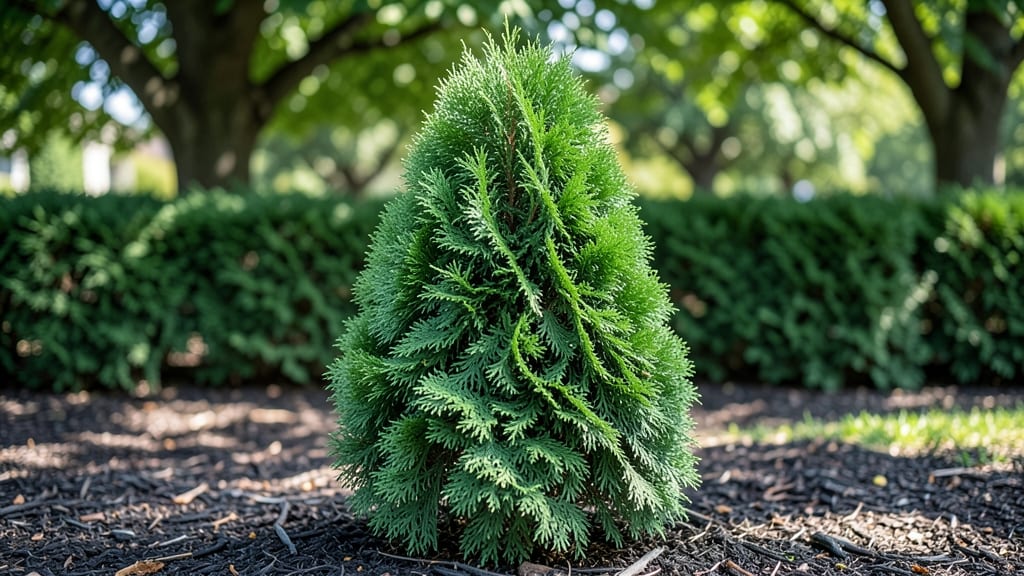
Thuja plants can stretch their shade tolerance further than you might expect, thriving in conditions where other evergreens would struggle.
If you love the lush, evergreen beauty of thuja trees but worry they’ll struggle in your shady yard, you’re not alone—many gardeners assume these plants need full sun to thrive.
The truth? Thuja plants handle shade better than you might think, but their growth and health depend on the right balance of light.
While they can survive in partial shade, pushing them into full shade risks sparse foliage, slow growth, and even pest problems. The key is understanding how much shade your specific variety can handle and how to support their health when sunlight is limited.
In this guide, I’ll break down how far thuja can stretch without sunlight struggles, which varieties excel in low-light spots, and the simple care tweaks that keep them lush year-round.
 Best Window Placement
How much shade can thuja trees tolerate before growth suffers?
Thuja trees—commonly known as arborvitae—are prized for their year-round greenery and adaptability, but their shade tolerance often leaves gardeners guessing. While they thrive in full sun to partial shade, pushing them into deep shade triggers noticeable growth changes.
Understanding these thresholds helps you place them correctly in your landscape without sacrificing their iconic dense foliage.
The key lies in light deprivation effects. Thuja trees grown in full shade (less than 2 hours of direct sun) often exhibit elongated growth, sparse foliage, and weakened disease resistance.
Their natural photosynthesis efficiency drops, forcing them to stretch toward any available light—a condition called etiolation. This not only makes them look leggy but also reduces their natural pest resistance.
Here’s the science: Thuja trees require at least 4–6 hours of filtered light daily to maintain healthy growth. Below this threshold, their chlorophyll production slows, leading to thinner branches and slower height increases.
Varieties like Thuja occidentalis (American arborvitae) handle partial shade (4–6 hours of light) better than Thuja plicata (Western red cedar), which prefers more sun.
For Thuja occidentalis, the most shade-tolerant variety, 3–5 hours of light per day keeps them healthy, though their foliage density may thin. In contrast, Thuja plicata struggles below 6 hours of light, often developing weak, sprawling branches that break easily.
This variety’s natural height advantage (up to 60 feet) is lost in shade, as its energy shifts from vertical growth to survival.
One critical factor is foliage density. Thuja trees rely on sunlight to produce chlorophyll-rich needles, which give them their signature lush look. In deep shade, their needle production slows, leading to thinner, less vibrant foliage.
Over time, this makes them more susceptible to pests like spider mites and diseases like root rot, as their natural defenses weaken.
If your thuja is in full shade (under 2 hours of light), you’ll likely see height growth continue but at a slower rate. The plant may grow 2–3 feet taller per year instead of the usual 3–5 feet in ideal conditions.
However, the trade-off is wider spacing between branches, making them look less full and more open and airy.
To mitigate shade stress, consider pruning for light exposure. Thin out dense inner branches to allow more light to reach the center, where etiolation often occurs. Additionally, mulching with compost improves soil nutrients, helping the tree compensate for reduced photosynthesis.
For potted thuja, move containers to sunnier spots in spring and fall to boost their resilience.
Another pro tip: Companion planting can help. Place taller, sun-loving plants like sunflowers or hollyhocks near your thuja to reflect light onto its branches. This indirect light boost can make a noticeable difference in foliage density over time.
Just avoid planting anything that competes for water or shades the base too heavily.
Remember, thuja trees are adaptable, but they aren’t invincible. While they can survive in deep shade, their long-term health and appearance will suffer.
For the best results, aim for at least 4 hours of filtered light daily and choose shade-tolerant varieties like 'Emerald Green' or 'Holmstrup' if your yard is on the shadier side.
🌿
Signs your thuja is stressed in shade (and how to fix it)
If your thuja looks less vibrant than expected, it might be struggling with shade stress. Unlike sun-loving plants, thuja can tolerate partial shade, but too little light causes noticeable issues.
Watch for sparse foliage, where branches appear bare or thin. This happens when the plant stretches toward distant light sources, leaving gaps in its canopy.
Another red flag is elongated growth, where stems grow taller and thinner than usual. This "spindly" look occurs as the thuja reaches for light, weakening its structure. You might also spot yellowing needles, especially on older branches, signaling nutrient deficiencies caused by limited photosynthesis.
🌱
Pests like spider mites and bagworms target stressed thuja because their weakened defenses make them easier prey. Check for tiny webs or brown bags on branches—common signs of infestation. Even if you don’t see pests yet, thinning foliage creates perfect hiding spots for them.
To fix shade stress, start with selective pruning to open the canopy. Remove overcrowded branches to allow better light penetration to inner growth. Avoid heavy pruning—focus on thinning out rather than cutting back. Pair this with companion planting taller, sun-loving plants nearby to reflect light onto your thuja.
For gradual acclimation, move potted thuja to a sunnier location for a few hours daily, increasing exposure over weeks. This helps harden the plant without shocking it.
Pair this with balanced fertilization (10-10-10 NPK) in early spring to support new growth. Mulch the base with organic matter to improve soil moisture retention.
With these steps, your thuja can bounce back—just remember, patience is key. Monitor progress monthly and adjust care as needed. A happy thuja in shade is still possible with the right approach! 🌿