
Size
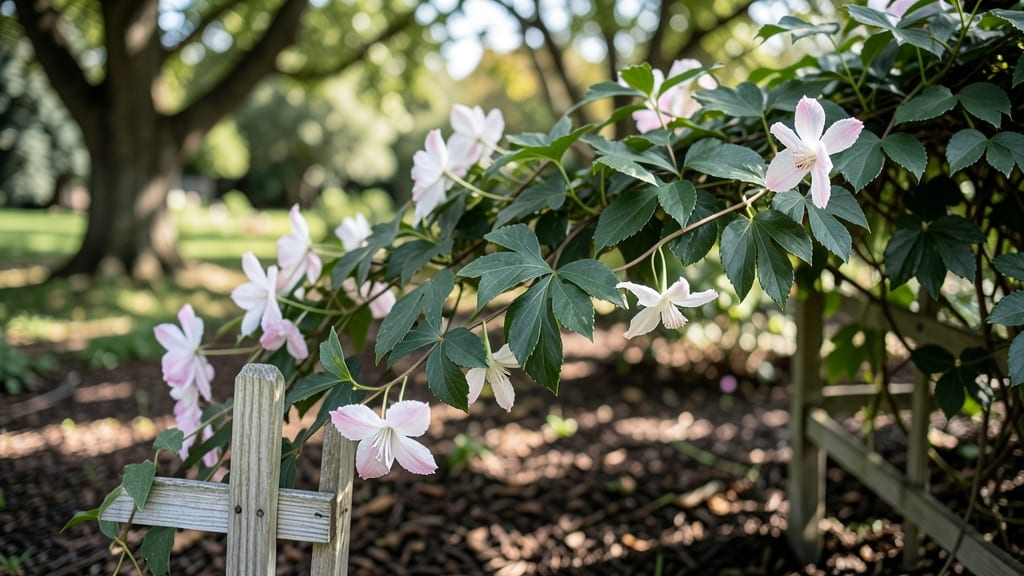
Clematis will grow in shade, but they typically need at least 6 hours of sunlight daily for optimal health and vibrant blooms. Varieties like 'Jackmanii' or 'Nelly Moser' tolerate partial shade better, though growth may be slower and flowers less abundant. Deep, dense shade often prevents proper vine development.
While clematis can survive in shadier spots, their growth and flowering depend heavily on light exposure. 🌿 The vines rely on sunlight for photosynthesis, which fuels their energy and supports robust blooms.
In low-light conditions, you might see fewer flowers and weaker stems, but choosing the right variety makes a big difference. For instance, 'Etoile Violette' handles partial shade better than many others, though it still benefits from morning sun to keep flowers coming.
To maximize success in shady areas, focus on well-draining soil and regular pruning to encourage new growth. Some gardeners also use reflective surfaces near the base to bounce extra light onto the vines.
The key is balancing shade tolerance with the plant's natural needs—clematis won't thrive in complete darkness, but with the right conditions, they can still add beauty to your garden.
💡 In This Article
- Light Requirements for Clematis Growth and Flowering
- Top Shade-Tolerant Clematis Varieties for Low-Light Gardens
Light requirements for clematis growth and flowering
Clematis vines rely on sunlight to produce energy through photosynthesis, a process where chlorophyll in the leaves converts light into glucose. Without adequate light, the plant struggles to develop strong stems and vibrant blooms.
Most varieties need at least 6 hours of direct sunlight daily to maintain healthy growth, though some can tolerate 4-5 hours in partial shade.
The key is balancing light exposure with moisture—too much sun without proper hydration causes leaf scorch, while too little light results in weak, leggy vines that flop under their own weight.
Here's what happens when light levels drop: chlorophyll production slows, reducing the plant's ability to create energy. This leads to fewer blooms and smaller leaves, as the vine diverts resources to basic survival rather than flowering.
For example, 'Jackmanii' clematis, a popular variety, may still grow in partial shade but often produces 30-50% fewer flowers compared to its full-sun counterparts.
The flowers themselves also lose vibrancy, fading to pale hues instead of their usual bold colors. 🌸 In deep shade, the vines may grow long and thin, lacking the sturdy structure needed to support heavy blooms.
Light quality matters too. Morning sun (when temperatures are cooler) is gentler than harsh afternoon rays, making it ideal for shade-tolerant varieties. If you're growing clematis in partial shade, position it where it gets at least 3-4 hours of morning sunlight and dappled shade the rest of the day.
This mimics natural forest conditions where young plants often grow under taller trees. You can also use reflective surfaces like light-colored walls or mirrors to redirect sunlight onto the vines, effectively increasing their light exposure by 10-20%.
Another critical factor is the plant's growth habit. Clematis are divided into three pruning groups, each with different light needs. Group 3 varieties (like 'Jackmanii') are the most shade-tolerant, while Group 1 and 2 varieties (early and late bloomers) require more light to produce their signature flowers.
For instance, 'Comtesse de Bouchaud' (Group 2) thrives in partial shade but may skip its second flush of blooms if light is insufficient. Understanding your variety's group helps tailor light exposure for optimal results.
Soil moisture plays a supporting role in light adaptation. In shadier spots, the ground stays cooler and wetter, which can lead to root rot if drainage is poor. Amending the soil with organic matter like compost improves aeration while retaining moisture without waterlogging.
A well-draining mix with 20-30% organic content helps clematis roots access both water and oxygen, even in lower-light conditions. This balance is crucial because overwatered roots in shade can't compensate for reduced photosynthesis.
What most gardeners overlook is how light affects flower development. Clematis buds form in the previous season, and insufficient light weakens these buds before they even open. For example, a 'Nelly Moser' vine in deep shade might produce buds that fail to bloom or drop prematurely.
To counteract this, fertilize shade-grown clematis with a low-nitrogen, high-phosphorus formula (like 5-10-5) in early spring to support bud formation, even if sunlight is limited.
In summary, clematis can survive in shade, but their growth and flowering are directly tied to light exposure. The 6-hour rule is a good benchmark, but with the right variety, soil prep, and light management, you can coax even shade-loving clematis into producing stunning displays.
The trade-off is slower growth and fewer blooms, but for gardeners with limited sun, shade-tolerant varieties offer a practical solution. 💚