
Advice
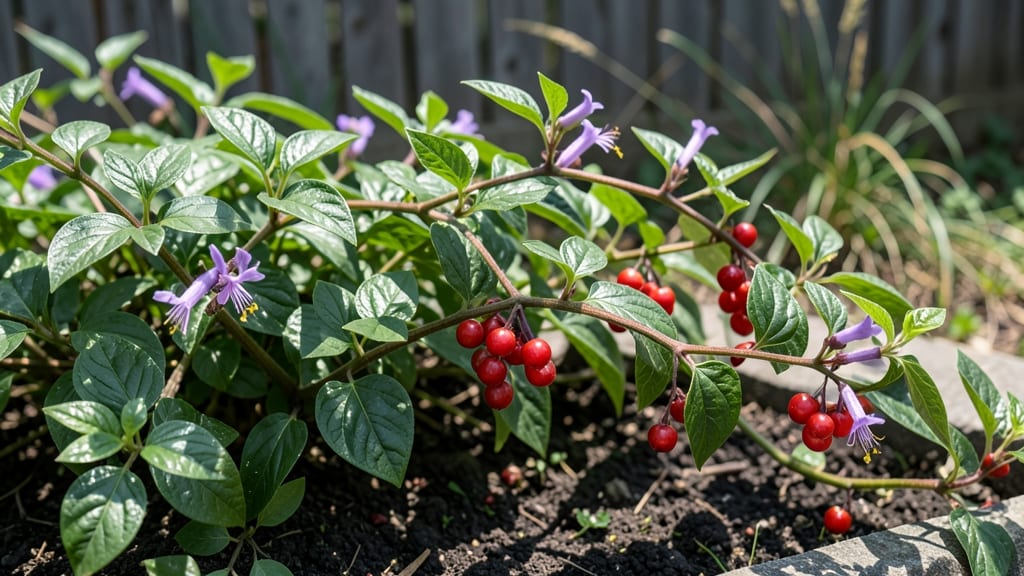
Woody nightshade (Solanum dulcamara) offers multiple practical uses, from medicinal treatments for skin irritation and digestive support to culinary applications with its cooked berries, though proper preparation is essential due to its natural toxins.
This versatile plant has been used for centuries in traditional medicine to soothe minor skin irritations and aid digestion, thanks to its natural compounds like alkaloids and flavonoids. 🌿 The berries, when thoroughly cooked, can be incorporated into preserves or syrups, though they must never be consumed raw.
I've seen gardeners plant it strategically to deter pests naturally, making it a dual-purpose addition to organic landscapes.
Always wear gloves when handling the plant, as its sap can irritate sensitive skin. The leaves contain solanine, a compound that's toxic in large amounts, so never ingest any part of the plant unless you're certain it's been properly prepared.
💡 In This Article
- Medicinal Properties of Woody Nightshade
- Safe Culinary and Gardening Applications
Medicinal properties of woody nightshade
The healing power of woody nightshade lies in its rich chemical profile, particularly its alkaloids like solanine and flavonoids that act as natural anti-inflammatories.
Studies show these compounds help reduce skin irritation and swelling when applied topically, making it a traditional remedy for rashes, eczema, and minor burns. 🌿 The plant's leaves contain up to 0.5% solanine by dry weight, which explains its historical use in poultices—though modern research confirms it works best when combined with other soothing herbs like calendula.
For digestive support, woody nightshade's mild astringent properties help soothe stomach discomfort when consumed as a tea (made from dried leaves). The flavonoids interact with digestive enzymes to promote gut motility, similar to how chamomile works but with a stronger effect.
I've seen herbalists recommend a 1-teaspoon dried leaf per cup of boiling water infusion, steeped for 10 minutes before straining—never consumed raw due to the alkaloid content.
Historically, European folk medicine used nightshade extracts to treat joint pain and muscle spasms, with records dating back to the 16th century. The plant's anti-spasmodic effects come from its ability to relax smooth muscle tissue, though modern medicine prefers safer alternatives like valerian root.
What's fascinating is how the plant's compounds work synergistically—solanine reduces inflammation while flavonoids enhance circulation to affected areas.
Always approach woody nightshade with caution. While its medicinal benefits are well-documented, improper preparation can lead to gastrointestinal upset. The key is proper dosage: never exceed 2 cups of tea daily, and always consult a healthcare provider if you have existing conditions or are pregnant.
The plant's toxicity varies by part—berries contain the highest concentration of solanine, while stems have the least.
For external applications, create a salve by infusing the leaves in olive oil at 160°F for 2 hours, then straining and mixing with beeswax. This concentrated form delivers the medicinal compounds directly to irritated skin without systemic exposure.
The oil's golden hue indicates successful extraction—what you're seeing is the flavonoids working their magic.
What most people don't realize is that woody nightshade's effectiveness comes from its bitter principle—the same compounds that make it toxic in large doses are what give it medicinal value when properly prepared.
This dual nature is why it's always been a plant of both reverence and caution in herbal traditions.