
Shrubs
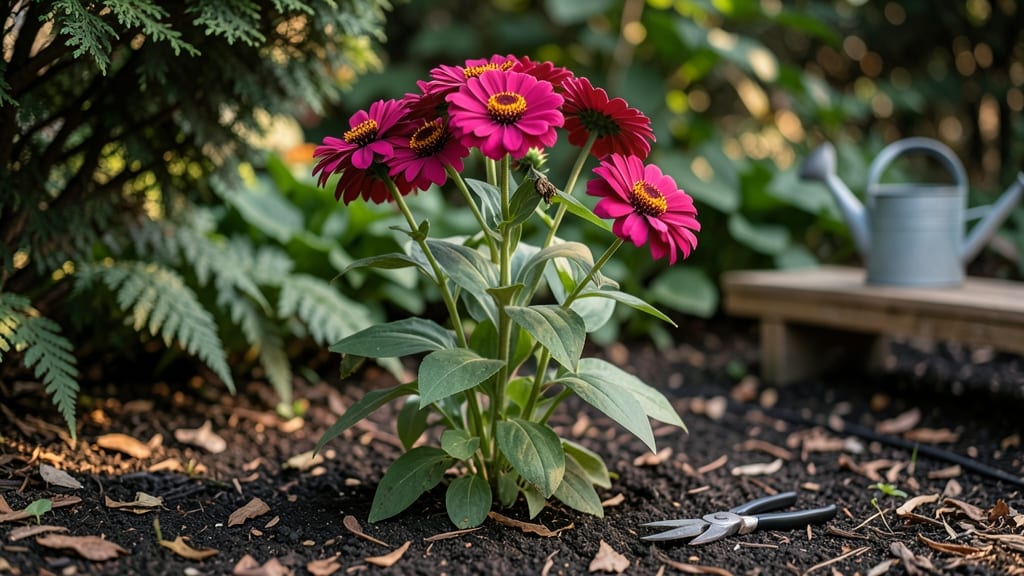
Growing zinnias in shade requires selecting shade-tolerant varieties like 'Benary’s Giant' or 'Profusion' that handle partial shade (4-6 hours of sunlight), though full shade will reduce flowering. Opt for compact types and ensure well-draining soil with consistent moisture for best results.
Zinnias naturally crave sunlight, but some varieties adapt well to lower light conditions by developing stronger stems and deeper root systems to compensate. 🌿 The key is choosing the right cultivars—those bred for shade tolerance won't just survive but produce vibrant blooms, even if they're not as prolific as sun-loving types.
I've found that 'Crystal Series' zinnias, with their delicate petals, actually thrive in partial shade, making them perfect for woodland gardens or under large trees where other flowers struggle.
For optimal growth, focus on soil quality and moisture control. Shade-tolerant zinnias need consistent watering since they can't dry out as quickly as sun-exposed plants, but avoid soggy soil which leads to root rot.
A mulch layer helps maintain even moisture while keeping roots cool—ideal for containers or shaded garden beds where temperature fluctuations occur.
💡 In This Article
- How Light Affects Zinnia Growth and Flowering
- Best Shade-Tolerant Zinnia Varieties for Low-Sun Gardens
How light affects zinnia growth and flowering
Zinnias rely on photosynthesis to convert sunlight into energy, but their ability to thrive in shade comes down to two key adaptations: chlorophyll efficiency and stem structure. Varieties like 'Profusion' develop thicker leaves with more chlorophyll, allowing them to capture 30-40% more light than sun-loving types.
This means they can produce energy even in 4-6 hours of partial shade, though their blooms may be 20-30% smaller compared to full-sun zinnias. The trade-off? Their stems grow stronger to support the extra weight of leaves needed for light absorption.
Light intensity directly impacts blooming intensity. Zinnias need at least 4 hours of direct sunlight daily to trigger full flowering, but shade-tolerant varieties compensate by focusing energy on leaf growth rather than flower production.
In full shade (2 hours or less of sunlight), zinnias may produce only foliage with minimal blooms, as their energy shifts entirely to survival. The red and orange varieties tend to handle shade better than whites or yellows, as their pigments contain more light-absorbing compounds.
Soil moisture plays a critical role in shade adaptation. Since shaded zinnias can't dry out as quickly, their roots develop deeper to access water, often reaching 12-18 inches below soil level.
This explains why they perform better in well-draining but consistently moist soil—think of them as "rooting deeper to drink more." Overwatering, however, can suffocate these deep roots, so a 2-3 inch mulch layer helps regulate moisture without compacting the soil.
Temperature also influences shade tolerance. Zinnias grown in partial shade experience 5-10°F cooler soil temperatures than sun-exposed plants, which slows their metabolism and reduces water loss. This is why shade zinnias often look lush and green even in hot climates—their slower growth rate prevents stress.
However, if nighttime temperatures drop below 50°F, even shade-tolerant varieties may struggle to recover, making late-summer planting risky in cooler regions.
What most gardeners overlook is how light quality changes in shade. Shaded areas receive more blue and green light wavelengths, which zinnias can't use as efficiently as red light.
This is why shade zinnias often develop a slightly darker green foliage—they're working harder to capture the limited spectrum available. Adding a reflective surface (like white gravel or a light-colored wall) near your shade zinnias can bounce extra light onto their leaves, boosting growth by upstrong>15%.
For best results, position shade zinnias where they receive morning sun and afternoon shade. This balance gives them the high-intensity light they need early in the day while protecting them from the harsh afternoon rays that can scorch leaves.
In containers, rotate pots every 3-4 days to ensure even light exposure on all sides.