
Trees
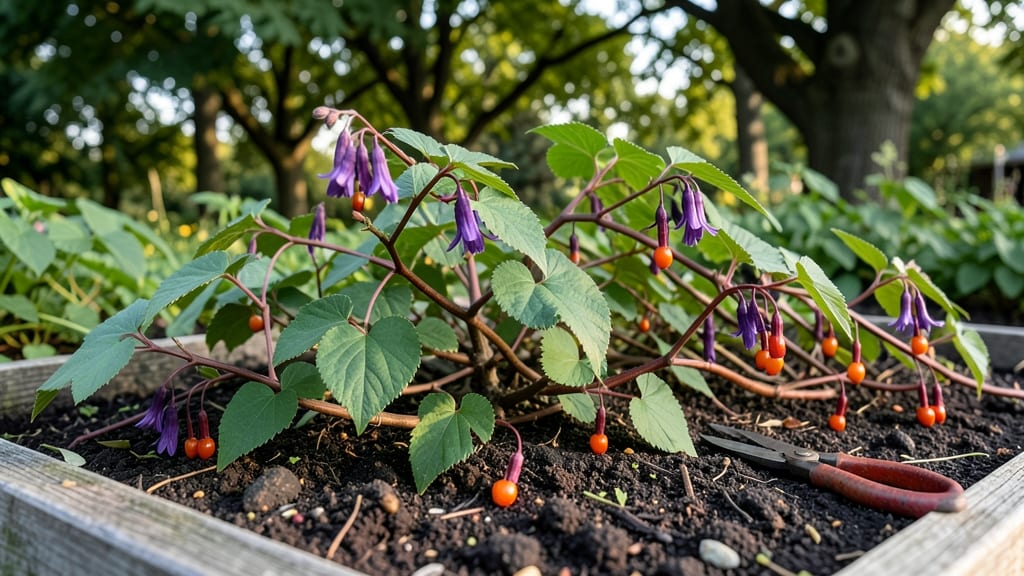
The identification of bittersweet nightshade could save your garden—and your pets. 🌿 This toxic vine mimics harmless plants, but its glossy, oval leaves and clusters of purple berries give it away.
One taste can cause vomiting or worse, so knowing its signs is critical before you pull "weeds" near children or animals.
The key is the berries: bright red when ripe, but they start green and turn orange first. Leaves grow in pairs along the vine, with jagged edges that look almost heart-shaped.
It thrives in shady, moist areas—think fence lines or underbrush—where it spreads aggressively. If you spot these traits, assume caution until you confirm it's not bittersweet nightshade.
Safe removal means wearing gloves and a mask, since the sap can irritate skin. Dig out roots completely to prevent regrowth, and bag the plant before composting. Even dead vines can release toxins into soil.
For pets, keep them away from the area until you're certain it's gone—some dogs and cats are drawn to the berries.
Regional notes matter: bittersweet nightshade thrives in the Northeast and Midwest but can pop up anywhere with damp shade. If you're unsure, snap a photo and compare it to local invasive plant databases. Better safe than sorry—this plant doesn't play nice with gardens or health.
Root Causes Of Misidentification
Bittersweet nightshade (Solanum dulcamara) often gets mistaken for its harmless—or even beneficial—cousins due to a mix of biological similarities, seasonal changes, and human perception quirks. Understanding these factors helps gardeners and foragers avoid dangerous errors. Below, we break down the science behind why confusion persists.
Bittersweet nightshade shares striking visual traits with non-toxic plants, thanks to evolutionary adaptations that help it thrive. Here’s how:
- Leaf Shape & Arrangement: Bittersweet nightshade’s compound leaves (with 3–9 leaflets) resemble those of Virginia creeper (Parthenocissus quinquefolia) or even wild grape (Vitis spp.). Both have palmate (hand-like) leaf structures, but bittersweet’s leaves are alternate (spaced along the stem), while Virginia creeper’s are opposite (paired at nodes). 🔍 Pro Tip: Check leaf attachment—bittersweet’s stems twist slightly, a key clue.
- Berry Resemblance:
Its red-orange berries mimic edible fruits like wax myrtle (Morella cerifera) or winterberry holly (Ilex verticillata). Unlike these, however, bittersweet berries:
- Are smooth and glossy (not waxy or matte).
- Turn black when fully ripe (edible lookalikes stay bright).
- Have a translucent, jelly-like interior when sliced (a dead giveaway).
- Vine Habit:
Bittersweet’s twining, woody stems can fool people into thinking it’s a harmless vine like passionflower (Passiflora) or clematis. However, bittersweet:
- Lacks showy flowers (its blossoms are small, star-shaped, and often overlooked).
- Grows aggressively upward, while clematis clings to supports.
- Produces a milky sap when broken (a toxicity signal).
Bittersweet nightshade’s appearance shifts dramatically with the seasons, making it harder to spot. Here’s how:
| Season | Bittersweet Nightshade Traits | Common Misidentification Risk |
|---|---|---|
| Spring |
|
Confused with bluebell (Hyacinthoides) or wild ginger (Asarum) flowers. |
| Summer |
|
Mistaken for juniper berries or dogwood (Cornus) fruits. |
| Fall/Winter |
|
Taken for winterberry holly or bittersweet honeysuckle (Lonicera), which are safe. |
💡 Key Takeaway: Bittersweet’s year-round presence (especially berries) is a red flag—most edible plants drop their fruits in fall.
Even with clear visual cues, our brains sometimes fill in the gaps based on context. Here’s why:
- Desperation for Color: In late autumn, when food sources dwindle, bright red berries trigger a subconscious "eat me" response. Evolutionarily, this was a survival tactic—but it backfires with toxic plants like bittersweet. ⚠️ Warning: Never eat berries based on color alone.
- Cultural Conditioning:
Some regions (like parts of Europe) have traditional uses for bittersweet nightshade in folk medicine, leading to overconfidence in its safety. In reality, its tropane alkaloids (like solanine) can cause:
- Hallucinations (in small doses).
- Severe gastrointestinal distress (in larger amounts).
- Neurological damage (rare but possible).
- Urban vs. Rural Exposure: City dwellers are more likely to mistake bittersweet for ornamental plants (like celastrus or pyracantha) because they’ve never encountered it in the wild. Meanwhile, rural foragers may overlook its toxicity due to familiarity with local flora.
🎯 Actionable Fix: When in doubt, use the "three-second rule"—if you can’t immediately identify a plant’s key traits (leaf attachment, sap, berry texture), assume it’s unsafe until proven otherwise.
Practical ways to manage bittersweet nightshade
Encountering bittersweet nightshade in your garden can be frustrating, but the good news is that most issues—whether misidentification, accidental ingestion, or unwanted spread—have clear, actionable solutions. Below, we break down the most common problems and their fixes, from quick removal to long-term prevention. Let’s tackle them step by step.
If you’ve confirmed it’s bittersweet nightshade (and not a harmless lookalike like Solanum dulcamara), the first step is removal. Here’s how to do it effectively:
🔥 Pull It by Hand (Best for Small Patches)
- When to use: Early in the growing season (spring or fall) when soil is moist.
- How to do it:
- Wear gloves (nitrile or rubber) to avoid skin irritation from sap.
- Grasp the plant at the base and twist gently to loosen roots.
- Do not compost—discard in sealed bags to prevent regrowth.
- Pro tip: 💡 Target young plants first; mature vines can regenerate from root fragments.
🍳 Smother or Solarize (For Stubborn Roots)
- When to use: If pulling leaves roots behind or the area is large.
- How to do it:
- Cover the area with black plastic sheeting or thick cardboard for 4–6 weeks in hot weather.
- The heat will kill roots and seeds without chemicals.
- Remove debris afterward and check for regrowth.
👨🍳 Use Vinegar or Herbicide (For Large Infestations)
- When to use: Only if the patch is extensive (e.g., >10 sq ft) or near high-traffic areas.
- How to do it:
- Vinegar spray (natural option):
- Mix 1 gallon white vinegar + 1 cup dish soap + 1 cup salt.
- Spray directly on leaves (avoid desirable plants).
- Reapply every 3–5 days until dead.
- Glyphosate (synthetic option):
- Follow label instructions for broadleaf weed killer.
- Apply on a dry, wind-free day and avoid overspray.
- Vinegar spray (natural option):
- ⚠️ Warning: Herbicides can harm other plants—test on a small area first.
Once you’ve removed the plant, take these steps to stop it from coming back:
🌡️ Improve Soil Health (Long-Term Solution)
- Bittersweet nightshade thrives in poor, compacted, or nitrogen-rich soil. Fix this by:
- Adding compost or aged manure to improve drainage and fertility.
- Planting cover crops (like clover or vetch) to outcompete weeds.
- Avoiding over-fertilization with high-nitrogen amendments.
🎯 Monitor and Maintain Your Garden
- 🔍 Regular inspections: Check for new growth weekly during spring/summer.
- 🌿 Mulch strategically: Apply 3–4 inches of mulch (wood chips or straw) to block sunlight and suppress seeds.
- 🐛 Encourage natural predators: Birds and insects may eat the berries—leave some habitat for wildlife.
📊 Keep It Out of Your Landscape
- Avoid planting near: Fruit trees, berry bushes, or edible gardens (it spreads aggressively).
- Check nursery plants: Inspect new additions for vines or berries before bringing them home.
Bittersweet nightshade is toxic if ingested, especially the berries. Here’s how to act fast:
🚨 Immediate Steps
- Remove access: Pick up fallen berries and secure the area with fencing if needed.
- Call poison control: In the U.S., contact the ASPCA Poison Control (888-426-4435) or your local emergency vet.
- Watch for symptoms: Drooling, vomiting, or lethargy in pets; stomach pain or dizziness in humans.
✨ Long-Term Safety
- Train pets: Teach dogs to avoid chewing plants (especially in training areas).
- Educate children: Explain why some berries are dangerous—use visual aids if helpful.
- Plant safe alternatives: Replace bittersweet nightshade with non-toxic vines like clematis or honeysuckle.
With these solutions, you can eliminate bittersweet nightshade and keep your garden (and family) safe. The key is early action—don’t let it take root! For persistent issues, combine removal methods and stay vigilant.
Frequently asked questions
What's the fastest way to confirm if a vine is bittersweet nightshade?
Check for paired leaves with jagged edges and milky sap when broken. The berries are your best clue: they start green, turn red-orange, then black when ripe—unlike edible lookalikes that stay bright. Snap a photo and compare with local invasive plant databases for confirmation.
Can dogs get sick from chewing bittersweet nightshade?
Yes, absolutely. The berries contain tropane alkaloids that cause vomiting, diarrhea, and even neurological symptoms in pets. If your dog ingests any part, call the ASPCA Poison Control (888-426-4435) immediately. Keep pets away from the area until the plant is fully removed.
Why does bittersweet nightshade spread so aggressively?
It thrives in shady, moist soil and produces thousands of seeds per berry cluster. The roots fragment easily, allowing new plants to sprout from even small pieces. Unlike many vines, it doesn't need support to climb—it twines aggressively upward, smothering other plants.
Is there a safe way to use bittersweet nightshade in gardening?
No, it's never safe near children, pets, or edible plants. While some cultures use it in traditional medicine, modern science confirms its toxicity. If you must remove it, wear gloves and a mask—its sap can irritate skin. For ornamental purposes, opt for non-toxic alternatives like clematis or honeysuckle.
How long does it take for bittersweet nightshade to regrow after removal?
If roots remain, new shoots can appear in as little as 7-10 days. To prevent regrowth, dig 6+ inches deep to remove all root fragments. Solarizing the area (covering with black plastic for 4-6 weeks) kills any remaining roots without chemicals.