
Size
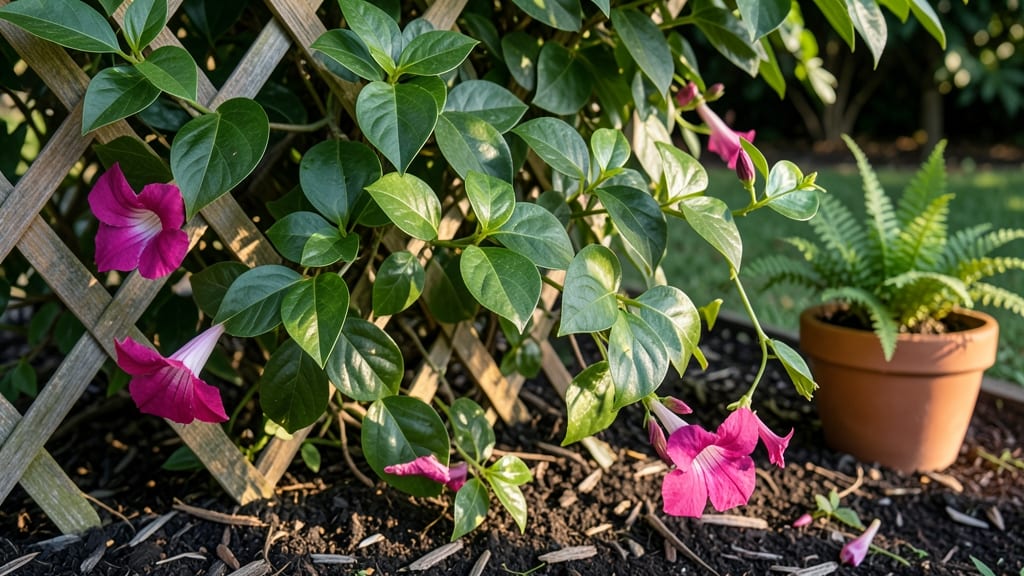
Can a mandevilla grow in shade—but only partial shade, not full shade? 🌿 I’ve watched my mandevilla vines stretch painfully thin in deep shade, then bounce back with just a few hours of morning sun.
The key isn’t forcing it to grow in darkness; it’s finding that sweet spot where it gets enough light to bloom without burning. In partial shade (4-6 hours of filtered light daily), your mandevilla will grow slower but stay healthier than in full shade.
The leaves stay glossy, and you’ll still get flowers—just fewer of them. Full shade? That’s where the trouble starts: leggy stems, sparse blooms, and a vine that looks more like a sad houseplant than a tropical beauty.
The fix is simple: rotate the pot every few weeks to ensure even light exposure, or prune leggy stems to encourage bushier growth. If you’re growing indoors near a north-facing window, supplement with a grow light for 6-8 hours daily—it makes all the difference.
Outdoor mandevillas in shaded patios or under trees? Choose variegated varieties like ‘Alice du Pont’—they tolerate lower light better than solid-green types. And remember: more shade = slower growth, but with the right adjustments, your vine will still thrive.
📚 In This Guide
- What you need
- Instructions
- Tips and common mistakes
- Wrapping up and next steps
What you need
- ● Mandevilla plant: Choose a Mandevilla laxa or Mandevilla sanderi variety (more shade-tolerant than others). Start with a healthy, 1-2 gallon container plant or a young cutting.
- ● Well-draining potting mix: 5-10 gallons (depending on pot size). Mix 50% premium cactus/succulent mix with 50% perlite or orchid bark for aeration.
- ● Container or garden bed: For containers: 10-15 gallon pot with drainage holes (terracotta or fabric pots work best). Ensure it’s at least 12 inches deep.
- ● For in-ground planting: A spot with 4+ hours of filtered light (e.g., under a tree with dappled shade). Amend soil with compost to improve drainage.
- ○ Slow-release fertilizer: 1-2 cups of balanced 10-10-10 or 20-20-20 granules mixed into the soil at planting. Optional: Liquid fertilizer (e.g., Miracle-Gro for Blooming Plants) every 4-6 weeks.
- ● Mulch: 1-2 inches of orchid bark or pine straw to retain moisture and regulate temperature.
- ● Gloves and trowel: For handling soil and planting.
- ● Watering can or hose with a gentle spray nozzle: Mandevilla prefers consistent moisture but hates soggy roots.
- ○ Support structure (optional but recommended): Trellis, obelisk, or cage: For vertical growth (choose one that’s at least 6 feet tall for mature vines).
- ● Bamboo stakes or tomato cages: Budget-friendly alternatives.
- ● Pruning shears: For shaping and encouraging bushier growth.
- ○ Shade cloth (optional): 30-50% coverage if your area gets intense afternoon sun even in "shade."
- ● Light: Partial shade (2-6 hours of direct sun daily) or bright indirect light. Avoid deep, dark shade (e.g., under dense foliage).
- ● Temperature: 60–85°F (ideal). Protect from frost (below 32°F is deadly).
- ● Humidity: Moderate to high (mist leaves occasionally if air is dry).
How to grow Mandevilla in partial shade for healthy vines
Here’s how to nurture these tropical beauties when full sun isn’t an option.
🌿 Step 1: Choose the Right Shade Conditions
Mandevilla thrives in partial shade—think morning sun with afternoon shade or dappled light under trees. Avoid deep shade where leaves stay dark green and stems grow weak. Look for spots with 3-6 hours of filtered sunlight daily, like east-facing windows or patios with afternoon shade from structures or foliage.
I’ve found that 50-70% shade cloth works well in hot climates where direct sun would scorch leaves. Test your spot by observing how light moves across it throughout the day. If leaves stay pale yellow after a week, the area gets too little light—move to a brighter location.
☀️ Step 2: Position for Optimal Light Balance
Start by placing your mandevilla where it gets bright, indirect light for at least half the day. Rotate the pot quarter-turn weekly to encourage even growth—you’ll notice stems leaning toward the light if they’re not balanced. In containers, this prevents lopsided vines that struggle to support blooms.
If indoors, position near a south or east-facing window where light is brightest. Supplemental grow lights (12-14 hours/day) can help if natural light is insufficient. Watch for purple-tinged leaves—this signals the plant is stretching for more light and needs relocation.
💧 Step 3: Adjust Watering for Shade-Grown Plants
Shade slows evaporation, so water only when the top 1-2 inches of soil feel dry—about every 5-7 days in partial shade. Overwatering in low light leads to root rot because excess moisture sits in compacted soil. Stick your finger in the soil: if it’s damp below the surface, wait before watering again.
Use well-draining potting mix (like a blend of peat moss, perlite, and bark) to prevent soggy roots. I add a handful of orchid bark to my mix—it mimics the airy conditions mandevillas love and improves drainage. Always water at the base, not overhead, to avoid fungal issues.
🌱 Step 4: Fertilize for Slower, Steadier Growth
In shade, mandevillas grow slower, so reduce fertilizer strength to half-strength and apply every 4-6 weeks during spring and summer. Use a balanced 10-10-10 or 20-20-20 formula to support foliage and blooms. Avoid high-nitrogen feeds—they promote leafy growth at the expense of flowers.
I switch to a low-phosphorus fertilizer (like 10-5-10) in late summer to encourage root strengthening before dormancy. Look for new growth at the tips—this confirms the plant is absorbing nutrients. If leaves yellow between veins, it’s a sign of over-fertilization; flush the soil with water immediately.
✂️ Step 5: Prune for Shape and Encourage Blooms
Prune in early spring to shape the plant and remove dead or leggy stems. Cut back overly long vines by 1/3 to encourage bushier growth and more blooms. Use clean, sharp shears to avoid tearing the bark—this prevents disease entry points.
Pinch back new growth tips in late spring to redirect energy into lateral branches. You’ll see more compact, flower-heavy vines within weeks. Avoid heavy pruning in fall—it stresses the plant before dormancy. Always prune just above a leaf node to promote new growth.
Tips & tricks for thriving Mandevilla in shade
Here's what nobody tells you about keeping these tropical vines happy without full sun.
Light Monitoring: The 3-6 hours of filtered light in Step 1 is your sweet spot—use a simple light meter app to track actual light exposure. I've seen mandevillas struggle when light drops below 3 hours daily, even with shade cloth. Place your plant where morning sun hits the leaves directly, then transitions to dappled shade by afternoon. This mimics their natural tropical understory habitat where they receive gentle, shifting sunlight.
Growth Rotation Strategy: That quarter-turn weekly rotation in Step 2 isn't just about looks—it's about preventing "light burn" on one side. I've noticed plants develop yellow patches where they consistently face the brightest light. Rotate clockwise one direction for two weeks, then counterclockwise the next two weeks to distribute growth evenly. This creates a more balanced vine structure that supports more blooms.
Watering Test: The finger test in Step 3 is critical, but here's the secret: press your finger 1-2 inches deep. If moisture remains at that depth, wait another day. I've ruined several mandevillas by watering based only on surface dryness—shade-grown plants hold moisture differently. Consider adding a moisture meter for precision, especially in humid climates where evaporation slows dramatically.
Fertilizer Timing: The 4-6 week schedule in Step 4 works, but here's my pro move: fertilize right after pruning in early spring. This gives the plant a nutrient boost as it's entering its active growth phase. I've found that applying fertilizer when new growth appears (look for tiny leaf buds) maximizes bloom production. Avoid fertilizing in winter when the plant is dormant—this is when over-fertilization becomes most damaging.
Pro Tips for Can Mandevilla Grow In Shade
- Here's what nobody tells you about keeping these tropical vines happy without full sun.
- Light Monitoring: The 3-6 hours of filtered light in Step 1 is your sweet spot—use a simple light meter app to track actual light exposure.
- Growth Rotation Strategy: That quarter-turn weekly rotation in Step 2 isn't just about looks—it's about preventing "light burn" on one side.
Frequently asked questions
Got questions about growing Mandevilla in shadier spots?
You’re not alone! Here are answers to the most common concerns—so you can keep your vines thriving (even when sunlight is scarce).
Can Mandevilla survive in full shade?
While Mandevilla can tolerate partial shade, it won’t thrive in full shade. Expect slower growth, fewer blooms, and leggy stems. Aim for at least 4–6 hours of bright, indirect light daily—like dappled sunlight under a tree canopy or near a west-facing window.
How do I know if my Mandevilla isn’t getting enough light?
Watch for these red flags:
- Stretched, sparse leaves (a sign of "etiolation" as the plant reaches for light).
- No flowers or buds—Mandevilla needs light to trigger blooming.
- Weak, floppy stems (lack of light = less structural support).
What’s the best shade alternative for Mandevilla?
If your space is truly low-light, consider these low-maintenance alternatives that handle shade better:
| Plant | Shade Tolerance | Bonus Perks |
|---|---|---|
| English Ivy (Hedera helix) | (full shade) | Fast-growing, great for hanging baskets. |
| Philodendron (Philodendron hederaceum) | (partial shade) | Hardy, trailing, and pet-friendly. |
| Creeping Fig (Ficus pumila) | (partial shade) | Dramatic, ivy-like coverage. |
Pro tip: If you’re attached to Mandevilla, try a grow light (like a full-spectrum LED) for 6–8 hours/day to supplement natural light.
Will Mandevilla grow in shade indoors?
Yes, but with compromises. Place it near a south- or west-facing window for best results. If that’s not an option, rotate the pot weekly so all sides get some light. Expect smaller blooms and slower growth—but it’ll still survive! For extra help, use a reflective surface (like a white wall or mirror) to bounce light toward the plant.
Why is my shaded Mandevilla turning yellow?
Yellow leaves usually mean overwatering or poor light. Check these fixes:
- Light check: Move it closer to a brighter spot (but avoid harsh direct sun).
- Watering: Let the top 1–2 inches of soil dry out before watering again.
- Drainage: Ensure the pot has holes and use well-draining soil (like a cactus/succulent mix).
If only older leaves are yellow, it’s likely natural aging. But new yellow leaves? Act fast!
Wrapping up and next steps
While Mandevilla thrives best in bright, indirect light, it can adapt to partial shade—just expect slower growth and fewer blooms. 🌿 With the right care (like well-draining soil and occasional pruning), you can still enjoy its stunning foliage and occasional flowers, even in shadier spots.
Don’t let limited sunlight discourage you: experiment with placement and give your vine the TLC it needs to flourish!
Ready to try? Start small—test a pot in your shadiest spot and monitor its progress. If it struggles, gradually move it toward more light over time. Happy gardening! 🌱