
Size
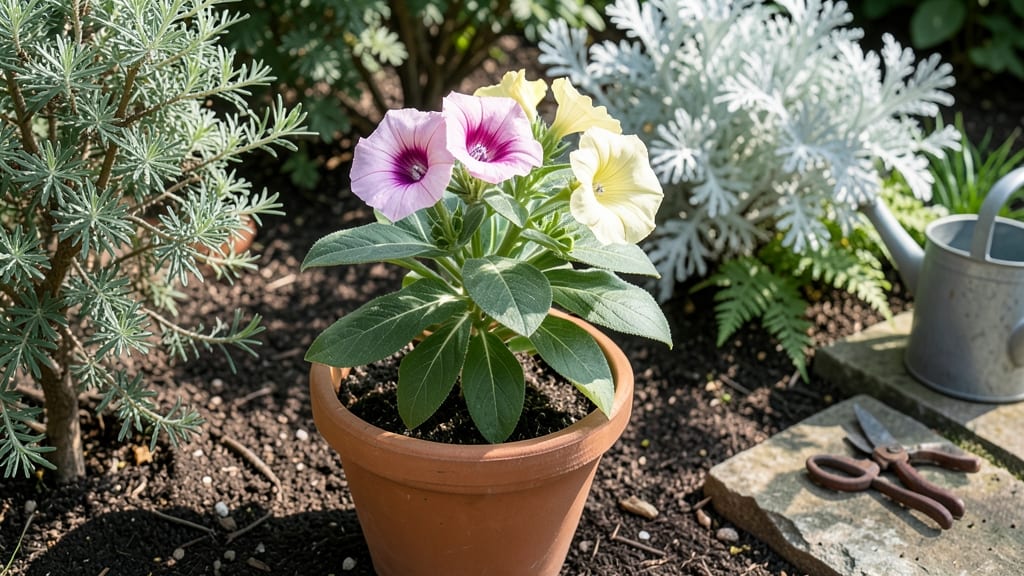
Four o'clocks will grow in shade, but they perform best with partial shade to full sun exposure. Some varieties like Mirabilis jalapa 'Alba' handle low-light conditions better, while others may produce sparse blooms or weak stems in deep shade. Well-draining soil and consistent moisture are key for healthy growth.
Four o'clocks (Mirabilis jalapa) are surprisingly adaptable plants that can survive in shaded areas, though their performance varies dramatically. 🌿 In deep shade, you'll often see fewer blooms and leggier stems as the plants stretch toward any available light. The good news?
Some varieties, like 'Alba' with its pale yellow flowers, are specifically bred for better shade tolerance. For the best results, aim for at least 4-6 hours of indirect light daily, especially if you're growing them in containers or areas with dense tree canopies.
What sets shade-tolerant varieties apart is their ability to balance photosynthesis with energy conservation. These plants develop broader leaves to capture more light, which explains why they might look lush but produce fewer flowers.
The trade-off is worth it for gardeners with limited sunlight—just be prepared to supplement with occasional pruning to maintain compact growth.
💡 In This Article
- How Light Affects Four O'Clocks Flowering and Growth
- Top 3 Shade-Tolerant Four O'Clock Varieties for Low-Light Gardens
How light affects four o'clocks flowering and growth
Four o'clocks (Mirabilis jalapa) rely on a process called photoperiodism, where their blooms open in response to light intensity rather than just time of day.
In low-light conditions, these plants trigger fewer flowers because their energy shifts from reproduction to survival. 🌱 Studies show that plants in deep shade produce about 30-50% fewer blooms compared to those in partial sun.
This happens because chlorophyll production slows down, limiting the plant's ability to convert light into energy for flower development.
The leaves themselves become a telltale sign of light deprivation. In shaded areas, four o'clocks develop broader, darker green leaves to maximize light absorption—a survival tactic that sacrifices bloom production. You'll often notice stems growing taller and thinner as they stretch toward any available light, a phenomenon called etiolation.
This weakens the plant structure, making it more prone to flopping over. For optimal growth, aim for 4-6 hours of indirect light daily, which balances leaf expansion and flower production.
Partial shade—defined as 3-6 hours of direct sunlight—is the sweet spot for most four o'clock varieties. Here, the plants receive enough light to support vibrant blooms while avoiding the stress of full sun exposure, which can scorch delicate petals.
The trade-off is subtle: while shade-tolerant varieties may bloom less, they compensate with longer flowering seasons. For example, 'Alba' varieties often bloom 2-3 weeks longer in partial shade compared to full sun, where they may finish their cycle sooner due to heat stress.
Soil moisture plays a critical role in shaded environments. Without adequate light, four o'clocks struggle to regulate water uptake, making them more susceptible to root rot in heavy soils. Always use well-draining soil with a mix of organic matter to prevent waterlogging.
In containers, ensure drainage holes are present and water only when the top 1-2 inches of soil feel dry. Overwatering in shade is a common mistake that leads to yellowing leaves and stunted growth.
Another key factor is the angle of light. East-facing windows or areas under deciduous trees provide the best indirect light for four o'clocks, as they receive gentle morning sun without harsh afternoon rays.
South-facing shade (from buildings or fences) can be too dark, while north-facing shade often gets too little light for consistent blooming. If you're growing in containers, rotate them weekly to ensure even light exposure on all sides.
For gardeners with limited space, consider using reflective surfaces like white walls or mulch to bounce light onto the plants. This simple trick can increase light availability by up to 20%, making a noticeable difference in bloom frequency.
The key is to mimic natural light conditions as closely as possible—four o'clocks won't thrive in artificial light alone, but supplemental strategies can make a big difference in shaded gardens.