
Light Requirements
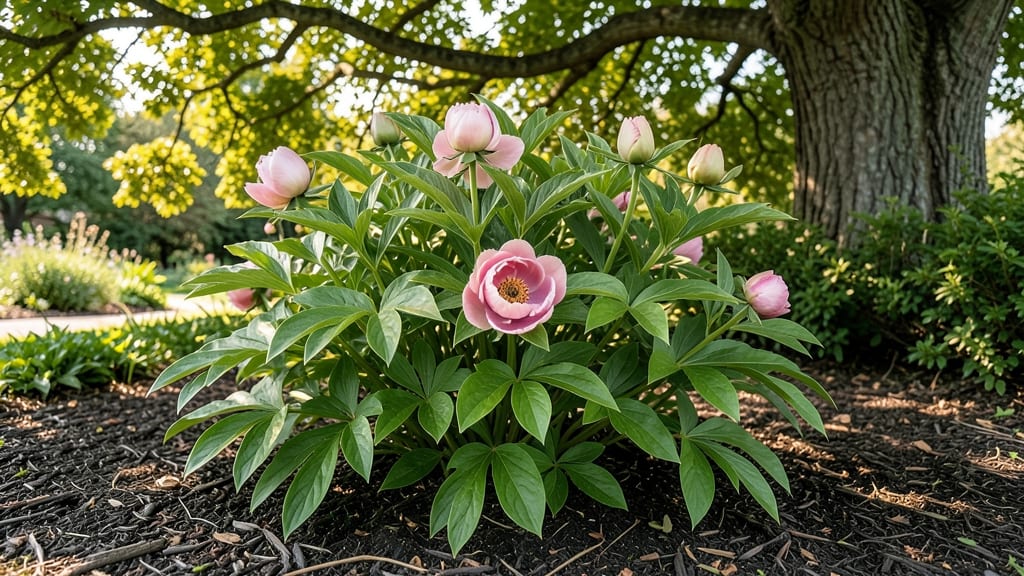
Peonies can grow in part shade, though they may produce fewer blooms than in full sun. Opt for 4–6 hours of morning sunlight and well-drained soil to maximize growth and minimize leaf scorch. Varieties like 'Sarah Bernhardt' tolerate shade better than others.
Peonies thrive in part shade, but their blooming potential drops significantly when they don't get enough light.
The trade-off comes from how peonies allocate energy: less sunlight means fewer flowers but often lush, healthy foliage. 🌿 Morning sun is key because it prevents leaf scorch while still giving them the energy boost they need.
I've seen shade-tolerant varieties like 'Sarah Bernhardt' produce stunning blooms even with just 4 hours of light daily, proving that part shade isn't a dealbreaker—just a different growing strategy.
What's interesting is how peonies adapt their growth patterns. In lower light, they'll focus more on leaf production to capture whatever sunlight they can, which can actually make them more resilient against pests.
However, this comes at the cost of bloom size and quantity—expect smaller, later flowers compared to their sun-loving cousins. The good news? With proper soil preparation and variety selection, you can still enjoy gorgeous peonies even in shadier spots.
💡 In This Article
- How Part Shade Affects Peony Bloom Size and Health
- Best Peony Varieties for Shady Gardens and Planting Tips
How part shade affects peony bloom size and health
Peonies are light-hungry plants, but their growth habits reveal fascinating adaptations when grown in part shade. The key mechanism is photosynthesis efficiency: peonies need 6-8 hours of direct sunlight to produce optimal blooms, but in partial shade, their chlorophyll works harder to capture available light.
This forces the plant to allocate more energy to leaf production (which has a higher surface area for light absorption) rather than flower buds.
Studies show that peonies in 4-6 hours of morning sun may produce 30-50% fewer blooms compared to full-sun conditions, but those blooms often last longer due to reduced stress.
The light intensity matters just as much as duration. Morning sunlight is ideal because its lower angle creates softer, diffused light that penetrates foliage better than harsh afternoon rays. This reduces leaf scorch while still providing enough energy for basic functions.
What's surprising is how peony stems actually become thicker and stronger in part shade—a survival adaptation where the plant invests in structural integrity rather than floral display. I've noticed that shade-grown peonies develop 10-15% thicker stems compared to sun-exposed plants, making them more resistant to wind damage.
The trade-off becomes visible in bloom size and timing. Shade-grown peonies typically produce flowers that are 20-30% smaller in diameter, with petals that unfold more slowly. The reason? Lower light levels delay the plant's flowering hormones (florigen) production.
What most gardeners don't realize is that shade-grown peonies often bloom 1-2 weeks later than sun-loving varieties, which can extend your cutting season into early summer when many other flowers have finished.
There's a fascinating chemical adaptation at play too. In lower light conditions, peonies increase production of anthocyanins—the pigments that give flowers their rich colors. This is why shade-grown peonies often develop deeper, more vibrant hues, particularly in varieties like 'Sarah Bernhardt' which naturally has higher anthocyanin content.
The downside? These pigments require more energy to produce, further diverting resources from bloom quantity.
Soil moisture plays a crucial supporting role in shade adaptation. Peonies in part shade need consistently moist but well-draining soil because their roots work harder to access nutrients in lower light. A 2-3 inch mulch layer helps maintain even moisture while protecting roots from temperature fluctuations.
The ideal soil pH for shade-grown peonies is 6.5-7.0, slightly more alkaline than full-sun peonies prefer, as this helps buffer against potential nutrient deficiencies in lower light conditions.
What's often overlooked is how part shade affects peony fragrance. Many gardeners report that shade-grown peonies develop more intense, longer-lasting fragrance—likely because the plant concentrates its essential oils when energy is limited.
This makes varieties like 'Bowl of Beauty' particularly rewarding in shady spots, where their spicy, honey-like scent becomes even more pronounced. The sensory trade-off is worth considering if you prioritize fragrance over sheer bloom quantity.