
Vegetables
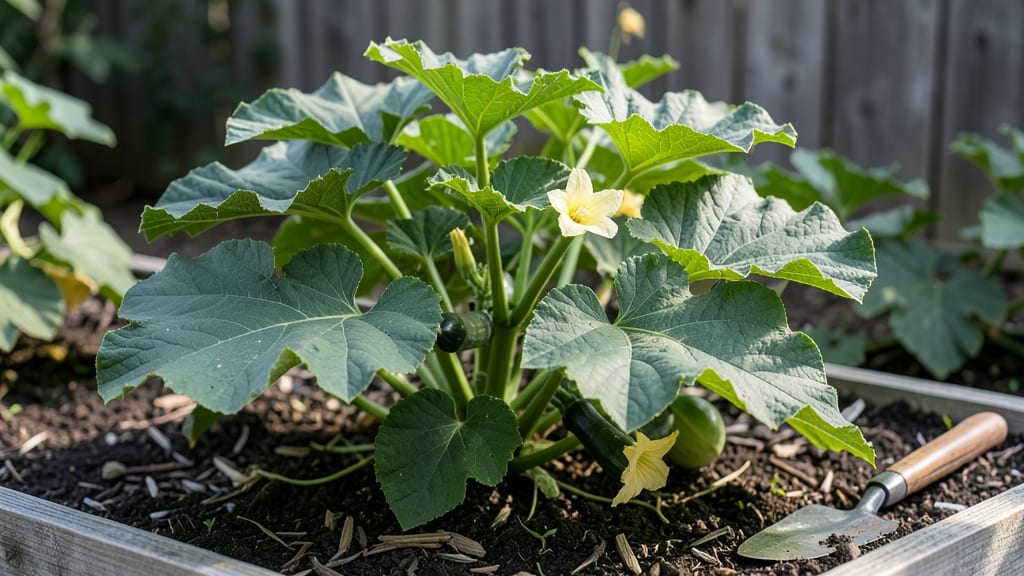
Zucchini can grow in shade but thrives best with 6-8 hours of direct sunlight daily; yields drop significantly in partial shade (under 4 hours), while deep shade (under 2 hours) often results in stunted growth or no fruit. Container gardening or raised beds improve light exposure in shady spots.
Zucchini plants are surprisingly adaptable—they can survive in partial shade, but their fruit production suffers dramatically when light drops below 4 hours daily. 🌿 The reason? Zucchini relies on sunlight for photosynthesis to fuel both leaf growth and flower/fruit development.
In shady spots, plants channel energy into leafy vines instead of producing zucchini, leaving you with lush foliage but few harvests. Even shade-tolerant varieties like 'Eight Ball' will yield smaller, fewer fruits compared to full-sun conditions.
If your garden has limited sunlight, focus on container placement—move pots to sunnier spots during peak hours or use reflective surfaces (like white walls) to bounce extra light onto the plants.
Adding companion plants like basil or marigolds nearby can also improve air circulation and light penetration, giving your zucchini a fighting chance in less-than-ideal conditions.
💡 In This Article
- How Shade Affects Zucchini Growth and Fruit Production
- Maximizing Zucchini Yields in Shady Gardens
How shade affects zucchini growth and fruit production
Zucchini plants are C3 photosynthesis specialists, meaning they rely on full-spectrum sunlight to maximize energy production. In full sun (6-8 hours daily), a mature zucchini plant can generate 2-3 pounds of edible fruit per week by converting sunlight into glucose at peak efficiency.
When light drops below 4 hours daily, photosynthesis slows dramatically—leaf chloroplasts produce only 30-50% of their full-sun capacity, forcing the plant to prioritize survival over fruit production. 🌞 This energy shift explains why shade-grown zucchini often produces smaller, misshapen fruits or none at all.
The plant's leaf structure also changes under shade. In low-light conditions, zucchini leaves grow larger and thinner (up to 30% more surface area) to capture whatever light exists, but this comes at a cost: thinner leaves are more prone to damage from wind or pests.
The stems become longer and leggier as the plant stretches toward any available light, creating a structurally weaker vine. What's worse, the reduced energy means fewer flowers develop, and existing flowers often fail to pollinate properly, leading to poor fruit set.
Here's the science: Zucchini flowers require direct sunlight for at least 4 hours daily to produce viable pollen. In deep shade (under 2 hours of light), the flowers may open but rarely produce fruit because the plant lacks the energy to sustain both flowering and fruiting simultaneously.
Even shade-tolerant varieties like 'Eight Ball' will show 50% fewer flowers in partial shade compared to full sun, directly translating to fewer harvests. 🌱 The key takeaway? While zucchini can survive in shade, its reproductive system—what produces the edible fruit—simply can't keep up.
Comparing full-sun vs. partial-shade growth reveals stark differences. A zucchini plant in full sun will produce 5-10 fruits per week during peak season, each weighing 1-2 pounds.
In partial shade (4-6 hours of light), the same plant might yield only 1-2 fruits per week, each weighing under 1 pound.
In deep shade (under 2 hours), fruit production often halts entirely, leaving you with a leafy green bush that looks healthy but delivers nothing to your kitchen.
One often-overlooked factor is the quality of light. Shade from trees filters out blue and red wavelengths—the very light frequencies zucchini needs most for photosynthesis. Artificial grow lights can help, but they must provide at least 12,000-15,000 lux (about the brightness of a well-lit office) to compensate.
Without this, the plant's internal clock (circadian rhythm) gets disrupted, further reducing flowering and fruiting. 💡 The moral? Shade isn't the enemy—poor-quality light is.
For gardeners in shady spots, understanding this science helps set realistic expectations. If your goal is decorative foliage, zucchini can thrive in partial shade. But if you want edible fruit, you'll need to supplement with light, choose the right varieties, or accept a significantly smaller harvest.
The plant's ability to adapt is impressive, but its priorities remain clear: survival first, fruit second.