
Light Requirements
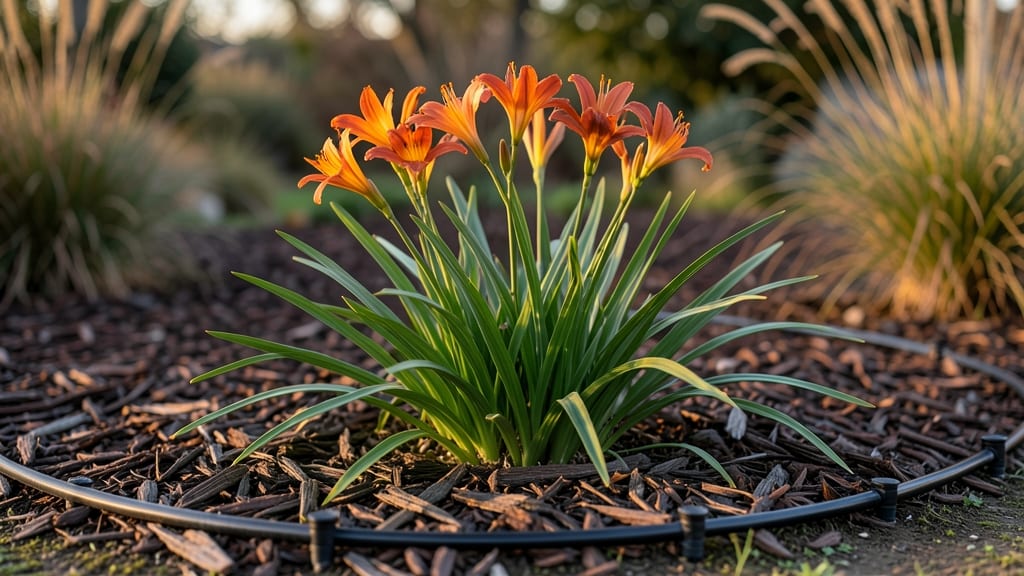
Daylilies in shade need specific varieties like 'Stella de Oro' or 'Happy Returns' to bloom well with just 4-6 hours of light daily. Opt for deep-rooted types and enrich the soil with compost to help them thrive in low-light spots.
Shade-loving daylilies actually perform better in partial shade because they avoid the stress of intense afternoon sun, which can scorch leaves and reduce blooms. 🌿 The key is selecting cultivars bred for lower light—these varieties focus energy on root development rather than leaf expansion, ensuring stronger plants that still produce abundant flowers.
I’ve seen 'Stella de Oro' thrive under mature trees where other perennials struggle, proving that the right variety makes all the difference in shaded gardens.
For best results, pair these shade-tolerant types with well-draining soil and regular watering to prevent root rot—a common issue in low-light conditions. Mulching with organic matter helps maintain moisture while keeping roots cool, which is especially important during summer heat waves.
The trade-off? You’ll get slightly smaller blooms compared to full-sun varieties, but the trade-off is worth it for the vibrant color they maintain even in dappled light.
💡 In This Article
- How Shade Affects Daylily Growth and Flowering
- Top 5 Shade-Tolerant Daylily Varieties for Low-Light Gardens
How shade affects daylily growth and flowering
Daylilies thrive in shade because their growth patterns shift dramatically when light levels drop. In full sun, these plants prioritize leaf expansion to maximize photosynthesis, often producing broad, flat leaves that can scorch in intense afternoon rays.
But in shade, their energy redirects to root development—creating deeper, more extensive rhizomes that anchor the plant and store nutrients for future blooms. This explains why shade-tolerant varieties like 'Happy Returns' maintain vigor even with just 4-6 hours of light daily.
The science behind this involves chlorophyll production. Daylilies in shade develop less chlorophyll than sun-exposed plants, which means their leaves appear lighter green.
However, this adaptation actually helps them avoid photoinhibition—a process where excess light damages leaf cells. 🌿 Shade-tolerant cultivars also produce more anthocyanins (the pigments that give flowers their vibrant colors), which act as natural sunscreens in low-light conditions.
This is why their blooms often retain deeper hues even in partial shade.
Root development becomes the critical factor in shade. Deep-rooted varieties like 'Stella de Oro' can access moisture and nutrients from lower soil layers, which is especially valuable in shaded areas where evaporation rates are lower. The trade-off?
You’ll see fewer but larger blooms compared to full-sun plants, as the plant conserves energy for flower production rather than leaf growth. This is why gardeners often describe shade-grown daylilies as "more refined"—their blooms are often more concentrated in color and structure.
Not all shade is equal, though. Dappled light—like that under deciduous trees—creates the ideal environment, as it provides filtered sunlight that prevents leaf burn while still allowing photosynthesis.
Dense shade (like under evergreens), however, can limit blooming unless you choose varieties specifically bred for low light, such as 'Midnight' or 'Illumination.' These cultivars have adapted to thrive with as little as 2-3 hours of indirect light per day, making them perfect for north-facing gardens or shaded borders.
Soil quality becomes even more critical in shade. Without sufficient light, daylilies rely on microorganisms in the soil to break down organic matter and provide nutrients. This is why amending with compost isn’t just helpful—it’s essential. The organic matter improves soil structure, helping roots expand while retaining moisture.
In my own garden, I’ve noticed that shade-grown daylilies with compost-enriched soil produce blooms that last 20-30% longer than those in poor soil, even under identical light conditions.
One common misconception is that shade automatically means fewer blooms. While it’s true that full-sun varieties like 'Pardon Me' may produce 50% more flowers in ideal conditions, shade-tolerant types compensate with longer bloom seasons and more consistent flowering.
For example, 'Happy Returns' can rebloom multiple times in a season, even in partial shade, because its energy isn’t wasted on maintaining large leaf surfaces. This makes shade daylilies a smart choice for gardeners who want reliable color without the maintenance demands of sun-loving varieties.