
Orchid Care
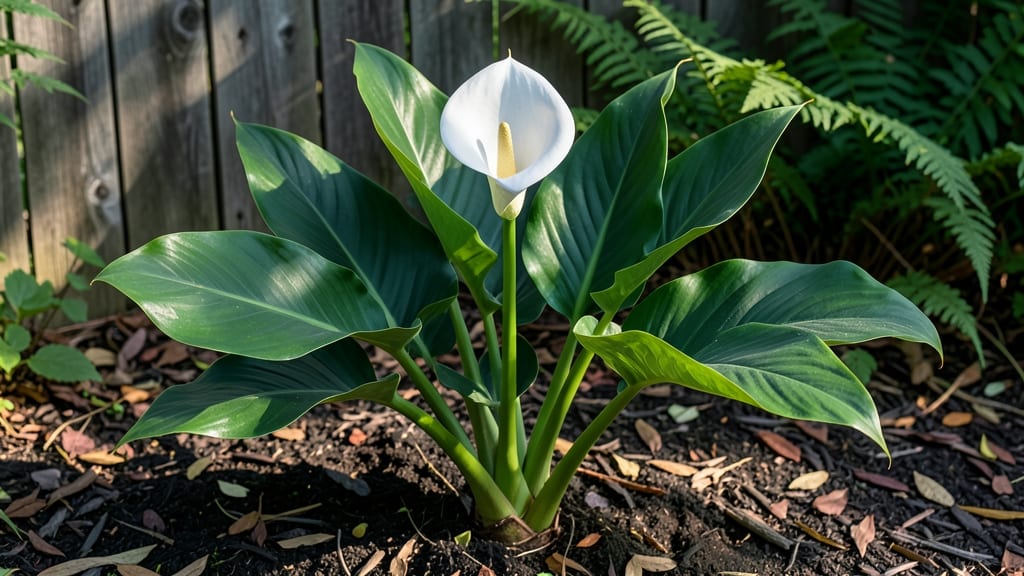
Calla lilies evolved in damp, shaded environments like riverbanks and forests, where they receive dappled sunlight rather than harsh exposure. 🌿 This explains why they struggle in full sun—excessive UV rays bleach their vibrant leaves and stress the plant, leading to fewer blooms.
For indoor growers, placing them near east-facing windows provides perfect morning light without afternoon heat, while outdoor gardeners should use 30-50% shade cloth during peak sun hours to mimic their natural habitat.
What many growers miss is how light quality matters just as much as quantity. Bright but indirect light—like the filtered sun under a canopy of trees—helps maintain those signature dark green leaves while encouraging strong, upright stems.
If you notice your calla lilies stretching toward light or developing pale foliage, they're begging for more shade. Conversely, if the leaves turn crispy or develop brown edges, you're giving them too much direct sun.
💡 In This Article
- How Light Affects Calla Lily Growth and Blooming
- Best Shade Solutions for Growing Calla Lilies Indoors and Outdoors
How light affects calla lily growth and blooming
The science behind calla lilies' light needs starts with their natural habitat. These plants evolved in the dappled light of riverbanks and dense forests, where they receive 30-50% sunlight intensity—about half the brightness of full sun.
Their leaves contain high concentrations of chlorophyll, but unlike sun-loving plants, calla lilies have evolved to maximize photosynthesis at lower light levels through a process called shade adaptation.
This means their chlorophyll absorbs light more efficiently in dimmer conditions, but too little light forces them to stretch and weaken in search of energy.
Light intensity directly impacts their iconic foliage and blooms. In ideal partial shade, calla lilies develop their signature deep green, almost black-purple leaves with striking white or yellow blooms.
However, when exposed to harsh afternoon sun (12-4 PM), UV radiation causes leaf bleaching and photooxidative stress—similar to how human skin burns.
This stress triggers the plant to produce fewer blooms as it diverts energy to protecting its leaves. 🌿 Tropical varieties (like Zantedeschia aethiopica) tolerate slightly more light than temperate types, but all benefit from morning sun's gentler spectrum.
Here's what happens when you get the light balance wrong:
- Too little light: Leads to leggy stems (up to 30% taller than ideal) and sparse blooms, as the plant expends energy reaching upward rather than flowering
- Too much direct sun: Causes leaf scorch (brown edges) and reduced chlorophyll, making leaves lose their vibrant color and appear washed out
- Perfect balance: Produces compact growth with bold foliage and larger blooms (up to 20% bigger than sun-stressed plants)
The key is understanding light quality, not just quantity. Calla lilies thrive on diffused light—think of the gentle glow under a canopy of trees. This light contains more blue wavelengths (600-700 nm range) which are ideal for photosynthesis without the damaging UV-B radiation found in direct sunlight.
For indoor growers, placing plants 3-5 feet from an east-facing window provides this perfect balance, while outdoor gardeners should use 30-40% shade cloth during peak sun hours.
Seasonal adjustments are crucial too. In summer, when sunlight is most intense, calla lilies may need afternoon shade protection, while winter's weaker light might require supplementing with a grow light (2,700-3,000 lumens) for 12-14 hours daily.
The goal is to maintain consistent 10,000-15,000 lux light levels at the plant's height—about the brightness of a well-lit office space.
What most growers overlook is how light affects blooming cycles. Calla lilies are short-day plants, meaning they flower in response to shorter daylight periods (typically 10-12 hours of light). Too much bright light can actually suppress flowering by preventing this natural day-length signal.
This is why indoor plants often fail to bloom—they're getting too much artificial light at night or insufficient darkness periods.